When life changes
There are moments in life that change us forever. For some they come suddenly, like a bolt from the blue. For others they creep in, gradually and almost imperceptibly, until one day you wake up and realize that life is no longer the way it was. Living with chronic illness or persistent pain is one such change. It can feel like being cast out onto the open sea, without a map or a compass. The body, which was once a friend, can become a riddle, an adversary, or even an enemy.
But in the midst of this storm there are paths to acceptance, meaning, and hope. Shamanism, with its roots in Indigenous wisdom and the rhythms of nature, offers a different view of illness and pain, and a set of tools that can help us find our way back to ourselves, even when life is at its most demanding.
Illness and pain in a shamanic worldview
In Western medicine, illness is often seen as something to be fought, cured, or removed. Pain is a symptom that something is wrong, and must be eased or eliminated. Shamanism sees it differently. Here, illness and pain are not only physical phenomena, but also messengers, signs that something is out of balance, whether in the body, the mind, the soul, or in the relationship with one's surroundings.
In shamanic tradition, the human being is part of a vast, living network, connected to nature, the ancestors, the spirits, and all living things. When illness or pain arises, it may be a call to listen more deeply, to seek causes that lie beyond the purely physical, and to restore balance to one's whole being.
A journey from resistance to acceptance
Let us meet Anna. She is 42 years old, a mother of two, and has always been active, she has loved hiking in the mountains, dancing, and working in the garden. Five years ago she was diagnosed with fibromyalgia. The pain came creeping in, first in her back, then in her shoulders, and finally everywhere. Everyday tasks like carrying grocery bags or playing with the children suddenly became insurmountable.
In the beginning, Anna fought against it. She tried everything, medication, exercise, diets, but the pain did not let go. She grew angry with her body, and felt betrayed. Her loneliness and despair grew. It was then that, through a friend, she came into contact with a shamanic guide.
Through conversations, drum journeys, and encounters with nature, Anna began to see her illness with new eyes. She learned to listen to her body, not only as a source of pain, but as a messenger. She began to ask: What is this pain trying to tell me? What do I need to change in my life? What old wounds or imbalances am I carrying?
Slowly but surely, Anna discovered that she could find meaning and even strength in what she was going through. She learned to accept that life would never be the way it was before, but that it could still be rich, beautiful, and full of new possibilities. Anna is of course fictional, but her experiences are based on real stories.
Anna is a fictional person, but her experiences are real and built on accumulated experiences over several decades.
Shamanic tools for acceptance and coping
Drum journeying – meeting your inner landscape
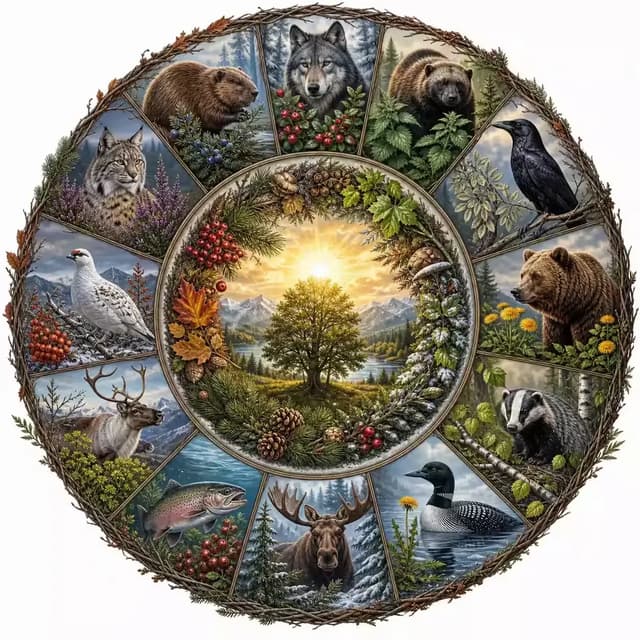
One of the most important shamanic practices is the drum journey. With the help of monotonous drumming, one is carried into a meditative state in which one can meet one's own inner images, symbols, and helpers. For people with chronic illness or pain, the drum journey can be a way of connecting with the body's wisdom, and of drawing strength and counsel from power animals, ancestors, or spiritual guides.
Anna, for example, experienced meeting a bear during a drum journey, a power animal known for its strength, calm, and ability to withdraw in order to heal itself. The bear taught her to rest, to listen inward, and to take care of herself without a guilty conscience.
Norse drum journeys by Shamanic association of Norway
Contact with nature – finding calm and support in the living
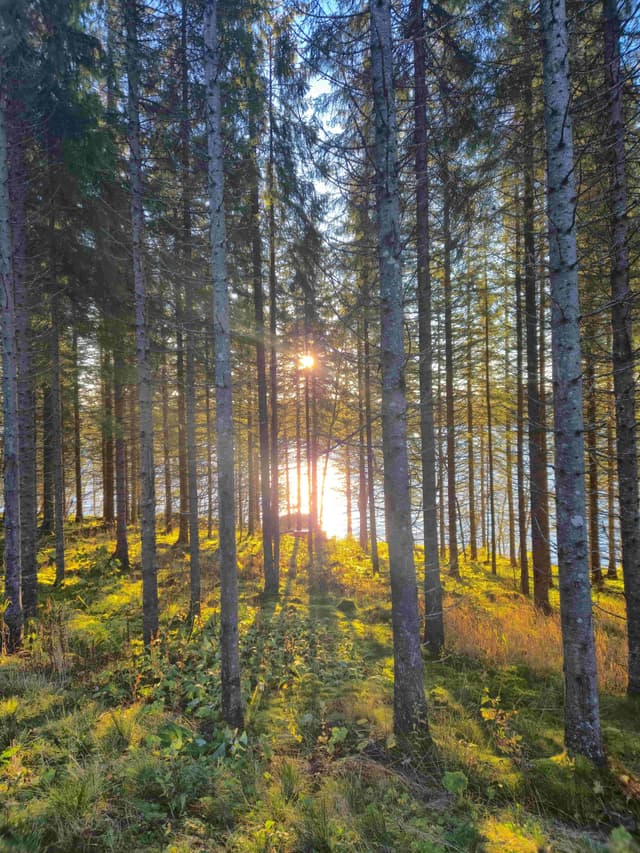
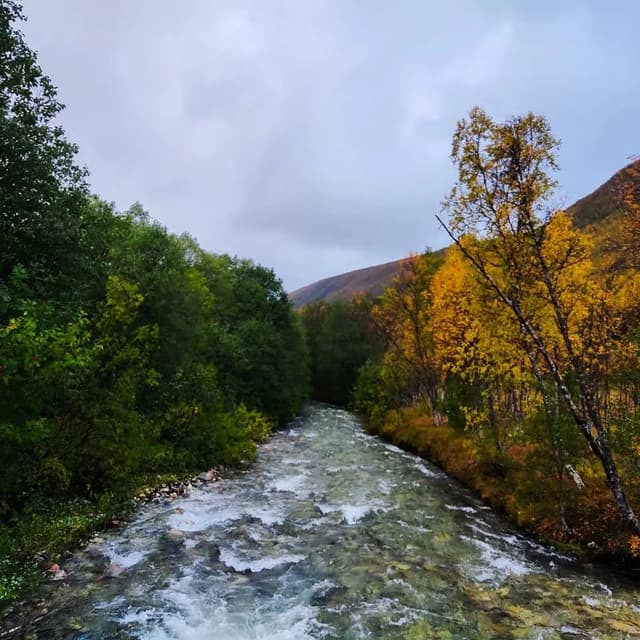
Shamanism sees nature as a living, ensouled force. Spending time in nature, whether a forest, by a lake, or in a garden, can provide both physical and psychological relief. For many with chronic illness, nature can be a sanctuary, a place where one can breathe, relax, and feel connected to something greater than oneself.
A simple practice is to sit by a tree, close your eyes, and listen to the sounds around you. Perhaps you feel the wind against your skin, the smell of earth, or birdsong. In such moments one may experience the pain loosening its grip a little, and gaining access to inner calm and strength.
Ceremonies and rituals – creating meaning and marking transitions
Many experience that chronic illness brings loss, of health, freedom, identity, or dreams. Shamanic ceremonies and rituals can help us acknowledge these losses, grieve over them, and at the same time open the way to new beginnings.
A ceremony can be simple: lighting a candle, writing a letter to your body, or making a small offering to nature. The most important thing is to give space to feelings, and to mark that one is entering a new phase of life, with all that this entails in terms of grief, hope, and possibility.
Power animals and spiritual helpers – never entirely alone
In shamanism, all people have power animals and spiritual helpers who accompany them through life. These helpers can be a source of comfort, strength, and guidance, especially when one feels alone or disheartened.
Anna experienced that, through contact with her power animal, she could draw on courage and endurance on the days when everything felt heavy. She learned to ask for help, not only from the people around her, but also from the invisible helpers who are always present.
Storytelling – giving illness a place in the life story
Shamanism is rich in myths and stories. Telling your own story, and seeing illness as part of a larger life journey, can help us find meaning and coherence. Perhaps illness can become a teacher, one that shows us new sides of ourselves, and opens doors we would otherwise never have found.
Acceptance – ceasing to fight against yourself
Acceptance does not mean giving up, but ceasing to fight against what is. For many with chronic illness, this is a long and difficult process. Shamanism offers tools for meeting pain with openness, curiosity, and respect, and for discovering what it can teach us.
Anna puts it this way: "I have stopped hating my body. Now I try instead to listen to it, and to give it what it needs. Some days that is rest, other days it is movement. I have learned that I still have a lot to give, even though my life looks different than it did before."
Meaning and hope – finding your place anew
When illness or pain takes away the life we thought we would have, it can be difficult to find meaning. Shamanism reminds us that meaning is not always about achieving or accomplishing something, but about being present, listening to the heart, and contributing what we can, here and now.
For Anna, it has been important to find small joys in everyday life: a cup of tea in the morning sun, a good conversation with a friend, or making something with her hands. She has also found joy in helping others, for example by sharing her story, or by supporting others who live with chronic illness.
Hope in the uncertain
Hope is not always the belief that everything will turn out well, but the certainty that there is always something to live for, even when life is difficult. Shamanism teaches us to trust in the wisdom of life, and that we are never entirely alone, neither in this world nor in the invisible worlds.
Anna says: "I don't know what the future will bring. But I know that I have survived everything I have been through so far. I have learned to trust that I have what I need, inside me, around me, and in the forces that accompany me."
A new path
Living with chronic illness or pain is a daily exercise in acceptance, patience, and courage. Shamanism offers no miracle cures, but it gives us tools to meet life as it is, with openness, wonder, and a willingness to learn. Through contact with nature, the spirits, and our own inner wisdom, we can find the strength to live a meaningful life.
This article offers reflections and descriptions of shamanic practices that can be used in connection with living with pain and chronic illness. The content is not intended as a substitute for professional medical advice, diagnosis, or treatment. No claims of health effect, prevention, treatment, or cure of illness or pain are made or should be understood as being made through this article.
Shamanic practices should not be used as the sole measure for health challenges, and one should always seek advice from authorized health professionals in the case of persistent or serious symptoms. The article is written to inspire reflection, personal development, and self-insight, and not to give medical advice or recommendations. The author takes no responsibility for any consequences of using the content, and the article should not be interpreted as an alternative to medical treatment or medical guidance.
References
Winkelman, M. (2010). Shamanism: A Biopsychosocial Paradigm of Consciousness and Healing. Santa Barbara: Praeger.
Eliade, M. (2004). Shamanism: Archaic Techniques of Ecstasy. Princeton University Press.
Grof, S. (2008). Holotropic Breathwork: A New Approach to Self-Exploration and Therapy. SUNY Press.
Rock, A. J., & Krippner, S. (2011). Demystifying Shamans and Their World: A Multidisciplinary Study. Imprint Academic.
Walsh, R. (2007). The World of Shamanism: New Views of an Ancient Tradition. Llewellyn Publications.
McGuire, M. B. (1988). Ritual Healing in Suburban America. Rutgers University Press.
Haraldsson, E. (2011). The Departed Among the Living: An Investigative Study of Afterlife Encounters. White Crow Books.