We live in a time when many feel alone, overwhelmed or on the outside. Mental health challenges have become part of the lives of a great many – both our own struggles and the pain we carry through others. In this landscape it becomes important to find a language for what cannot always be explained by logic, and a space for what cannot be resolved with quick answers.
This article wishes to open such a space
With roots in a shamanistic understanding of life – as found in the traditions of, among others, the Forest Finn, Sami and Siberian peoples – we wish to show how ancient wisdom can be of help in life today. Not as a replacement for modern help and treatment, but as a tool for rediscovering the strength within oneself, forging bonds with others, and finding peace with life.
Shamanism teaches us that everything is connected, or that everything is ensouled. We are not alone. We carry our ancestors in our blood, the earth beneath our feet speaks to us, and we have helpers – visible and invisible – who accompany us through life's many phases. When we forget this, we often lose our way. When we remember it again, we can begin to heal.
- Mental health from a shamanistic perspective
In Western medicine, mental health is often treated as something that happens "in the head". We speak of symptoms, diagnoses and treatment plans. This can be useful, but many find that it is not enough.
In the shamanistic understanding, mental health is about balance. Not only in the mind, but in the whole person: the body, the soul, the emotions and the connection to the world around us. When one part falls out of balance, it affects the whole. A person who has lost the connection to their inner life, their roots, nature, or the community around them, can begin to "wither" – just like a plant without sunlight and water.
Illness as a messenger
The shaman does not see mental difficulties as something evil in themselves, but as messengers. A depression can be the soul's way of saying: "Now you need to stop and listen." Anxiety can be a warning that something in life is not sustainable. Loneliness can be a call to find your way back to the pack, to nature, to yourself.
The question then becomes not only: "How do I get rid of this?" – but also: "What is this trying to teach me?"
- Suicide prevention – when the darkness threatens
In shamanism one often speaks of the dark night of the soul – a time when it feels as though all light has gone out, and one has lost the way home. Such periods can be life-threatening, but also deeply transformative – if one is given support, safety and time to come through them.
Many who consider taking their own life feel that they are a burden to others. They may believe that they have no worth, or that no one can understand the pain they carry. Shamanism reminds us that all souls are valuable – and that help exists both in the human and in the spiritual realm.
Signs that someone is struggling
Some signs that someone may be considering suicide can be:
Withdrawal, isolation
Dark, hopeless statements
Sudden changes in mood or behaviour
Talk of death, farewells, or "putting things in order"
Abuse of substances or self-harm
A sudden calm after prolonged depression
These signs do not always mean that someone has concrete plans – but they are always signals that deserve to be taken seriously.
- How to help – meeting the darkness with warmth
What we can do
You don't have to be a shaman, a psychologist or an expert to make a difference. The most important thing is that you care and dare to be present. Here are some things anyone can do:
Be brave and ask: "How are you, really?"
Being seen can be a lifesaver.
Listen without judging: You don't have to offer solutions. Just hearing another person say "I understand" or "I am here" can loosen something in a stuck inner landscape.
Show up physically: Some need practical help. Meet them, invite them out, make food, just be there.
Make it easier to ask for help: Not everyone can say "I need you". Take the initiative.
Talk about spirituality and hope: If it feels right, share how you yourself draw strength from nature, rituals, prayers or helpers.
How to have the difficult conversation
Many avoid asking directly about suicidal thoughts because they are afraid of making things worse. But often the opposite is true – being able to talk about it can save lives.
Try saying something like:
"I notice that you're having a hard time. Have you thought about harming yourself?"
"I'm worried about you. You are important to me, and I want to know how you really are."
If the person says that they have such thoughts:
Listen. Don't panic.
Say, for example: "Thank you for telling me. I would like to help you."
Don't promise to keep it a secret.
It is better to say: "This is too big for just the two of us. Let's find someone together who can help."
Go with them to get help – the GP, the emergency room, a crisis line or someone you trust.
- Shamanism as a tool for good mental health
Shamanism is not a religion with fixed dogmas, but an understanding of life built on contact with nature, the spirit world and one's own inner wisdom. In the face of mental challenges, shamanism gives us tools that are about connection: to ourselves, to other people, to spiritual helpers, and to the living landscape around us.
Power animals and inner guides
In many shamanistic traditions one makes contact with a power animal – a symbol of qualities and strengths one carries within, or needs to develop. Knowing that you have a power animal by your side can give courage in times of fear and chaos.
Example:
Bear – inner strength, protection, the ability to withdraw and return
Owl – clarity in the dark, inner wisdom, the ability to see the hidden
Reindeer – endurance, belonging to the herd, adaptation to the seasons of life
By meditating on the power animal or going on a drum journey, one can gain insight into what the soul needs in order to heal.
Drum journey and meditation
The drum journey is a central ritual in which a monotonous rhythm – often from a frame drum – is used to alter the state of consciousness. In this state one can meet one's helpers, see symbols and images from the subconscious, and recover lost life force.
For some, quiet walking in the forest, fire ceremonies or spiritual stillness in nature also work as healing practices.
Contact with nature and connection to the earth
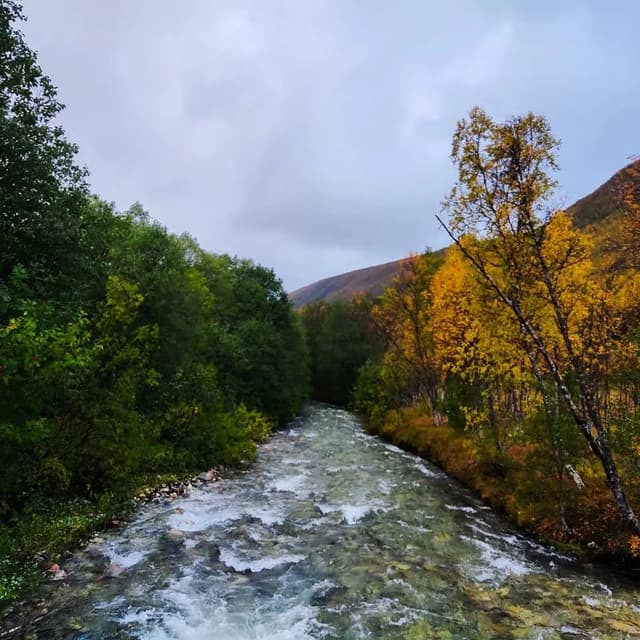
Being in contact with the earth beneath your feet – literally – has a deeply healing effect. When the soul feels adrift, rootless or splintered, it helps to be in forest, mountains or by water. In shamanistic thinking, nature is alive, and the relationships we forge with it nourish us at the deepest level.
Try:
Lying down on the ground and feeling the earth breathe
Asking the wind or the tree for support and strength
Giving offerings of thanks (for example herbs, stones, song) to the nature you walk through
Ceremonies for healing and renewal
Shamanistic rituals are often a form of personal or shared healing. You can create a simple ceremony to:
let go of grief
call back lost life force
strengthen the connection to ancestors
kindle hope in dark times
Example of a simple healing ceremony:
Light a candle.
Breathe deeply and ask for protection.
Say aloud what you wish to let go of.
Burn a paper with the words you want to release, or bury it.
End with thanks to your helpers, to nature and to yourself.
- Shamanistic principles for safety and community
In shamanism, community is not merely social – it is sacred. A person without belonging withers, but a person who knows their place in the circles of life will always find nourishment and strength. The community includes not only other humans, but also the spirits, the ancestors, the animals and the earth itself.
In the face of mental pain, this is one of the most healing insights: You are not alone. You have a place. You are important.
Living in a circle – not a hierarchy
Shamanistic thinking is built on a circular structure. There is no "above" or "below" – everyone carries something valuable. Everyone has the right to their voice, their grief and their gift.
In the circle:
We listen with the heart.
We speak from a true place.
We hold space for one another.
Such circles still exist – in drumming circles, prayer communities and conversation groups – but they can also be created close to home: between friends, in the family, or in a quiet room with candles and intention.
Respect for the invisible and the vulnerable
A shamanistic community carries a deep respect for the invisible: feelings, wounds of the soul, inner journeys. In many cultures, vulnerability is seen as weakness. But in shamanism, vulnerability is often the gateway to wisdom.
When we dare to show our true selves – with our scars, unrest and shame – we also open the door to the love of others. This can be life-transforming.
Carrying one another through dark times
In shamanistic culture it is a matter of course that we carry one another. When someone falls, the circle bends around them. When someone grieves, we grieve together. When a soul loses its spark, the community brings the light back.
We can do this today – without ritual expertise or perfect words. By:
Listening.
Including.
Inviting.
Holding someone in silence, when words cannot be found.
In this way we carry the light onward, together.
- Personal exercises and rituals
When life feels heavy and rootless, we need actions that can anchor us. Small but powerful rituals and exercises – not necessarily dramatic – can be enough to turn us back towards life. In shamanism, it is not the size of the ritual that determines its effect, but the intention and the presence.
Here are some exercises and rituals you can do alone – or together with someone you trust.
- Grounding ritual – when you feel overwhelmed
Time: 5–15 minutes
Place: Preferably outdoors in nature, but it can also be done indoors with plants/stones/water
How to do it:
Stand barefoot on the ground (or imagine it if that is not possible).
Close your eyes and feel the weight of your body.
Breathe deeply – in through the nose, out through the mouth.
Imagine that you are sending roots from your feet down into the earth.
Say aloud or within yourself:
"I am here. The earth carries me. I let go of what I do not need. I receive strength."
End by thanking the earth. You may want to leave a stone, flower or small gift as thanks.
- Calling back life force – when you feel empty
Shamanism says that we can "lose" pieces of our life force through trauma, grief or exhaustion. This exercise is about calling it home.
How to do it:
Light a candle.
Sit in stillness and say:
"I call back all the strength that belongs to me, from the places where I have lost it."
Imagine light streaming into your body, in small currents or as a wave.
Feel where in the body it "fills up".
Thank yourself and the light.
- Simple everyday rituals for hope and direction
Morning ritual: Light a candle and say a sentence you wish to live by today, e.g.:
"May I be open, calm and safe."
Evening ritual: Write down one thing you are grateful for, even on a difficult day.
Water ritual: When you shower or wash your face, say:
"Let what weighed on me run away. I begin anew."
- Make your own altar
A shamanistic altar need not be religious – it is a place of power. You can make it on a shelf, a stone, a table. Lay out objects that give you peace and meaning:
Stones, feathers, pictures, a small figure, a text, herbs, a note with a wish.
The altar becomes a place you can return to. A place that says: "You belong. You are alive."
- When we need help – how to seek support and create safety
No one should have to carry heavy thoughts alone. Yet many do not know where to turn, or are afraid of being rejected. In this chapter we go through how to seek help – both from the human and the spiritual community – and how we can be of help to others.
Asking for help – even when it is difficult
Asking for help takes courage. In the shamanistic understanding it is a sign of strength and wisdom, not weakness. When we ask for help, we open doors for healing – and for the community to do what it is meant to do: carry.
Here are some ways to put it:
"I'm having a hard time at the moment. Can I talk to you for a bit?"
"I'm struggling with dark thoughts, and I need someone to be with."
"I don't know what I need, but I don't need to be alone right now."
You can say it to:
A friend you trust
A shaman or spiritual guide
Your GP
A helpline or crisis service
A family member, a neighbour, a teacher, a support contact
How to find the right help
There are many forms of help. The most important thing is that you find one that meets you with warmth and respect.
The GP: They can give a referral to talk therapy or acute help.
Crisis lines (see list further down): Anonymous and always available.
Shamans/spiritual guides: In some places there are safe, experienced people who offer conversations and ceremonies.
Networks and support groups: There are many communities for mental health, including ones with a nature-based approach.
How to support someone who is struggling
When you see that someone is struggling, don't wait for "the right moment". A warm human presence can be enough.
Here is how you can begin:
"I've noticed that you seem down – do you want to talk a little?"
"You are important to me. How are you, really?"
"I know I can't solve it, but I can be here with you."
What you don't need to do
You don't need to give advice or "fix" anything
You don't need to be perfect or say the right things
You don't need to understand everything – the most important thing is that you listen
Make a safety agreement
This is a simple way to create safety together with another person:
Agree on who to contact first in a crisis (e.g. friend, GP, emergency room)
Agree on what helps most when things are at their hardest (quiet company, a walk, talking, music)
Create an "emergency phrase" – a simple way to say that you need help without explanation:
"It's dark now."
"Can you hold me for a bit?"
Important points of contact in Norway
Mental Helse Helpline: 116 123 (open around the clock, anonymous)
Kirkens SOS: 22 40 00 40 (open around the clock)
Emergency room: 116 117
Acute suicide risk: Call 113
- A life in connection – carrying hope onward
Shamanism teaches us that we are never alone. Even in our deepest loneliness, there are invisible bonds that bind us together – to nature, to our ancestors, to the spirits, and to one another.
When we rediscover these connections, we also find the way back to ourselves.
The cardinal directions – guides in life
In the shamanistic understanding, each cardinal direction has its own power, its own message and its own support. When we stand at a crossroads, we can turn to the directions for guidance:
North – Wisdom, strength, patience. The direction of the ancestors.
East – New beginnings, clarity, visions. The realm of the eagle.
South – Life force, passion, the path of the heart. The joy of the child.
West – Deep insight, transformation, the night of the soul. The way of the bear.
Each direction carries a lesson. When you seek answers, you can turn towards the direction that calls to you.
The elements – the building blocks of life
In shamanism we are not separate from the elements – we are them. Working consciously with them can bring inner balance.
Earth – Stability, safety, roots.
Water – Emotions, flow, cleansing.
Air – Thoughts, visions, new perspectives.
Fire – Power, will, transformation.
When we feel restless or stuck, we can turn to the elements for support. Walk barefoot on the earth, cleanse yourself in water, breathe deeply with the wind, sit by a fire.
Power animals – inner guides
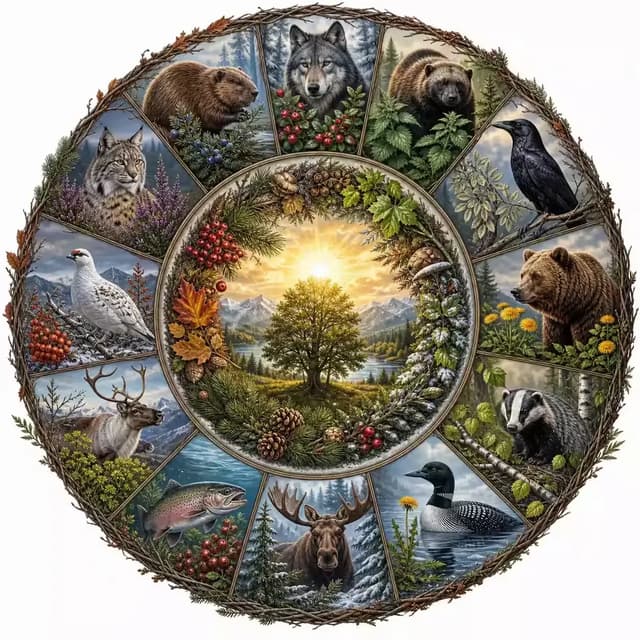
Every person has power animals – the soul's companions. They can appear in dreams, visions or drum journeys, and give us strength in challenges.
Some examples:
Bear – Inner strength, healing, protection.
Owl – Clarity, intuition, the ability to see in the dark.
Wolf – Community, loyalty, a guide through unknown terrain.
Horse – Freedom, journeys between worlds, endurance.
Finding your power animal is about listening within. Which animals have you always felt a special connection to?
Helpers, good spirits and ancestors
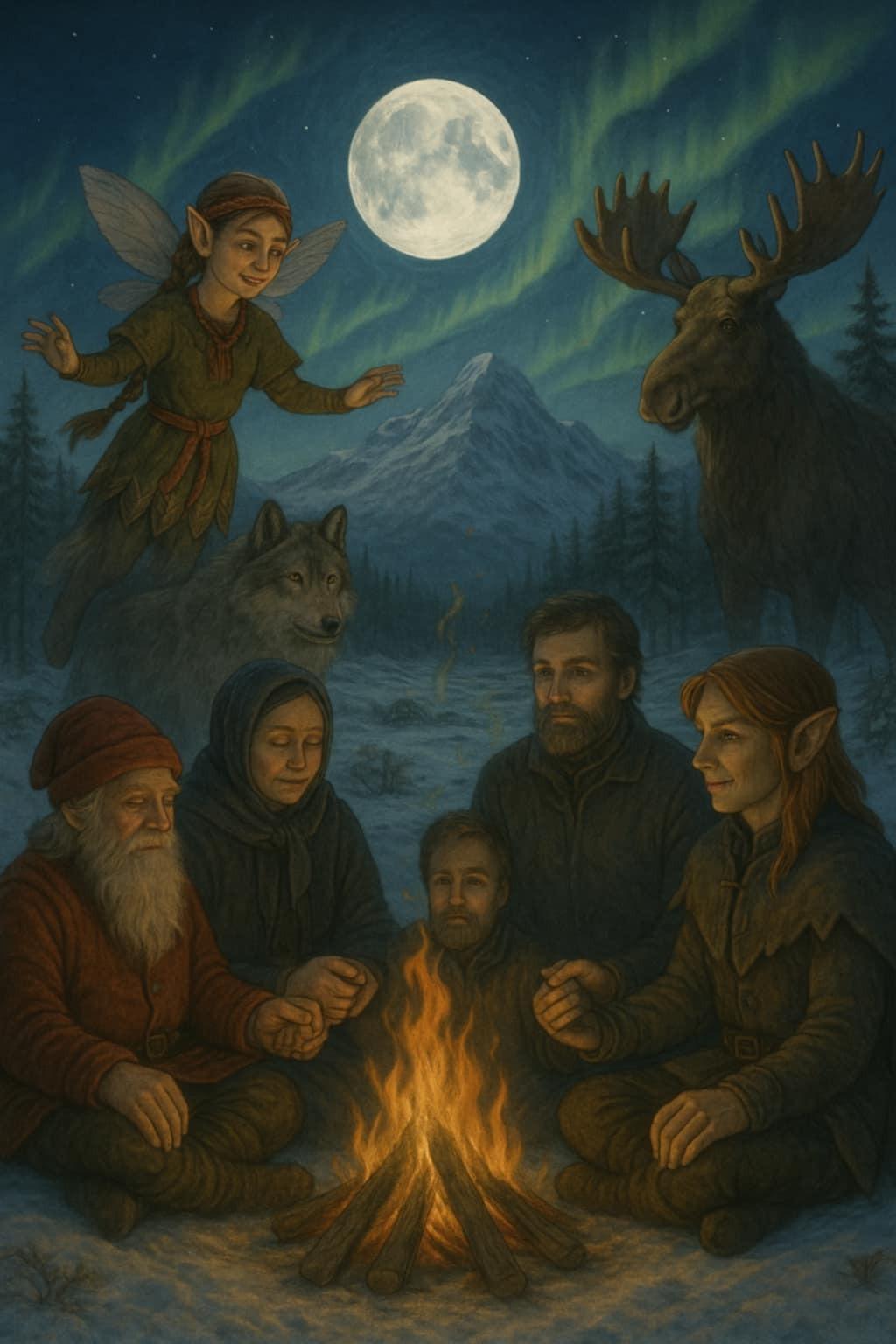
In shamanism, our ancestors are never far away. They whisper through the wind, laugh through the flames of the fire, and hold us in our weakest moments. We can call on them for support and guidance.
Helpers can also be spirits from nature – mountain spirits, river spirits, the guardians of the forest. They have existed long before us, and will be here long after us. When we honour them, we also honour ourselves.
A simple prayer to the ancestors:
"Ancestors, I honour you. I carry your blood, your strength, your wisdom. Guide me when the way is dark."
The little folk, elves and the spirits of nature
Many shamanistic traditions recognize the existence of the little folk – beings who live in parallel with us, in forests, beneath the earth, by springs of water. They are the guardians of nature, and must be treated with respect.
Signs that the little folk are near:
An object that suddenly vanished turning up in an unexpected place.
A feeling of being watched in the forest.
An inexplicable urge to stop and listen.
When we walk in nature, we can greet them, leave a small gift (a flower, a little food, a song). Being in balance with the little folk also gives us balance in our own life.
The animal and plant kingdoms – our kin
In shamanism we are not "above" nature – we are part of it. Every tree, every river, every animal has its own spirit, its own song. When we live in harmony with them, we live in harmony with ourselves.
Ways to forge bonds with nature:
Listen to the wind and hear what it whispers.
Speak to a tree and place your hands against the trunk.
Pick a plant with respect, and thank it for its gift.
When we honour nature, we honour life itself.
Humans – our strongest community
We are one another's medicine. In the shamanistic understanding, community is a circle – no one stands above anyone else. Everyone has a voice. Everyone has a gift to share.
When we carry one another, we also carry ourselves.
Remember:
It is allowed to be vulnerable.
It is allowed to ask for help.
It is allowed to need time.
Every time you show care, you kindle a spark of light in another's heart.
Closing ritual – carrying hope onward
Find a quiet place. Light a candle. Hold a stone, a feather, or another natural material in your hand.
Say aloud or within yourself:
"I am part of something greater. I am not alone. I carry light. I carry hope. I carry my story with dignity. May I walk with strength, in connection with all that is living."
Place the object in nature as a gift – a promise to yourself to remember your place in the circle of life.
Afterword
This booklet is intended to be both informative and a tool for self-help. A reminder that you are valuable, and that you are never alone – not in the human world, not in the spirit world, not in nature's eternal rhythms.
Even when it feels difficult, ask for help, see your GP or another professional. There are also helplines you can call for advice and support. You do not have to carry all your sorrows and burdens by yourself. Even if a friend or someone you trust cannot and should not take over your problems, share your thoughts, bring them out into the light – it can bring relief simply through sharing.
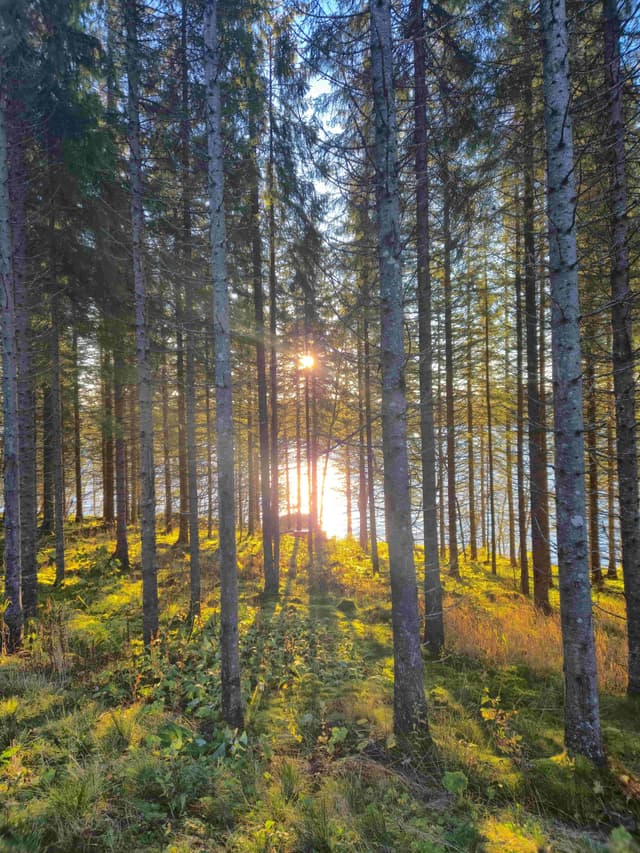
If you ever doubt, go out into the forest. Lay your hand on a tree. Watch the wind dance in the grass. Feel your heart beat.
Life is with you. We are with you.
Written by Kjell H Gove. 2025
Source list
Eliade, M. (1964). Shamanism: Archaic Techniques of Ecstasy. Princeton University Press.
Harner, M. (1990). The Way of the Shaman. Harper & Row.
Hoppál, M. (2007). Shamanism: An Introduction. International Society for Shamanistic Research.
Ingerman, S. (1991). Soul Retrieval: Mending the Fragmented Self. HarperOne.
Krippner, S., & Welch, P. (1992). Spiritual Dimensions of Healing: From Native Shamanism to Contemporary Health Care. Quest Books.
Lid, N. (1933). Norsk folkeminne. Oslo: Aschehoug.
Manker, E. (1957). The Nomadism of the Swedish Mountain Lapps. Acta Lapponica.
Siikala, A.-L. (2002). Mythic Images and Shamanism: A Perspective on Kalevala Poetry. Finnish Literature Society.
Winkelman, M. (2010). Shamanism: A Biopsychosocial Paradigm of Consciousness and Healing. Praeger. Helsedirektoratet. (2017). Nasjonal veileder for selvmordsforebygging. https://www.helsedirektoratet.no Folkehelseinstituttet (FHI). (n.d.). Psykisk helse og selvmordsforebygging. https://www.fhi.no