When life changes
Life is in constant motion. Sometimes the changes happen slowly, almost imperceptibly, like the seasons gliding into one another. Other times they come suddenly and violently, as when a relationship ends, we lose someone we love, lose our job, or have to move away from everything we know. Such life crises and transitions can shake us to our foundations. They can fill us with grief, fear, and confusion, but also with hope, curiosity, and the possibility of growth.
In such times it can feel as though the ground beneath us disappears. We lose our bearings, feel small and vulnerable. It is then that we need support, from ourselves, from others, and perhaps also from something greater than ourselves. Shamanism, with its ancient roots, offers a set of tools and symbols that can help us navigate through life's major transitions. It reminds us that we are not alone, and that we can always find our way forward, even when everything feels dark and chaotic.
Life crises and transitions – a part of the circle of life
What is a life crisis?
A life crisis is a period in which we experience that the old no longer works, but the new has not yet taken form. It may be an outer event, such as divorce, loss of a job, illness, or moving, or an inner process, such as the passage into adulthood, a midlife crisis, or aging. Common to all crises is that they challenge our identity, our relationships, and our belief in the future.
In Western culture, crises are often seen as something negative, something we must "get through" as quickly as possible. In shamanic tradition, by contrast, crises are a natural part of the circle of life. They are transitions, thresholds, portals to something new. They give us the chance to grow, learn, and find new sides of ourselves.
Rites of passage
In many traditions, rites of passage have been a natural part of life. When a child becomes an adult, when someone marries, gives birth, or dies, the community gathers to mark the transition. The rituals give structure, meaning, and support. They help us let go of the old, and welcome the new.
In modern society, many of these rituals have been lost. We move, change jobs, or go through the breakup of a relationship without having any framework for processing what is happening. Shamanism offers a way back to such rituals, to symbols and practices that can help us navigate through change.
Shamanic rituals for life crises and transitions
Going through the portal – rites of passage in practice
Imagine that you are standing before a door. Behind you lies the old life, what you know, what has been safe. Before you lies the unknown. You do not know what awaits, but you know that you cannot go back. This is the portal, the threshold, the transition.
In shamanic practice this can be symbolized through rituals in which you physically or symbolically pass through a door, an arch, or a circle of stones. You can create a simple ceremony for yourself or together with others:
Find a place in nature, or make an arch of branches, stones, or flowers.
Stand before the portal and reflect on what you are leaving behind, and what you wish to carry with you onward.
Walk slowly through the portal, and notice what happens in your body and mind.
When you have gone through, you can light a candle, sing a song, or simply sit in silence and sense the new that awaits.
Such rituals give the body and mind a chance to understand that something has changed. They give us the strength to let go, and the courage to welcome the unknown.
Finding guides in the inner landscape
In shamanism, the drum journey is a central tool for navigating through life's crises. By listening to monotonous drumming, you can enter a meditative state in which you meet your own inner images, symbols, and helpers.
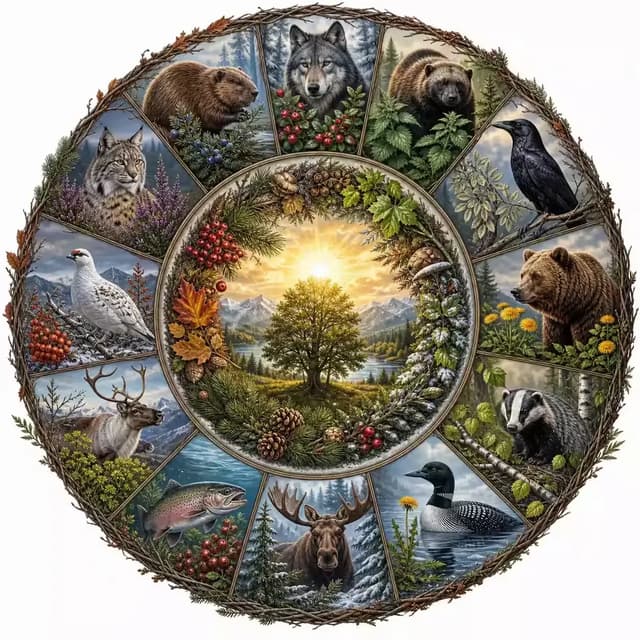
When you stand in a transition, you can use the drum journey to seek advice from power animals, ancestors, or spiritual guides. Perhaps you meet a bear that gives you strength, an eagle that gives you an overview, or an ancient forefather or foremother who reminds you of who you are.
The drum journey can give you new perspectives on the crisis you are facing, and help you find the courage and wisdom to move forward.
Contact with nature
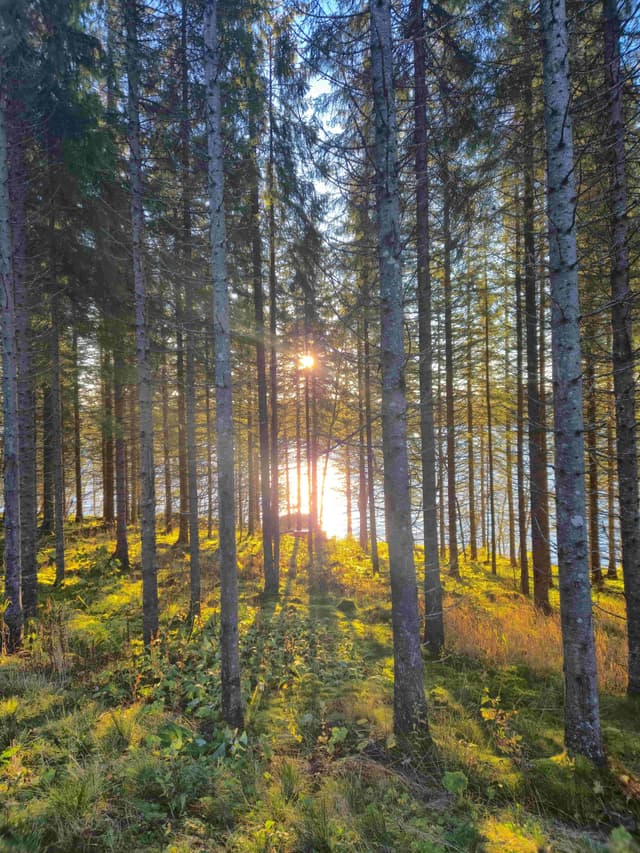
Nature is one of shamanism's most important teachers. When life is in disarray, being in nature can give both calm and strength. Walking in the forest, sitting by a lake, or simply feeling the wind against your skin can help us find our way back to ourselves.
In shamanic practice you can ask for support from nature, from the trees, the stones, the animals, or the elements. Perhaps you can make a small ritual in which you lay down a stone, a branch, or a flower as a symbol of what you are letting go of, and take with you something new as a symbol of what you wish to welcome.
Symbols and objects
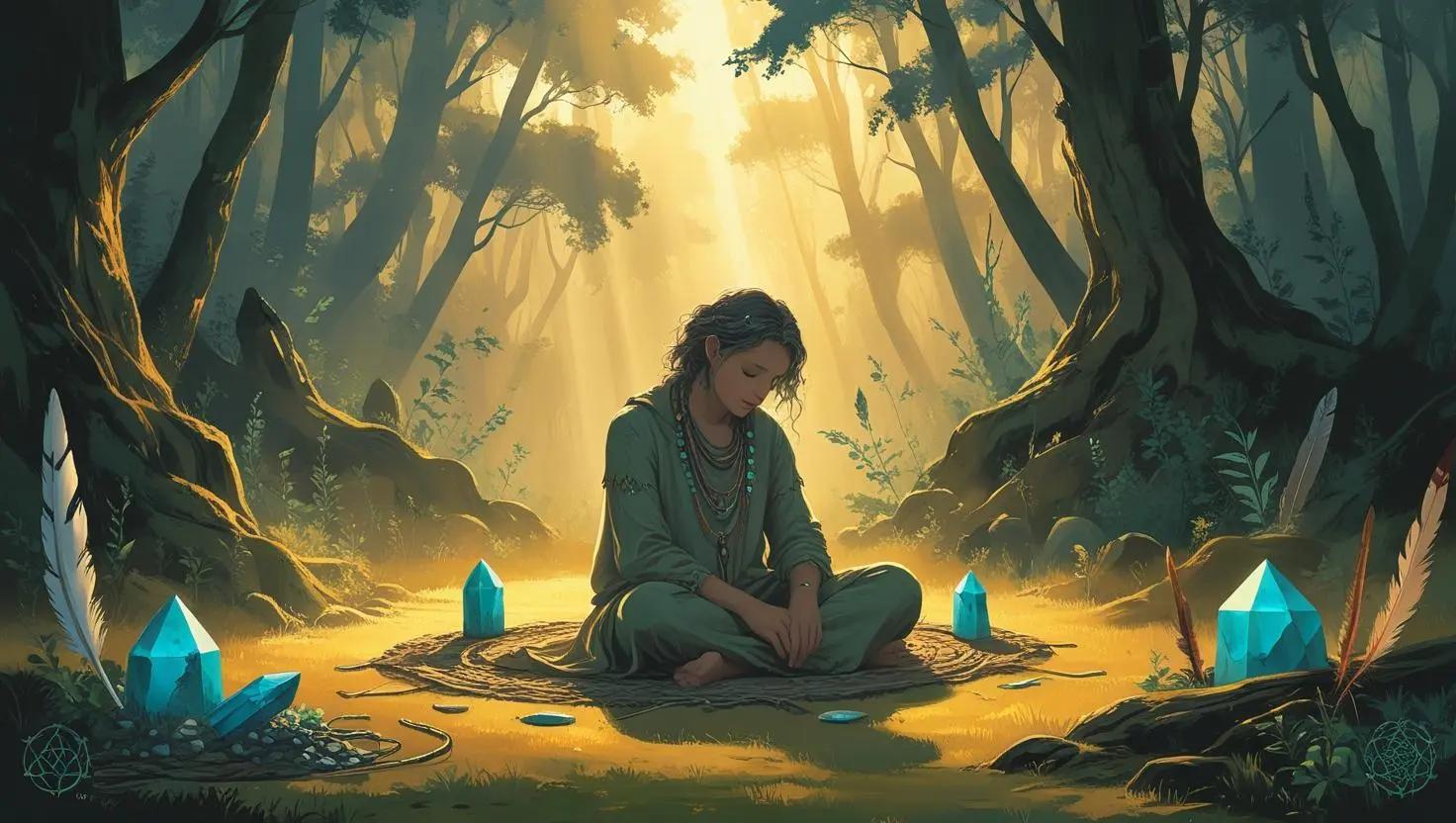
Shamanism often uses symbols and objects as bearers of power and meaning. When we stand in a life crisis, it can be a great help to have something concrete to hold, look at, or carry with us as a reminder of strength and protection. This may be a stone, a feather, an amulet, or an image that symbolizes what you wish to draw power from. Many people make their own talismans or power objects in connection with rituals, and give them a special meaning through prayer, song, or meditation. Carrying such symbols can give a sense of security and support in difficult times.
Community and circle
A cornerstone of shamanic practice is community. Life crises can feel isolating, but in shamanism there is a strong tradition of gathering in a circle, a safe space where everyone can share their experiences, feelings, and stories. In the circle there is room for both grief and joy, doubt and faith. Being seen and heard in such a community can be a powerful support in transitions. It reminds us that we are not alone, and that we can draw strength from one another.
Stories and myths – finding meaning in the crisis
Shamanism is rich in stories and myths about transitions, death and rebirth, and about heroes who face great trials. Reading, hearing, or telling such stories can give perspective and hope. These myths remind us that crises are not the end, but often the beginning of something new. They give us images and symbols that can help us understand our own situation in a deeper way.
Personal stories
Many who have used shamanic tools in life crises tell of how rituals, drum journeys, and community have helped them find calm and direction. A woman who went through a difficult divorce described how she used drum journeys to meet her inner strength, and how a small ritual with stones and candles helped her mark the transition to a new life. A young man who moved to a new city told of how he made an ancestor altar in his new home, and how it gave him a sense of belonging and security in the unknown.
Meeting life crises and major transitions is never easy. But with shamanic wisdom we can find tools that help us navigate the unknown, let go of the old, and open ourselves to the new. Through rituals, symbols, drum journeys, and community, we can draw strength, find meaning, and move forward with courage and hope. Shamanism reminds us that we are never alone, that we can always find guides in both the visible and the invisible, and that life is a circle of eternal change and possibility.
References
Eliade, M. (2004). Shamanism: Archaic Techniques of Ecstasy. Princeton University Press.
Winkelman, M. (2010). Shamanism: A Biopsychosocial Paradigm of Consciousness and Healing. Praeger.
Walsh, R. (2007). The World of Shamanism: New Views of an Ancient Tradition. Llewellyn Publications.
Rock, A. J., & Krippner, S. (2011). Demystifying Shamans and Their World: A Multidisciplinary Study. Imprint Academic.
Hultkrantz, Å. (1992). Shamanic Healing and Ritual Drama: Health and Medicine in Native North American Religious Traditions. Crossroad.