In the depths of the forests, across the expanses of the tundra and in the silent shadows of the mountains, human beings have sought the sacred from time immemorial. For many, the shaman's path is one of the oldest and most fundamental approaches to the sacred – a practice that is not only about believing, but about experiencing, sensing and living in harmony with the invisible forces that flow through all life. This article takes you on a narrative journey into the shaman's universe, where the sacred is not a distant idea, but a living, pulsing reality.
Everything is alive, everything is sacred
For the shaman the world is a web of relationships, reality's world wide web. Everything that exists – stones, trees, animals, humans, rivers and mountains – is alive and carries its own spirit or power. This worldview, often called animism, is not merely a belief, but a way of experiencing the world. When the shaman opens the senses, it is to listen to the vibrations of this web, to feel its rhythm and to understand how everything connects in a sacred whole.
The language of nature
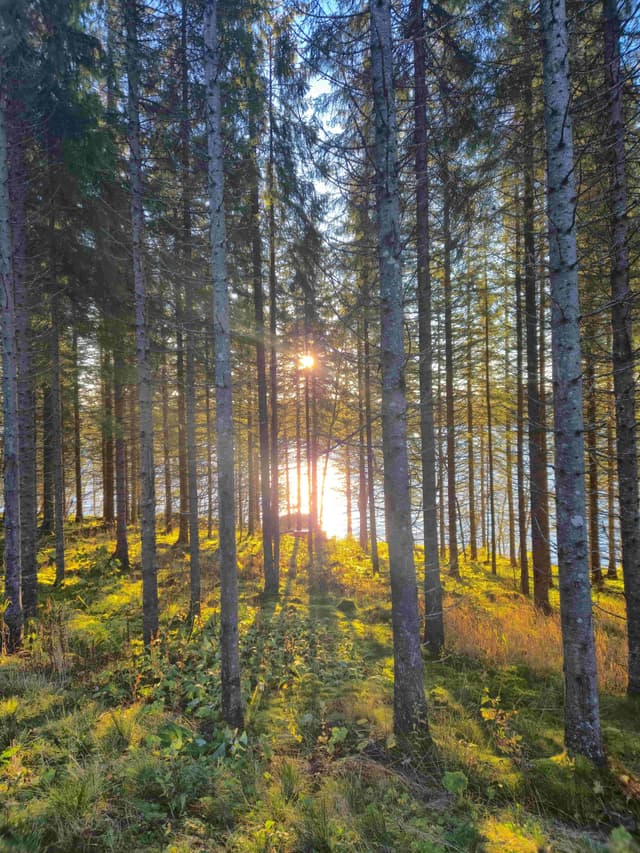
In the shaman's eyes, nature is not mute. The wind whispers, the river sings, and the flight of the birds may carry messages from the spirit world. To approach the sacred is therefore to learn the language of nature – to listen, observe and respect. It is through this deep listening that the shaman gains insight, healing and guidance.
Opening the sacred space
Before any shamanic act, a sacred space is opened. This may be done through rituals, prayer, song, or by invoking the four cardinal directions. The purpose is to create a space where the sacred can come forth, where the boundaries between the visible and invisible worlds grow thinner, and where communication with the spirits becomes possible.
Altered states of consciousness
A central part of the shaman's practice is the ability to enter altered states of consciousness. This may happen, for example, through drumming, song, dance or fasting. In such states the shaman can travel to the spirit world, meet spiritual guides, retrieve power animals or receive visions. These journeys are not metaphors, but are experienced as real encounters with the sacred.
Meeting the spirits
The shaman is an intermediary between human beings and the spirits. In many cultures, to approach the sacred is synonymous with approaching the spirits – ancestors, nature spirits, animals, or greater cosmic forces. These encounters often take place through visions, dreams or ecstatic journeys, and give the shaman insight, power and healing abilities.
Power places and sacred landscapes
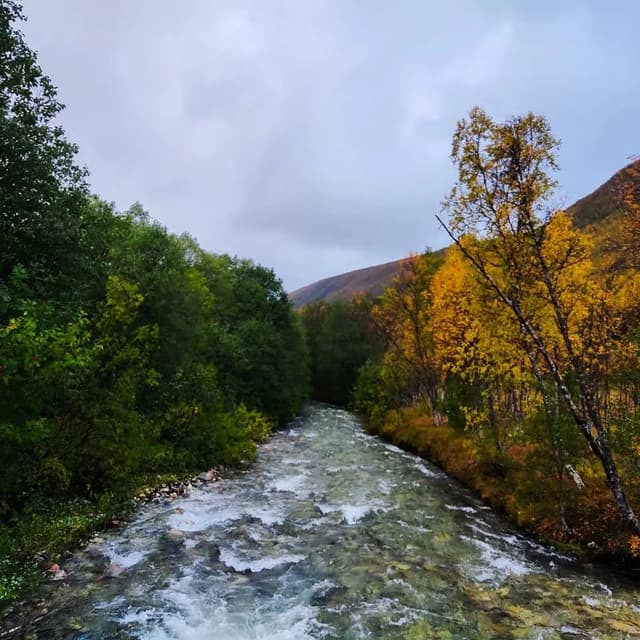
In shamanic tradition there are places in nature regarded as especially sacred – power places where the veil between worlds is thinner. Here the shaman can more easily make contact with the spirits, draw power or perform healing. These places may be mountain peaks, springs, great trees or open plains. To visit such a place is to step into the sacred, and it requires respect, humility and often special rituals.
Symbols and totems
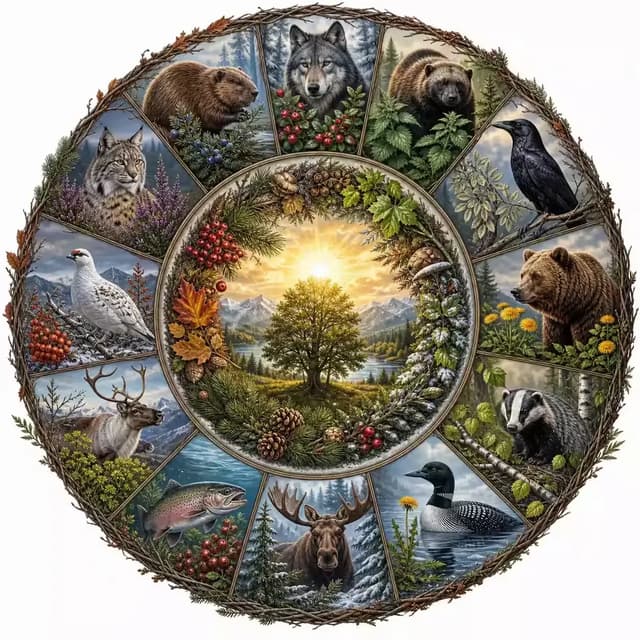
The shaman often uses symbols, masks, drums and other objects that carry spiritual power. These objects are not merely tools, but living bearers of the sacred. They can serve as bridges between the worlds, and give the shaman access to wisdom and power from the spirits.
Illness and imbalance
In shamanic understanding, illness is often a sign of imbalance – between the human and nature, between body and spirit, or between the individual and the community. To heal is therefore to restore balance, and this often happens through contact with the sacred. The shaman seeks not only to remove symptoms, but to heal the soul and restore the connection to the sacred web of life.
The shaman's healing methods
Healing can happen in many ways: through song, drumming, the use of herbs, rituals or spirit journeys. Common to all the methods is that the shaman seeks help from the spirits, and that the healing happens in cooperation with the sacred. This may involve retrieving lost soul parts, driving out harmful spirits or strengthening the patient's life force.
Guide and bridge-builder
The shaman is not only a healer, but also a guide, counselor and bridge-builder between human beings and the sacred. In many societies the shaman has had a central role in interpreting dreams, foretelling the future, leading rituals and maintaining the balance between the human being and nature. To approach the sacred is therefore also to take responsibility for the well-being and harmony of the community.
Rites of passage and the cycles of life
The shaman often leads rites of passage – birth, puberty, marriage and death – where the sacred comes forth most clearly. Through such rituals the individual and the community are given the opportunity to meet the sacred, mark important transitions and ensure that the cycles of life continue in balance.
Not only belief, but experience
One of the most characteristic features of shamanism is its emphasis on direct experience. The sacred is not something one merely believes in, but something one can experience through visions, dreams, ecstasy and contact with the spirits. This experience gives deep meaning, strength and insight, and is the very foundation of the shaman's authority and practice.
Transformation and initiation
Many shamans go through an initiation – a crisis, illness or vision – that brings them into close contact with the sacred. This transformation enables them to help others, because they have themselves experienced death and rebirth on the spiritual plane. In this way the shaman becomes living proof that the sacred is real and accessible to those who dare to approach it with an open mind and heart.
Shamanism in our time
Though shamanism has roots in prehistoric times, it still lives in many cultures, and has also gained renewed relevance in modern society. Many today seek a return to shamanic practices to find meaning, healing and contact with the sacred in a world marked by fragmentation and alienation.
Ecological awareness and respect for nature
Shamanism's emphasis on the sacredness of nature has inspired many to develop a deeper ecological awareness. Today, approaching the sacred is also about caring for the earth, respecting its limits and living in balance with nature. This is perhaps shamanism's most important message for our time: that all life is sacred, and that we have a responsibility to safeguard this sacredness.
A night by the fire
Let us imagine a night in the wilderness. The fire crackles, the stars shine above the treetops, and the shaman sits in deep concentration. The drum beats its monotone rhythm, and slowly the world slips into another state. The sounds of the forest become voices, the shadows dance, and the shaman senses that he is no longer alone. The spirits are present – not as distant myths, but as a living presence. In this moment the sacred is not a concept, but an experience, a certainty that flows through everything.
A healing journey
A woman comes to the shaman with an inexplicable illness. Through drumming and song the shaman enters a trance, travels to the spirit world and meets her power animal. There, in the encounter with the sacred, he finds the cause of the illness – a lost soul part, an old grief. Through the ritual the soul part is brought back, and the woman feels whole again. This is not only a healing of the body, but a restoration of the connection to the sacred.
Living with the sacred
To approach the sacred from a shamanic standpoint is to live in a world where everything is ensouled, where nature is a living book one can read, and where the human being is part of a greater cosmic order. It is about listening, sensing, experiencing and respecting – and about understanding that the sacred is not something distant, but something that can be experienced here and now, in every encounter with nature, in every dream, in every song. The shaman's path is an invitation to open oneself to the mystery of life, to step into the sacred with humility, courage and openness.
The information in this article is intended only for general knowledge and inspiration. It describes shamanic perspectives and practices, and is not to be interpreted as medical advice, diagnosis or treatment.
The shamanic methods and healing techniques discussed here are not an alternative to professional medical treatment.
For physical or mental health complaints you should always consult a doctor, psychologist or other qualified health professional.
Do not discontinue or postpone medical treatment on the basis of information in this text.
For acute health problems, contact a doctor or emergency medical services immediately.
The article is not written by health personnel and does not replace medical expertise. All use of the information is at your own risk.
References
Wikipedia. "Shamanism."
ReVision Publishing. "Shamans, Sacred Places, and the Healing Earth."
Holitschke, S. "Shamanism and the sacred in the modern world." LinkedIn, 2025.
Bright, B. "Shamanic Initiation, Descent, and Learning Through Direct Experience of the Sacred."
Winkelman, M. "Shamanism and the Origins of Spirituality and Ritual Healing." Journal for the Study of Religion, Nature and Culture, 2010.
Sandner, D., & Wong, S. "The Sacred Heritage: The Influence of Shamanism on Analytical Psychology." Routledge.
Naxon, M. R. "Shamanistic Knowledge and Cosmology." In Tribal Epistemologies. Routledge, 2019.
Yale HRAF. "Cross-Culturally Exploring the Concept of Shamanism."
Debra Lynn Alt. "Shamanism."
Lightning Inspiration. "Shamanistic Worldview."
VanPool, C. S. "The signs of the sacred: Identifying shamans using cross-cultural regularities." ScienceDirect, 2009.
Chelsea Green Publishing. "How to Open A Sacred Space."
Warrior Child Healing. "The Shamanic Worldview: Everything is Alive and Sacred."
Harvard ReVista. "The Powers of the Sacred."
Alchemessence. "Shamanism 101: Everything You Need to Know."
Foundation for Shamanic Studies. "The Shamanic Worldview: Everything is Alive."
Sacred Ecstatics. "Follow the Glowing Red Antlers: Re-Encountering Shamanism."