Aurvandil is an often overlooked figure in Norse mythology, whose story bears the marks of both cosmological symbolism and deeply rooted shamanic themes. His role as a boundary-crossing figure – from earthly trials to the starry sky – makes him a key figure for understanding how Norse beliefs interact with nature-spiritual traditions.
The mythological foundation of Aurvandil
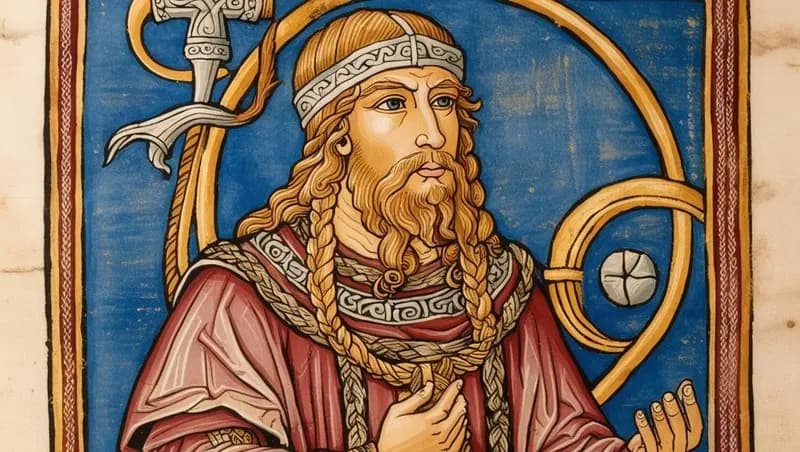
According to Skáldskaparmál in Snorri's Prose Edda, Aurvandil is the husband of the völva Gróa. During Thor's battle against the giant Hrungnir, Thor gets a fragment of a whetstone lodged in his forehead, and Gróa is summoned to remove it with magic. As thanks, Thor tells how he carried Aurvandil in a basket across the icy Élivágar rivers from Jotunheim. One of Aurvandil's toes stuck out and froze, whereupon Thor broke it off and cast it into the sky as the star Aurvandilstá (Aurvandil's toe).
Etymological and cultural parallels
The name Aurvandil (Old Norse Aurvandill) is related to the Old English Ēarendel and the Gothic Auzandil, which points toward a common Germanic mythological figure associated with light and the dawn. In Christ I, an Old English religious poem, Ēarendel is described as "the brightest of angels", which links him to the morning star (Venus). This duality between earthly suffering and celestial transformation forms the core of Aurvandil's myth.
A shamanic reading of Aurvandil's journey
Aurvandil's journey with Thor across the Élivágar can be analyzed as a shamanic initiation rite:
Boundary-crossing journeys
Thor's role as carrier through the deadly rivers recalls the shaman's ability to navigate between worlds. In Siberian shamanism, rivers are often used as symbols of the passage into the spirit world. The basket Thor uses can be interpreted as a shamanic aid to transport, like the drum or the "boat of the soul" in indigenous rituals.
Symbolic mutilation and transformation
The frost injury to the toe and its transformation into a star reflect shamanic self-injury rituals, in which bodily destruction leads to spiritual renewal. In Tolley's analysis of Norse magic, such transformations are central to attaining supersensory knowledge. The placement of the toe in the sky underscores the connection between earthly trials and cosmic order. This is, moreover, not something we practice in shamanism today, nor can we vouch that it represents actual practice; in other words, it is not something we recommend.
Communication with the spirit world
Gróa's failed healing of Thor can be seen as a broken shamanic séance – her joy at her husband's return disturbs the magical process. This illustrates the fragile balance between human emotions and spiritual focus in shamanic practice.
Shamanic roots in Norse cosmology
Aurvandil's story bears the marks of pre-Christian nature-religious practices
Animal transformations
The basket journey recalls the berserkers' wolf-skins and Odin's horse-call (Sleipnir), both connected to shamanic boundary-crossing.
Water as a ritual portal
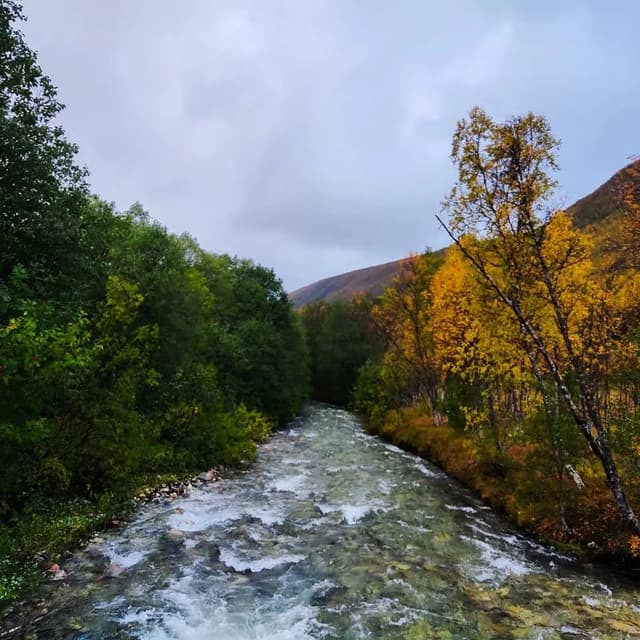
Élivágar, the "storming rivers", function as a borderland zone between Jotunheim and Midgard. In the shamanic tradition, such waterways are gates to the spirit world.
Healing through narrative
Thor's tale to Gróa during the healing shows how verbal magic (galdr) and storytelling were integrated into Norse healing, like shamans' use of mythic narratives during treatment.
Source references
Skáldskaparmál (Snorri Sturluson) – Primary source for the Aurvandil myth
Tolley, Clive (2009) – Shamanic analysis of Norse magic
Simek, Rudolf (1993) – Etymological study of the name Aurvandil
Gesta Danorum (Saxo Grammaticus) – Aurvandil as Ørvendil
Eliade, Mircea (1951) – Comparative shamanism research
Christ I (Old English poem) – Ēarendel as a Christian parallel
Allen, Richard Hinckley (1899) – Star identifications
Vatnsdæla saga – References to fylgjur and animal forms
Ryan, P.D. (2002) – Jungian/shamanic synergy
The Gulating Law – Christian criminalization of belief in spirits