Barbmoáhkká is one of the lesser-known goddesses in Sámi mythology. Her role is closely linked to the life of migratory birds and the great cycles of nature, and she represents the connection between Sápmi and the distant, sun-drenched lands in the south. Through her power over the movements of the birds, she also carries a deep symbolism of life, death, and renewal in the Sámi worldview.
Barbmoáhkká's origin and significance
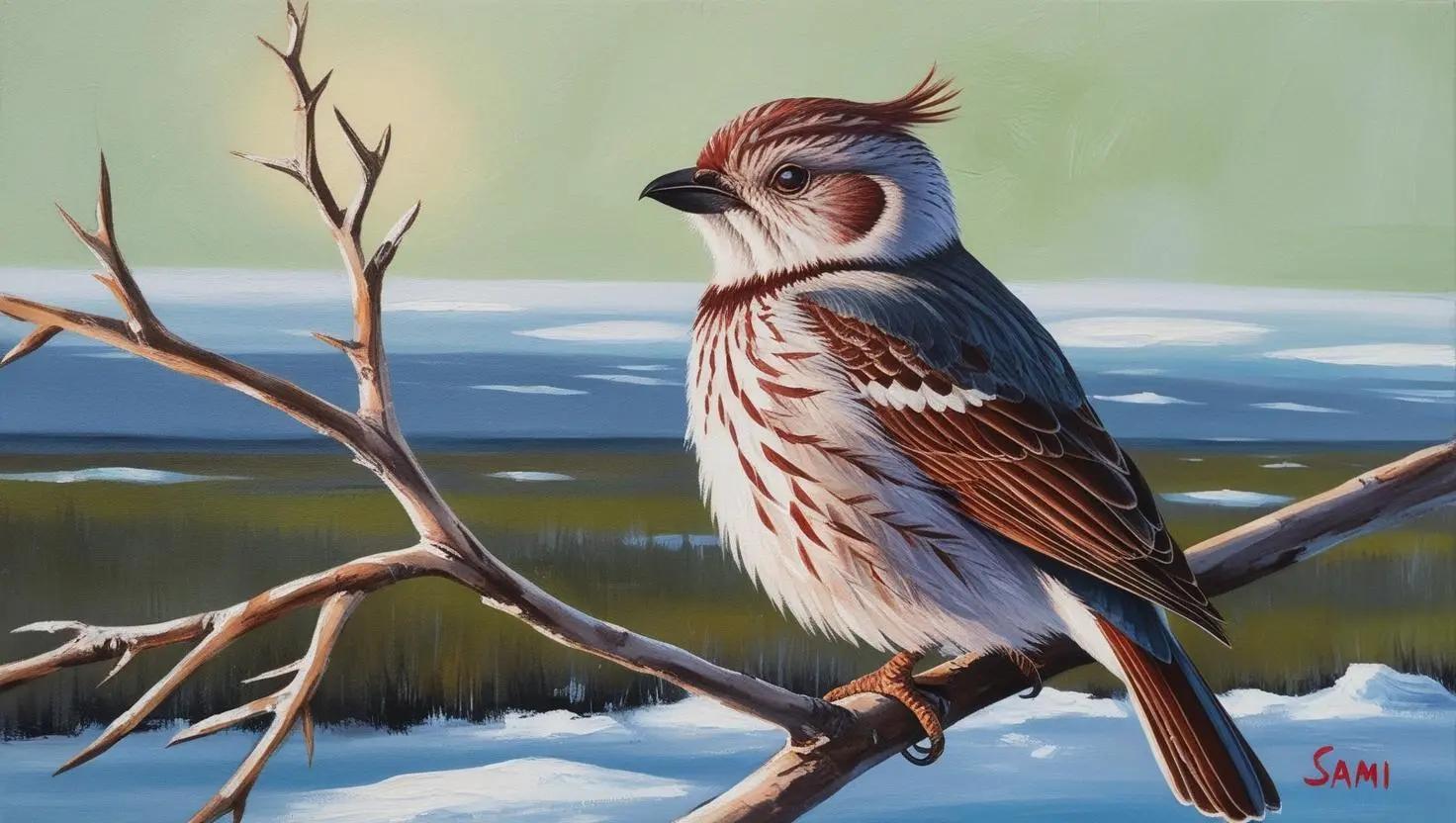
In pre-Christian Sámi belief, nature was populated by numerous gods, spirits, and beings, each responsible for different aspects of life. Barbmoáhkká was the goddess who ruled over all migratory birds. According to Sámi belief, far to the south on earth there was a land where the sun always shone - Barbmoriika, or the Barmo land. This land was the winter home of the migratory birds, and Barbmoáhkká was the one who called the birds back to the north when spring came.
The name Barbmoáhkká lives on in the Sámi word barbmolotti, which means migratory bird. Her role was not only to bring the birds back, but also to decide how many were to return to Sápmi and how many were to remain in Barbmoriika. She thus had a direct influence on the balance of nature, and on people's relationship with the birds, which were important both as a food resource and as symbols of the changing seasons.
Mythological function and rituals
Barbmoáhkká was one of the many gods and spirits with whom the Sámi sought contact through sacrifice and ritual. Among the Sámi it was common to give gifts to the gods to secure their favor - this could be meat, blood, cod liver oil, or small metal objects. The sacrifice was adapted to the god or spirit one wished to appease, and in Barbmoáhkká's case it might be to ensure that the migratory birds returned in abundance, which was crucial for the ecosystem and for people's livelihood.
The noaidis, the Sámi shamans, had a central role in contact with the spirit world. They often used birds as symbols or helpers on the runebomme - the Sámi drum. The king of the birds, Guorga (the crane), was Barbmoáhkká's messenger and had to give an account to her of how many birds had survived the winter. Barbmoáhkká then decided how many were to be sent back to the world of humans, and how many were to remain with her in Barbmoriika.
Symbolism and worldview
Barbmoáhkká represents an important aspect of the Sámi understanding of the world, in which the cycles of nature and the movements of animals are closely interwoven with human life. The birds were not only food, but also messengers and symbols of hope, renewal, and contact between different worlds. That Barbmoáhkká held power over the fate of the birds shows how central she was to Sámi cosmology and to the annual cycle.
Her domain, Barbmoriika, was a kind of paradise far to the south, a place of eternal sun and abundance, in contrast to the darkness and cold of winter in the north. This land was part of the mythological map, and served as an explanation for where the birds disappeared to in winter - an explanation that combined observation, imagination, and religious belief.
Barbmoáhkká today
Although Barbmoáhkká is not among the best-known Sámi gods today, her memory lives on in language, traditions, and in research on Sámi mythology. Her role sheds light on how the Sámi have understood and interpreted the rhythms of nature, and how they have used myths and rituals to create meaning and coherence in existence.
In modern times, researchers and cultural communicators have brought Barbmoáhkká to the fore as an example of the rich and diverse Sámi spirit world, and of how the relationship with birds and nature has been an integral part of Sámi identity and livelihood.
References
Friis, Jens Andreas (1871). Lappisk mythologi, eventyr og folkesagn. Cammermeyer. Christiania.
NIBIO. (n.d.). Fugl i samisk tro og mytologi II. Fact sheet for the project "Fugleturisme i Midt- og Øst-Finnmark", "Naturarven som verdiskaper (M)".
Tunón, Håkan & Frändén, Märit (eds.) (2011). Báktegovat ja govadasat II - Hällbilder och samiska trummor II. Uppsala University.