It often begins with a sound.
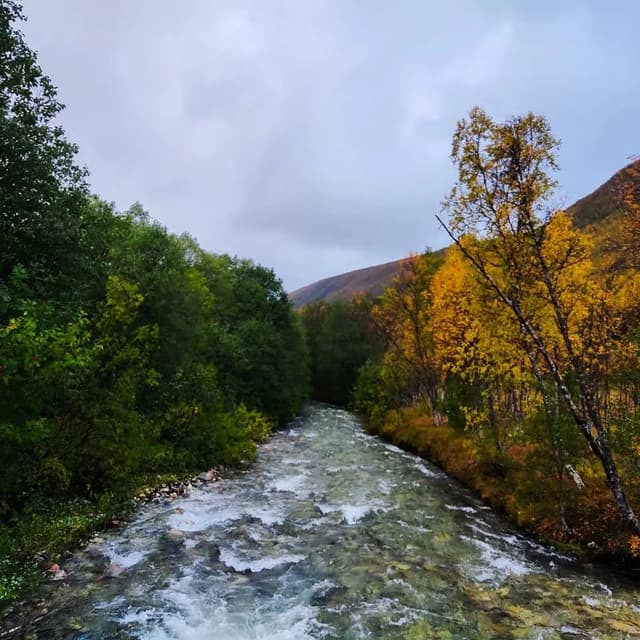
Not a scream, not a voice, but a faint, rhythmic gurgling movement – water striking stone, as if the stream itself were breathing. In the twilight, when the light withdraws and the world becomes more translucent, one can sense that the water does not merely flow. It waits.
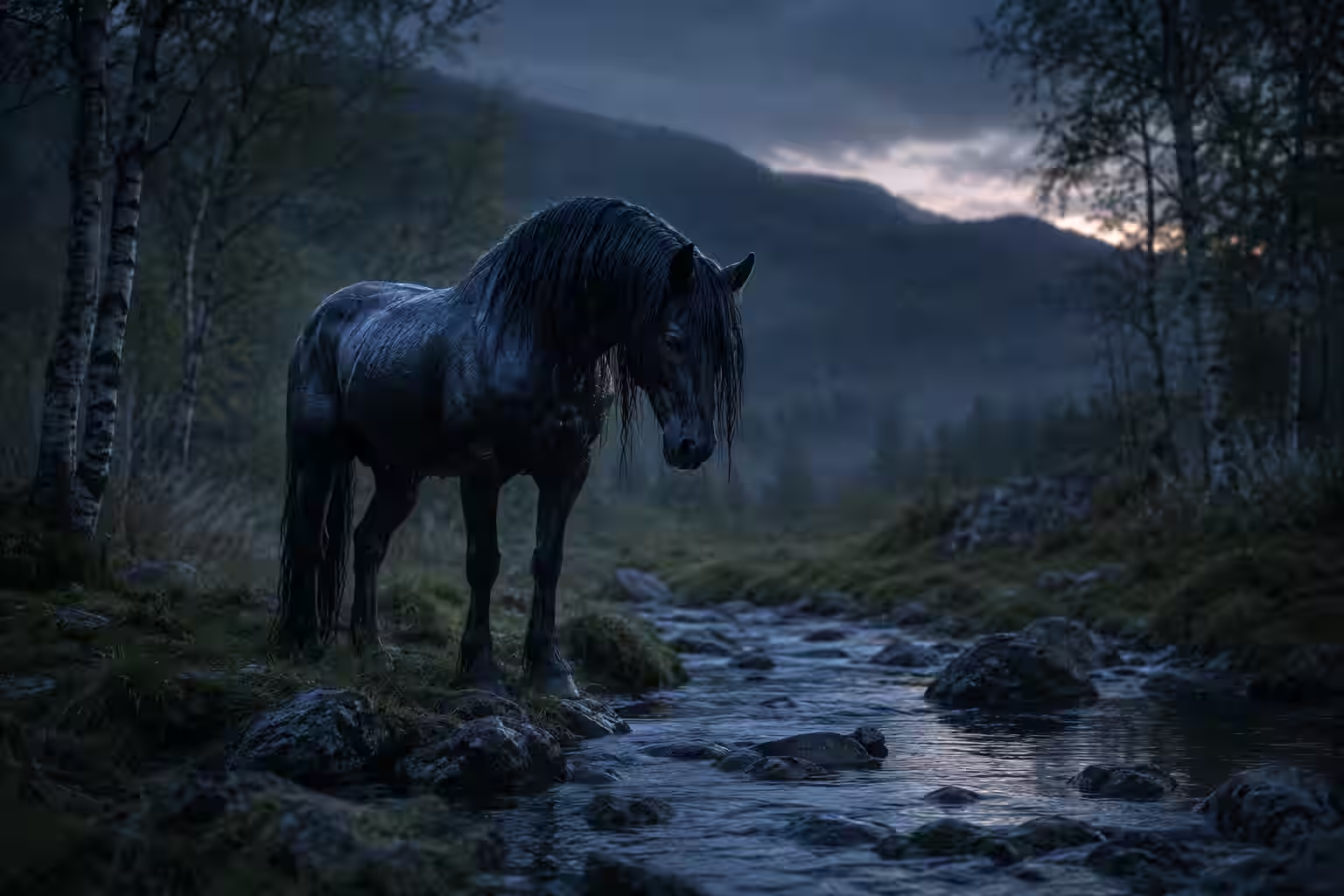
Along streams, rivers and small running waters in the Nordic countries, people have for centuries told of something that hides in the margins of the water. Not a god, not an animal, but something in between: a creature that both entices and threatens, that mirrors humanity's own longing and fear. In Sweden it is called the bäckahästen. In Norway we encounter related beliefs, often more dissolved into local names and tales: the nøkken, the fossegrimen, or simply “the one in the stream”. But in its purest form it appears as a horse: a beautiful, glistening creature at the water's edge, still and patient.
It waits for someone to climb onto its back.
The margins of the water
In Nordic folk belief, water is never merely water. It is a boundary. A crossing. A place where worlds meet and blend. The stream, unlike the sea or the great lakes, is especially charged because it is close. It cuts through the landscape, near farms and paths, part of people's daily life. But precisely for that reason it is also unpredictable.
The stream may be safe in the morning, dangerous by evening. It may be shallow one day and deep the next. Children learn early to respect it, not only for its physical dangers, but for what might dwell there.
The bäckahästen belongs to this margin. It is not a being that seeks out humans; it lets humans come to it. It is visible, alluring, almost inviting. A horse in itself is not threatening; in pre-industrial Scandinavia it was a familiar and necessary animal, a companion in work and travel. But the bäckahästen is something else.
It stands there alone.
It is often described as unusually beautiful. Its coat may gleam wet, as though it has just risen from the water. Sometimes it is coal black, other times white or grey. Its eyes may be calm, almost human. It is precisely this calm that makes it dangerous.
Whoever approaches does not necessarily feel fear. Rather, a pull.
The child's encounter
The tales of the bäckahästen are often directed at children. This is no coincidence. Children are curious, trusting, and less bound by the social and practical rules that protect adults. They move closer to the water, further out towards the edge, where safety gives way to the unknown.
In many tales, it is a child who first catches sight of the horse. It stands still, almost as if waiting to be discovered. The child approaches. Perhaps it reaches out a hand. Perhaps it laughs, believing it has found a stray horse.
And the horse allows itself to be touched.
It lets the child climb up.
This is the moment when the world shifts. For as long as the child stands on the ground, there is a distance, a possibility of withdrawing. But the moment it sits on the horse's back, a boundary is broken. In some versions the horse's body grows, becomes longer, wider, as if it can carry more and more children. In other tales the skin clings to the rider, so that it is no longer possible to dismount.
And then it goes.
Not away from the water, but towards it.
It walks down into the stream, calmly at first, then deeper. The water rises. The child's laughter may turn into cries. But it is too late. The bäckahästen disappears beneath the surface, and with it those who have climbed on.
It is a brutal tale, but also a clear warning: do not trust what entices by the water. Do not go too near. Do not be seduced by the beautiful thing that stands alone in the borderland.
The nature of enticement
The bäckahästen is not merely a dangerous creature. It is a manifestation of enticement, of that which draws a person towards what they do not fully understand. Herein lies a deeper symbolism.
Water often represents the unconscious, the hidden, that which lies beneath the surface. The stream, smaller and more accessible than the sea, becomes an image of the nearby unconscious: that which we can sense, but not fully control. The bäckahästen stands at the threshold of this space.
It offers a crossing.
To climb onto the horse can be understood as surrendering to something: an impulse, a curiosity, a temptation. That the skin clings, that one cannot dismount again, points to how certain choices cannot be reversed. Once a boundary has been crossed, there is no way back to innocence.
In this sense, the bäckahästen is not merely a children's tale, but an existential figure. It expresses a recognition that the world holds forces that both attract and destroy, and that humans themselves have an inclination to approach them.
Relatives in the water
The bäckahästen does not stand alone in Nordic folk belief. It is part of a larger family of water beings who all share certain traits: they are tied to water, they entice people, and they operate in the borderland between the visible and the hidden.
The nøkken is perhaps the best known. He often appears as a man, sitting by the water playing the fiddle. The music is irresistible. It draws people closer, and like the bäckahästen he can lead them into the water and drown them. The fossegrimen, a close relative, can also teach music, but at a price.
These figures share an aesthetic: they are beautiful, talented, alluring. The danger lies not in the grotesque but in the enticing. This distinguishes them from many other supernatural beings that frighten through their appearance.
The bäckahästen represents this aesthetic in a particularly pure form. It says nothing. It plays no music. It simply is. The lure is its presence, its stillness, its accessibility.
Landscape and lifeworld
To understand the bäckahästen, one must also understand the landscape it belongs to. In pre-modern Scandinavia, water was a necessity of life, but also a constant danger. Drowning was a real risk, particularly for children. Streams could flood, become deep after rain, hide holes and currents.
The tales of folk belief therefore also functioned as a form of social regulation. They taught children to keep their distance, to be cautious. But instead of dry rules, the knowledge was conveyed through images and stories that lodged themselves in memory.
A warning that says “do not go too near the water” can be forgotten. A tale of a beautiful horse that takes you down into the depths remains.
At the same time, these tales reflect an animistic understanding of nature. Water is not dead; it is inhabited, ensouled, filled with will. The stream is not merely an object, but a subject: something one must relate to, respect, perhaps even negotiate with.
The symbolism of the threshold
Perhaps the most striking thing about the bäckahästen is its placement: always at the edge. It does not stand deep in the water, and it does not go far onto land. It remains in the crossing.
This makes it a classic liminal figure: a being that belongs to the threshold between two worlds. In many cultures, such thresholds are especially charged: doorways, crossroads, twilight, the turning of the seasons. These are places and times where the usual rules are weaker, where the unusual can break through.
The stream is such a threshold. It cuts through the landscape, but also connects. It is both path and obstacle. The bäckahästen personifies this duality.
It invites a crossing, but the crossing it offers is not safe.
The power of the tale today
Although the bäckahästen belongs to an older folk belief, it has not lost its relevance. On the contrary, it can be read in new ways in our time. It points towards a fundamental human experience: the encounter with what entices us away from safety, from the familiar.
In a modern context, the bäckahästen can be understood as an image of everything that attracts us without our fully understanding the consequences: technologies, ideas, relationships, places. It represents the moment when we choose to climb up, to surrender ourselves, without knowing whether we can dismount again.
But it is important not to reduce it to a mere metaphor. For in its original context it was also something more: part of a living understanding of the world in which nature was pervaded by presence. To encounter the bäckahästen was not merely a psychological event, but a real possibility.
A final image
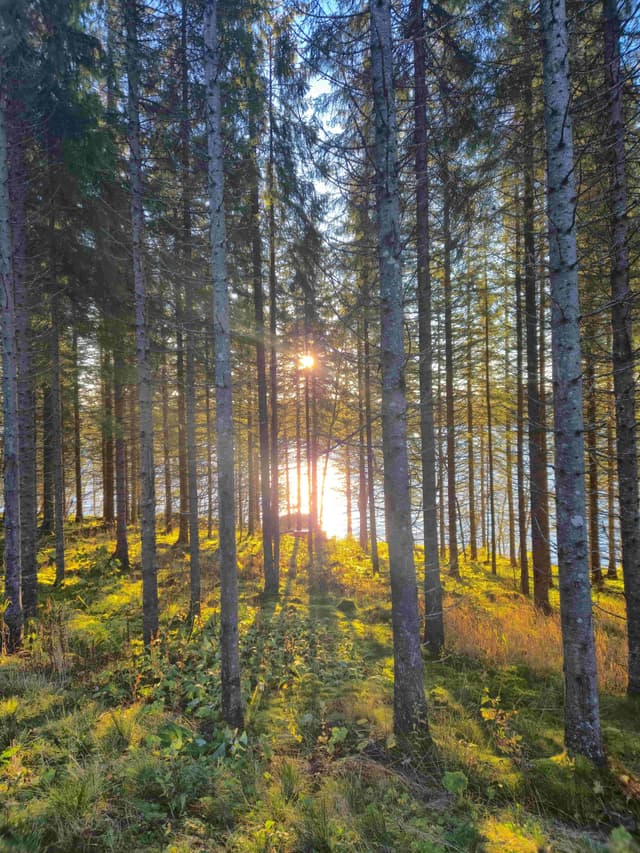
Imagine an evening in the northern landscape. The light is low, almost blue. A stream winds through the grass, quiet but alive. The air is cool, and everything seems a little more open, a little more receptive.
There, at the water's edge, stands a horse.
It does not move. It does not look directly at you, but you notice it all the same. It is beautiful, in a way that is hard to explain. Not flashy, not overwhelming, simply present.
You know you ought to move on.
But you remain standing.
And in this moment, before anything happens, before a choice is made, lies the whole heart of the tale. Not in the drowning, not in the tragedy, but in the pull. In the space between the known and the unknown, between safety and risk.
The bäckahästen does nothing.
It waits.
And that is precisely why it is so dangerous.
Sources
Veronica Lundgren, Hästen med de många namnen (2012)
Hästoffer i den fornnordiska religionen (DiVA publication)
Ørnulf Hodne, Norsk folketro (Cappelen, 1999)
Reimund Kvideland and Henning K. Sehmsdorf, Scandinavian Folk Belief and Legend (1991)