In world history, few cultures have woven together as complex and mysterious a symbiosis of symbolism and magic as the Norse people. Among their diverse traditions and beliefs, bind runes stand as one of the most fascinating and enigmatic practices. These intricate symbols, often used for both decorative and magical purposes, have gained new interest and understanding among modern scholars and enthusiasts.
Historical context
Bind runes have their origin in the Norse culture that flourished in Scandinavia and the surrounding regions from the 8th to the 11th century. The runes themselves were the writing system used by these people, but bind runes represented an extension of this tradition to include symbolism, magic and rituals.
Unlike the alphabetical use of runes to convey words and messages, bind runes involved the overlapping, crossing and combining of runes to create a unique visual form. These complex patterns were not only aesthetically pleasing, but also believed to possess power and meaning on a deeply magical and symbolic level.
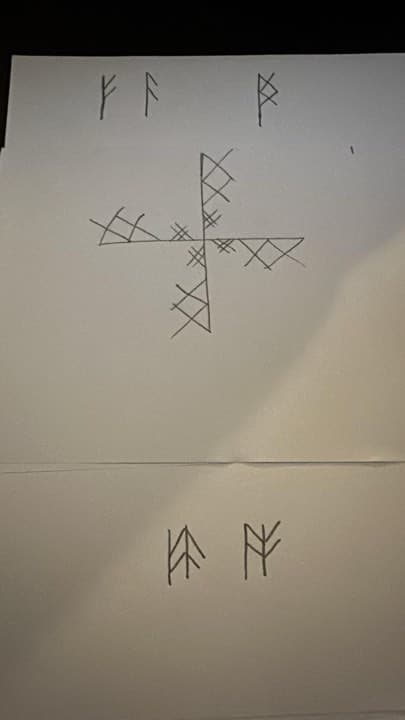
Each rune in the Norse alphabet had its own symbolic meaning and associated powers. For example, "Fehu" represented prosperity and material wealth, while "Ansuz" was linked to wisdom and communication. When these runes were combined into bind runes, their properties and powers would be amplified and woven together in a unique way. In the illustration, you can see interpretations of how this bind rune might look. It is important to note that a bind rune can take on several meanings depending on how it is composed. This also means that a "positive" rune can take on "negative" connotations.
Interestingly, bind runes also had a deep connection with Norse mythology and cosmology. The patterns could mirror the world tree, Yggdrasil, or even represent the various gods and powers that were central to Norse belief.
Use and practice
Bind runes were used in a number of ways in Norse society. They could be engraved on weapons and tools to grant strength and protection, or carved into runestones as a form of magical communication with the divine. They were also used in rituals and ceremonies to invoke specific powers or to ask for protection and guidance.
In addition to their practical application, bind runes were also a part of the daily life of the Norse people. They could be found carved into houses and furniture as protection against evil spirits, or even embroidered onto clothing as a form of personal amulet.
While bind runes were gradually forgotten after the Christian conversion of Scandinavia, they have experienced a renaissance in modern times. With growing interest in Norse mythology, symbolism and magic, scholars and enthusiasts have begun to explore these ancient practices anew.
Modern practitioners of Norse spirituality and magic use bind runes as a tool to explore the deep symbolism and to connect with the ancient powers and wisdom they represent. They are also used in artistic contexts, as inspiration for tattoos, jewelry and other works of art.
Bind runes stand as a fascinating example of the complexity and depth of Norse culture. Through these intricate symbols, people could communicate with gods, invoke powers and protection, and explore the deepest layers of Norse mythology and cosmology.
While our understanding of bind runes is still incomplete, modern research and exploration continue to shed light on these ancient practices. They remain a reminder of the rich heritage of the Norse people and the timeless power of symbolic and magical practice.