Drumming has been an integral part of shamanic ceremonies for thousands of years, and plays a central role in both the musical and spiritual aspects of these practices. This article will explore the diverse traditions of drumming in shamanism, with a focus on both musical elements and their spiritual significance. We will look more closely at different cultures, including Sami and Norse tradition, as well as the Hungarian shamanic tradition.
The role of the drum in shamanism
Drumming in shamanic ceremonies serves several important purposes:
Inducing trance: The repetitive rhythm helps the shaman and the participants enter altered states of consciousness.
Communication with the spirit world: The drum is often regarded as a tool for calling on spirits and guides.
Healing: Drum rhythms are used in healing rituals to restore balance and harmony.
Creating sacred space: The sound of the drum often marks the beginning and end of a ceremony, and defines the sacred space.
Transmission of cultural knowledge: Drum rhythms may contain coded messages and cultural narratives.
Musical aspects of shamanic drumming
From a musical perspective, shamanic drumming is characterised by several elements:
Rhythmic patterns
Shamanic drum rhythms are often simple and repetitive, but can vary considerably between different cultures. Some common patterns include:
A steady, monotonous rhythm (often around 180-220 beats per minute)
Varying intensity and tempo to guide the participants' experience
Complex polyrhythms in some traditions
Types of drums
Different cultures use different types of drums in shamanic ceremonies:
Frame drums: Common in many shamanic traditions, including Sami and Norse
Double-headed drums: Used in some Siberian traditions
Water drums: Particularly associated with the Yupik people of Alaska
Playing techniques
Shamanic drumming often involves specific playing techniques:
Varying striking techniques to produce different tones and overtones
The use of drumsticks or hands, depending on the tradition
The incorporation of rattling or bells in some cultures
Spiritual aspects of shamanic drumming
From a spiritual perspective, drumming in shamanic ceremonies has deep and diverse meanings
The drum as a world tree
In many shamanic traditions the drum is seen as a representation of the world tree or axis mundi - the axis that connects the various worlds. The sound of the drum acts as a ladder or bridge between these worlds.
The drum as a living being
Many shamans regard the drum as a living being with its own spirit. The drum can be seen as a partner or guide in the shaman's work.
Drum rhythms as a cosmic language
The rhythms played on the drum can be interpreted as a cosmic language that communicates directly with the spirit world. Different rhythms may have specific meanings or functions in the ceremony.
Drumming in various shamanic traditions
Sami tradition
In Sami shamanism the drum, known as the "runebomme" or "goavddis", plays a central role. The Sami drum is usually a frame drum made of reindeer hide stretched over a frame of birch or pine.
The surface of the drum is often decorated with symbols representing various aspects of Sami cosmology, including gods, spirits, and forces of nature. These symbols act as a map for the shaman's journey in the spirit world.
The rhythms used in Sami shamanism are often simple and repetitive, designed to induce trance and facilitate communication with the spirit world. The shaman, known as a noaidi, uses the drum both as a navigation tool and as a means of channelling healing energies.
Norse tradition
In Norse shamanism, often associated with the practice of seid, drumming was also an important part of ritual practices. Although there is less direct archaeological evidence of drumming in Norse shamanism compared to Sami tradition, historical and literary sources suggest that drums played a role in ritual practices.
Norse shamans, known as völver (feminine) or seidmenn (masculine), may have used drums in combination with chanting and other techniques to enter trance and communicate with the spirit world. The rhythms used in Norse shamanism may have been inspired by the rhythms of nature, such as waves, wind, or heartbeat.
Siberian tradition
Siberian shamanism, which encompasses many different ethnic groups, has a rich tradition of drumming. Siberian shaman drums are often large, double-headed drums made of animal hide stretched over a wooden frame.
The rhythms used in Siberian shamanism can vary considerably between different ethnic groups, but are often characterised by a gradual increase in tempo and intensity as the ceremony progresses. The drumming is often accompanied by vocal chanting and the use of bells or rattles.
Hungarian shamanism
The Hungarian shamanic tradition, known as the "táltos" tradition, has a particularly rich and living singing culture. An important part of this tradition is the "regös" - wandering bards or shamans who combine song, drumming, and storytelling.
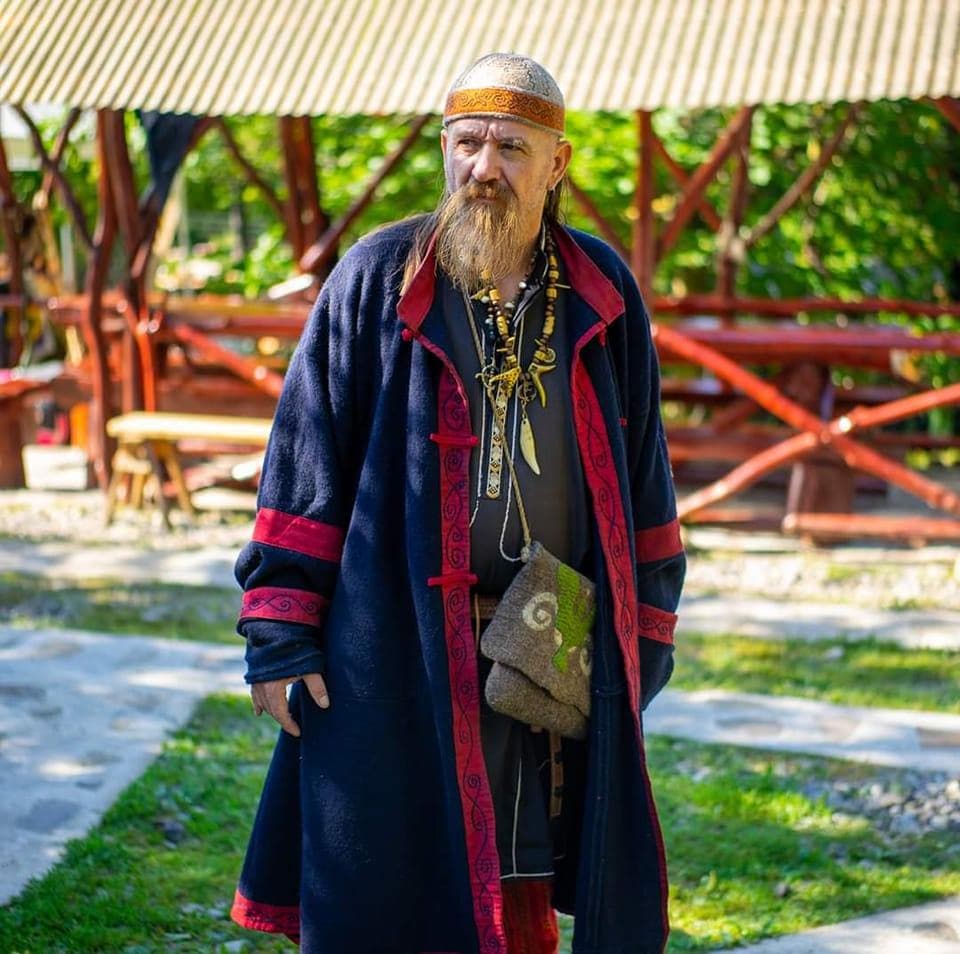
Regös Sziránszki József is a prominent modern practitioner of this tradition. His work has been instrumental in reviving and preserving ancient Hungarian shamanic practices.
Regös Sziránszki József
Regös Sziránszki József is a Hungarian musician, storyteller, and tradition-bearer who has dedicated his life to exploring and reviving the Hungarian shamanic tradition. His work combines elements of traditional Hungarian folk music with shamanic practices.
József's musical style is characterised by:
The use of traditional Hungarian instruments, including drums, flutes, and string instruments
The incorporation of "torokének" or throat singing, a technique that produces overtones
Rhythmic patterns inspired by ancient Hungarian rituals and the cycles of nature
Lyrics that draw on Hungarian folklore and shamanic cosmology
József has played an important role in bringing attention to the Hungarian shamanic tradition both nationally and internationally. His performances and workshops have helped many to rediscover this rich cultural heritage.
Rhythmic patterns in shamanic drumming
Rhythmic patterns in shamanic drumming vary considerably between different cultures and traditions. Some common patterns include:
Monotonous rhythm
A steady, repetitive rhythm of around 180-220 beats per minute is common in many shamanic traditions. This rhythm is designed to induce trance and alter states of consciousness. Example:
| 1 & 2 & 3 & 4 & |
| X X X X X X X X |
Heartbeat rhythm
A rhythm that imitates the heartbeat is often used in healing rituals. This rhythm can vary in tempo to guide the patient's state. Example:
| 1 & 2 & 3 & 4 & |
| X . X . . . . . |
Galloping rhythm
A rhythm that imitates the sound of a galloping horse is common in some Siberian and Central Asian traditions. This rhythm is often associated with the shaman's journey between worlds. Example:
| 1 & 2 & 3 & 4 & |
| X . X X . . X X |
Polyrhythmic patterns
In some African and South American traditions, complex polyrhythmic patterns are used. These can involve several drums playing different rhythms simultaneously. Example:
Drum 1: | X . X . X . X . |
Drum 2: | . X . X . X . X |
Drum 3: | X . . X . . X . |
Modern applications and research
In recent years there has been growing interest in shamanic drumming both within alternative medicine and scientific research. Studies have begun to explore the potential therapeutic effects of shamanic drumming, including its impact on stress, anxiety, and depression.
Some researchers have investigated the neurophysiological effects of shamanic drumming. Preliminary studies suggest that repetitive drumming may have measurable effects on brainwave patterns, and may induce altered states of consciousness.
At the same time, there has been a flourishing of modern shamanic practices and "drum circles" that incorporate elements of traditional shamanic drumming. These practices are often adapted for a modern, Western audience and are frequently combined with other healing modalities.
Preserving and passing on traditions
While interest in shamanic drumming is increasing, it is important to be aware of the need to preserve and respect the original traditions. Many indigenous communities are working actively to preserve and pass on their shamanic practices, including drumming traditions.
Organisations and individuals such as Regös Sziránszki József play an important role in this work. Through performances, workshops, and teaching they help to ensure that these rich traditions are not lost, but continue to evolve and adapt in modern contexts.
Drumming in shamanic ceremonies represents a rich and diverse tradition that spans cultures and eras. From the simple, repetitive rhythms used to induce trance, to the complex polyrhythms that tell cosmic stories, the drum plays a central role in the shaman's work.
Whether it is the Sami runebomme, the Siberian double-headed drum, or the Hungarian regös songs, the drum acts as a bridge between worlds, a tool for healing, and a carrier of cultural knowledge. In the hands of skilled practitioners such as Regös Sziránszki József, these traditions continue to develop and find new expressions in the modern world.
While scientific research is beginning to shed light on the potential therapeutic effects of shamanic drumming, it is important to remember the deep spiritual and cultural significance these practices have for many indigenous communities. Future exploration and application of shamanic drumming should therefore balance scientific curiosity with cultural sensitivity and respect.
Whatever form it takes, the drum remains a powerful tool in the shaman's arsenal - a rhythmic pulse that connects past and present, the physical and the spiritual, the human and the cosmos.