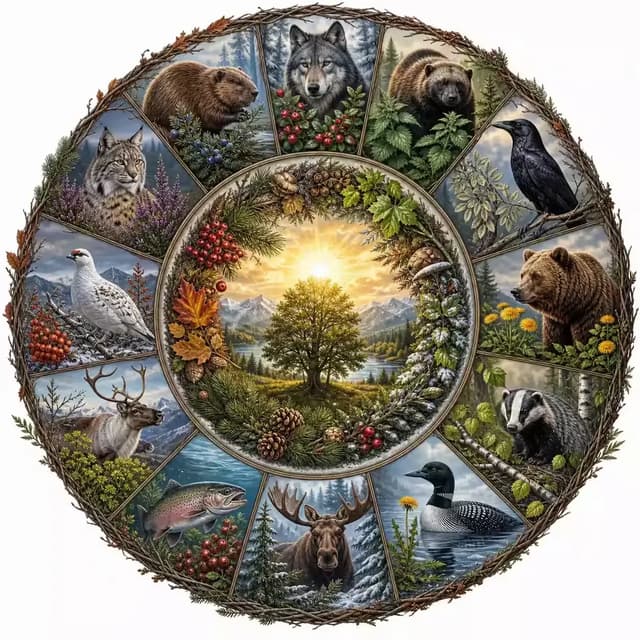
Dreams have fascinated people since the dawn of time. We wake in the morning with images, feelings and stories that can be as vivid as reality, and yet so different from everyday life. In the shamanic tradition, dreams are not just random nightly experiences, but sacred journeys to other worlds, encounters with spirits, ancestors and power animals – and guides along life's path.
Shamanism, with its roots in indigenous wisdom across the world, sees dreams as a natural part of life, and as a doorway to the spirit world. Dreams can give insight, healing and guidance – both to the individual and to the community. By learning to interpret and work with their dreams, one can develop a deeper understanding of oneself, one's challenges and one's possibilities.
Dreams as a bridge between worlds
In the shamanic tradition, dreams are far more than random nightly experiences. They are bridges between the physical and spiritual world, and portals to encounters with spirits, ancestors and power animals. Many shamanic cultures, from Siberia to South America, have a deep respect for dreams and regard them as just as real as waking life.
Dreams can be visions, warnings, healing messages or encounters with spiritual guides. In some cultures the shaman dreams on behalf of the entire community, and interprets the dreams to find solutions to challenges, illness or conflicts. Dreams can also be a way to make contact with the ancestors, or to receive advice from the spirit world.
Dreams as sources of healing and insight
In the shamanic tradition, dreams are used actively for healing and self-development. Dreams can show us what is out of balance in our lives, and which wounds or patterns need attention. Through dream work one can experience being healed or finding new sides of oneself.
Shamans and dream workers often encourage exploring even the most uncomfortable dreams, because they can contain important messages about what we need to process or release. Dreams can also be a source of creativity, inspiration and new ideas – and can help us find our own unique path in life.
The dream body and the spiritual journey
In the shamanic tradition one often speaks of the "dream body" or the "free soul" – the part of us that travels outside the body in dreams and visions. This body can meet spirits, visit other worlds, or gain insight about the future or the past.
Some shamans learn to journey consciously in dreams, and can use this ability to help others with healing or guidance. Being aware in one's dreams, or being able to direct the dream, is often called "lucid dreaming" – a state in which one is aware that one is dreaming, and can influence the dream's content.
Dreams as guides
Dreams can be like an inner compass needle – they show us which direction we should go, which choices we should make, or which sides of ourselves we should explore. In the shamanic tradition it is common to see dreams as messages from the soul or the spirit world, and as guides along life's path.
Dreams can give us insight into our own needs, wishes and challenges. They can also warn us of danger, or show us which strengths we have but perhaps do not use enough. By interpreting and working with their dreams, one can develop a deeper understanding of oneself, and find new ways to meet life.
Dreams as community guides
In many shamanic cultures, dreams are shared in community, and interpreted by elders or shamans. This can strengthen the bonds between people, and give the community insight into challenges or opportunities. A single dream can be enough to change the life of an entire village – for example by revealing a new hunting ground, a source of health, or a warning of danger.
Dreams can also be a source of creativity and innovation – many artists, scientists and inventors have received important ideas through dreams. In the shamanic tradition it is common to see dreams as a source of wisdom and inspiration, and as a way to forge bonds with nature and the spirit world.
Create a sacred space
To benefit from dream work, it is important to create a safe and sacred space where one can sleep and dream. This can be as simple as tidying the bedroom, lighting a candle, or placing a crystal or a small object of special meaning on the nightstand. Some use incense, chanting or a short meditation before going to bed, to set an intention to receive guidance or healing in dreams.
Set an intention before you fall asleep
One of the most important techniques in shamanic dream work is to set an intention before you fall asleep. This can be a question you want answered, a theme you want to explore, or a desired experience in the dream. You can say the intention aloud, write it down in a journal, or visualize it while lying in bed.
This practice is often called "dream incubation" – consciously calling forth a dream about a specific theme or question. Historically, people have used this technique to get advice about health, love, or life choices. In the shamanic tradition it is common to use ritual acts, such as praying, singing, or visualizing a symbol, to strengthen the intention.
Write down your dreams
One of the simplest and most effective ways to work with your dreams is to keep a dream calendar or dream journal. Place a notebook and a pen by the bed, and write down your dreams as soon as you wake. It is important to note both images, feelings, and any symbols or recurring themes.
By following the dreams over time, you can discover patterns, recurring symbols or feelings that can give insight into your inner life. The dream journal can also be a tool for reflecting on how the dreams change, or how they can give advice about what you need to process or explore.
Interpreting symbols and feelings
In the shamanic tradition, dreams are deeply personal, and the symbols can have different meanings for different people. It is therefore important to listen to your own intuition when interpreting your dreams. Start by noting the most important symbols or events in the dream, and write down which associations you have to them.
You can ask yourself: What does this symbol mean to me? What feelings does it evoke? Is there something I recognize from my own life? Dream interpretation is not about finding one correct interpretation, but about exploring possible meanings, and listening to what the dream wants to tell you.
Return to the dream
Another powerful technique is to return to the dream through visualization or a drum journey. Sit or lie down, close your eyes, and imagine that you enter the dream again. You can ask the dream figures for advice, or explore the dream landscape to find new answers or insights.
This technique can be especially useful if you have had a strong or incomprehensible dream and want more clarity. You can also use drumming, rattling or music to come into a meditative state, and more easily enter the dream landscape.
Sharing and interpreting together
In the shamanic tradition it is common to share dreams with others, and to interpret them together. This can be with friends, family, or in a dream group. By telling their dreams, one can gain new perspectives and insights, and strengthen the bonds with other people. What dreams have you had recently that you would like to share? Maybe you will get an exciting interpretation from someone that gives you a new understanding. Just remember that it is always your gut feeling that is the most correct. But even an interpretation that is completely wrong for you can give new perspectives, either for yourself or others.
You can also use creative methods, such as drawing, painting or dancing your dreams, to explore them in a new way. Some also use cards, such as tarot or oracle cards, to gain further insight into their dreams.
Create a ceremony
You can make a simple dream ritual to strengthen the connection with the dream world. For example, you can light a candle, incense, or make a small altar with symbols or objects that have meaning for you. Set an intention for the dream, and ask for guidance or healing. This can make the dream work more meaningful and sacred, and help you come into contact with your inner wisdom.
Lucid dreaming and visions
Some shamanic traditions speak of "dreaming with open eyes" – that is, experiencing visions or spiritual experiences in a waking state. This can happen through meditation, a drum journey, or by being in nature and letting the mind flow freely. Try to be present in the moment, and open yourself to receive insight or guidance from the spirit world.
Shamanic dream work
Dream work is a journey into the inner landscape – a journey that can give insight, healing and guidance. In the shamanic tradition, dreams are not just random images, but sacred messages from the soul or the spirit world. By learning to interpret and work with their dreams, one can develop a deeper understanding of oneself, and find new ways to meet life.
Dreams can be like an inner compass needle – they show us which direction we should go, which choices we should make, or which sides of ourselves we should explore. They can also warn us of danger, or show us which strengths we have but perhaps do not use enough. By interpreting and working with their dreams, one can develop a deeper understanding of oneself, and find new ways to meet life.
Dream work is not about finding one correct interpretation, but about exploring possible meanings, and listening to what the dream wants to tell you. It is about being curious, open and respectful towards the dreams, and letting them be guides along life's path.
Dream work in a modern world
In today's world, where many live a busy and stressful life, dream work can be a source of calm, insight and self-development. By learning to interpret and work with their dreams, one can find new answers to questions, process feelings, and develop a deeper contact with oneself and the spirit world.
Dream work can also be a way to strengthen the bonds with other people, through sharing and joint interpretation. In a dream group one can gain new perspectives and insights, and experience that one is not alone in one's challenges or wishes.
How to get started?
Create a safe and sacred space for dreams. Tidy the bedroom, place a crystal or a small object of special meaning on the nightstand, and use incense or hymns before you fall asleep.
Keep a dream journal. Write down your dreams as soon as you wake, and note both images, feelings and symbols.
Set an intention before you fall asleep. Ask that the dream give you insight or guidance about a specific theme or question.
Interpret your dreams. Note the most important symbols or events, and write down which associations you have to them.
Return to the dream through visualization or meditation. Sit or lie down, close your eyes, and imagine that you enter the dream again.
Share your dreams with others. Tell your dreams to friends, family or in a dream group, and interpret them together.
Use creative methods. Draw, paint or dance your dreams, or use music to explore them in a new way.
Make a dream ritual. Light a candle, incense, or make a small altar with symbols or objects that have meaning for you.
Dream with open eyes. Try to be present in the moment, and open yourself to receive insight or guidance from the spirit world, even in a waking state.
Dreams are more than just nightly experiences – they are guides along life's path, sources of insight, healing and self-development. In the shamanic tradition, dreams are sacred journeys to other worlds, encounters with spirits, ancestors and power animals, and messages from the soul or the spirit world.
By learning to interpret and work with their dreams, one can develop a deeper understanding of oneself, and find new ways to meet life. Dream work is about being curious, open and respectful towards the dreams, and letting them be guides along life's path.
References
Eliade, M. (2004). Shamanism: Archaic Techniques of Ecstasy. Princeton University Press.
Harner, M. (1990). The Way of the Shaman. HarperOne.
Winkelman, M. (2010). Shamanism: A Biopsychosocial Paradigm of Consciousness and Healing. Praeger.
Rock, A. J., & Krippner, S. (2011). Demystifying Shamans and Their World: A Multidisciplinary Study. Imprint Academic.
Walsh, R. (2007). The World of Shamanism: New Views of an Ancient Tradition. Llewellyn Publications.
Hultkrantz, Å. (1992). Shamanic Healing and Ritual Drama: Health and Medicine in Native North American Religious Traditions. Crossroad.
Ingerman, S. (1991). Soul Retrieval: Mending the Fragmented Self. HarperOne.
Tedlock, B. (2001). The Woman in the Shaman's Body: Reclaiming the Feminine in Religion and Medicine. Bantam.
Krippner, S. (2011). Demystifying Shamans and Their World: An Interdisciplinary Study. Imprint Academic.
Narby, J., & Huxley, F. (2001). Shamans Through Time: 500 Years on the Path to Knowledge. Tarcher.
Vitebsky, P. (2001). The Shaman: Voyages of the Soul – Trance, Ecstasy and Healing from Siberia to the Amazon. University of Oklahoma Press.
Lewis-Williams, J. D. (2002). The Mind in the Cave: Consciousness and the Origins of Art. Thames & Hudson.
Metzner, R. (1998). The Well of Remembrance: Rediscovering the Earth Wisdom Myths of Northern Europe. Shambhala.
McKenna, T. (1992). Food of the Gods: The Search for the Original Tree of Knowledge. Bantam.
Krippner, S., & Friedman, H. L. (2010). Mysterious Minds: The Neurobiology of Psychics, Mediums and Other Extraordinary People. Praeger.
Abram, D. (1996). The Spell of the Sensuous: Perception and Language in a More-than-Human World. Pantheon Books.
Jung, C. G. (1964). Man and His Symbols. Doubleday.
Reed, H. (1976). Dream Incubation: The Induction of Psychophysiological Out-of-Body Experiences. Dream Network Journal.
Price, S., & Haynes, D. (2019). Dreamworks: The Art of Working with Dreams. Independently published.
Villoldo, A., & Perlmutter, D. (2011). Power Up Your Brain: The Neuroscience of Enlightenment. Hay House.