Indigenous thinking and the modern Western mindset represent two fundamentally different approaches to the world, to nature, and to humanity's place in the universe. These differences are clearly expressed in belief systems, where, for example, shamanism, a common practice among many indigenous peoples, differs significantly from the Abrahamic religions such as Christianity, Islam, and Judaism. Understanding these differences is crucial for avoiding mistaken comparisons and for recognising the unique perspectives embedded in indigenous traditions.
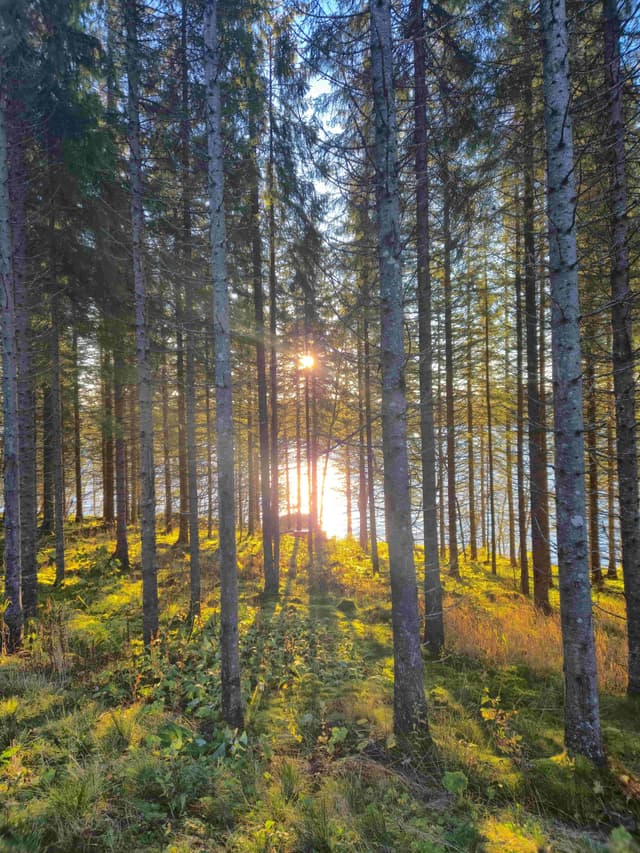
Nature as a living force vs. nature as a resource One of the most striking differences between indigenous thinking and modern Western thought is how nature is understood. In many indigenous traditions, including shamanism, nature is seen as a living, spiritual force. Trees, rivers, mountains, and animals are regarded as ensouled beings with their own rights and roles in the balance of the universe. This stands in contrast to the modern Western view, where nature is often seen as a resource that can be exploited for human progress. This difference in perspective affects how different cultures interact with the environment; where indigenous peoples often seek to maintain a harmonious balance, Western thought can tend towards dominance and control over nature.
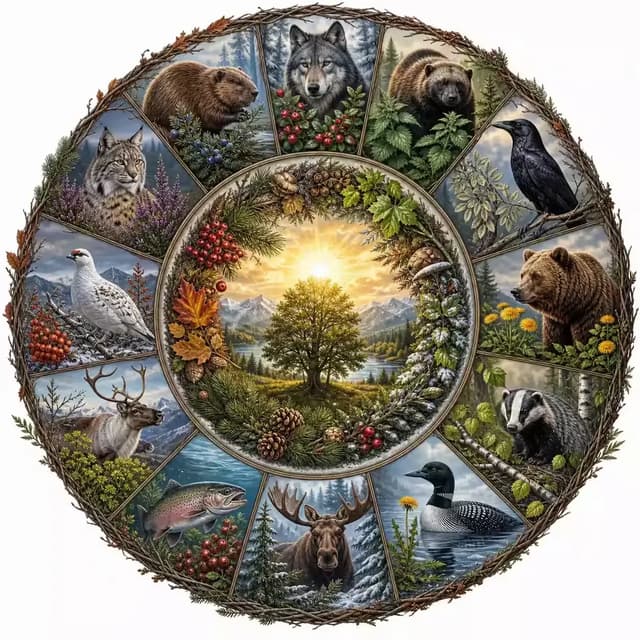
Cyclical time vs. linear time The understanding of time is another central difference. In many indigenous traditions, time is cyclical, with an emphasis on repetition and rebirth. The cycles of nature, such as the seasons, day and night, birth and death, are seen as parts of a continuous process in which everything is interconnected. By contrast, modern Western thought often operates within a linear time frame, where time is seen as a forward-moving straight line towards the future. This can also be seen in religions such as Christianity, where history moves from creation towards a final day of judgement. This linear understanding of time supports the idea of constant progress and development, in contrast to the cyclical stability and repetition of indigenous thinking.
Holistic worldview vs. dualistic worldview Another significant difference lies in the worldview itself. Indigenous thinking is often holistic; the world is seen as an integrated whole in which everything is connected. This holistic view is reflected in shamanism, where everything from physical objects to spiritual beings is part of a complex web of relationships. Humans, animals, plants, and spirits are all part of the same universal unity. The modern Western mindset, on the other hand, is often dualistic, drawing a clear distinction between matter and spirit, good and evil, humanity and nature. This dualistic view is especially evident in the Abrahamic religions, where there is a strong division between the sacred and the profane, the heavenly and the earthly.
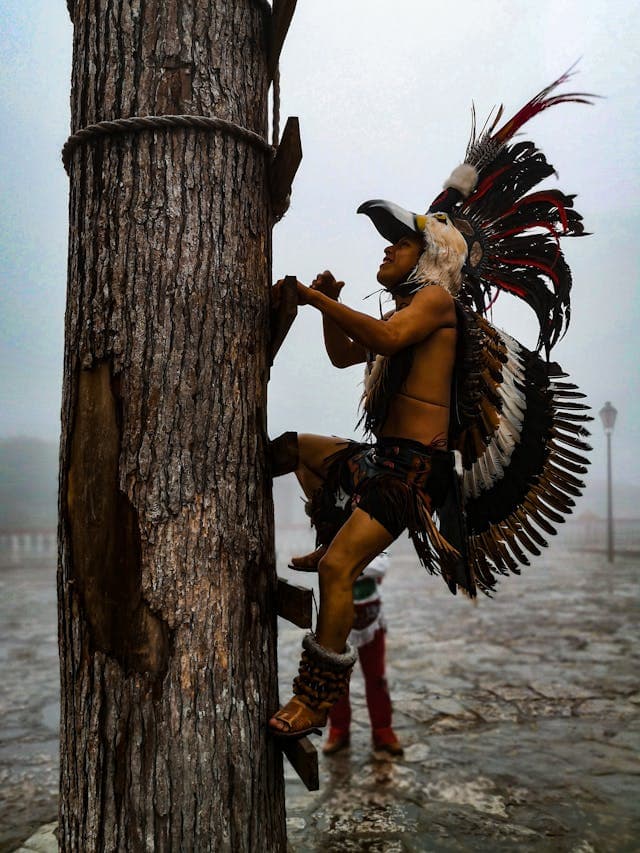
Shamanism vs. the Abrahamic religions: different approaches to the sacred Shamanism, which is part of many indigenous traditions, is a practice that focuses on direct communication with the spirit world. The shaman acts as an intermediary between the physical world and the spirit world, and this communication is often connected to healing, hunting, and the maintenance of balance in the community. This stands in contrast to the Abrahamic religions, which often have a strictly hierarchical structure with a distant, transcendent God who is mediated through sacred texts and institutions. Where shamanism is flexible and continually adapts to the changing conditions of nature, the Abrahamic religions are characterised by dogmatics and fixed doctrines that are intended to be unchanging.
Different perspectives on morality and society These differences in belief systems also affect morality and the organisation of society. In many indigenous traditions, morality is connected to maintaining balance and harmony, both within human society and in relation to nature. Obedience to the laws of nature and respect for all living beings are central principles. Modern Western societies, strongly influenced by the Abrahamic religions, often have a morality that is codified in laws and rules, with a focus on the individual's relationship to a higher power and on the individual's rights and duties within a hierarchical society.
Sources
Hultkrantz, Åke. Shamanism and Traditional Belief Systems Among Indigenous Peoples. New York: E.J. Brill, 1997.
Hultkrantz explores shamanism in various indigenous societies, focusing on their worldview and how it differs from Western religious traditions. Smith, Linda Tuhiwai. Decolonizing Methodologies: Research and Indigenous Peoples. London: Zed Books, 1999.
Smith addresses how indigenous peoples' mindset and values differ from Western scientific and cultural thinking, and how these differences should be respected in research and policy. Deloria, Vine Jr. God Is Red: A Native View of Religion. Golden: Fulcrum Publishing, 1994.
Deloria, a prominent indigenous author, compares indigenous religious perspectives with Western Christian traditions, focusing on how time, nature, and spirituality are perceived differently. Ingold, Tim. The Perception of the Environment: Essays on Livelihood, Dwelling and Skill. London: Routledge, 2000.
Ingold discusses how different societies relate to nature, with particular emphasis on the differences between Western and indigenous conceptions of the environment and their place in the world. Eliade, Mircea. Shamanism: Archaic Techniques of Ecstasy. Princeton: Princeton University Press, 1964.
A classic study of shamanism that compares various shamanic practices around the world, and which also sheds light on the differences between shamanism and Western religions.