Fylgja, a concept from Norse mythology, represents a spirit or being that follows and protects a person throughout life. The word "fylgja" comes from the Old Norse word meaning "to follow". These spiritual companions are often seen as personifications of a person's destiny and can provide insight, protection and guidance. The fylgja can manifest in various forms, often as animals, but also as humans. To fully understand the significance of the fylgja, we must delve into the historical context of Norse religion and mythology.
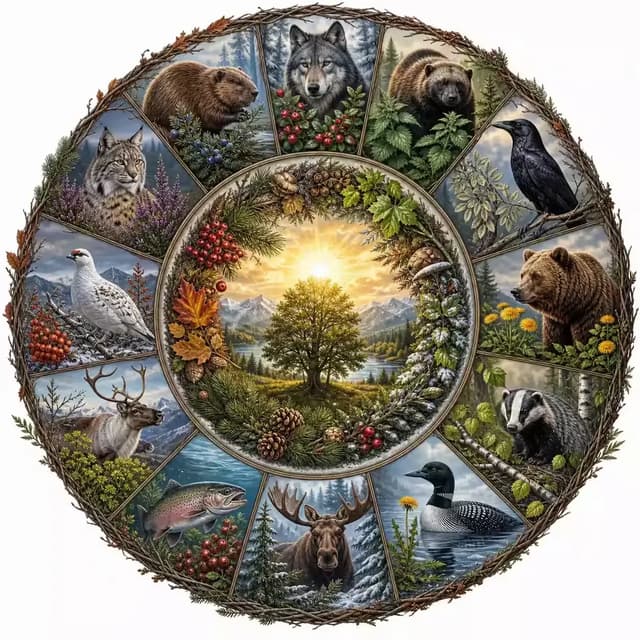
Fylgja in Norse mythology In the Norse world, the belief in the fylgja was deeply integrated into the religious and cultural life of society. The fylgja was closely tied to a person's life energy and destiny. It often manifested in dreams or visions, especially in situations involving life-changing decisions or dangers. The fylgja could appear as an animal that represented certain traits or qualities of the person. For example, if a fylgja manifested as a wolf, it could indicate strength, loyalty and a strong protective role.
Connection to gods and goddesses Fylgjas also have connections to specific gods and goddesses in Norse mythology. These connections can provide further insight into the role and significance of the fylgja.
Frigg Frigg, Odin's wife and one of the foremost goddesses in Norse mythology, is known for her wisdom and ability to see destiny. As protector of the home and family, fylgjas connected to Frigg can represent protection, care and family values. Frigg is also known for having knowledge of the destinies of all beings, but she does not share this knowledge with anyone, which underscores the fylgja's role as one who understands destiny but guides discreetly.
Odin Odin, the mighty Allfather, also has a connection to the fylgja. As a god of wisdom, war and magic, fylgjas connected to Odin can represent deep knowledge, fighting spirit and magical skills. Odin's own fylgjas, such as his ravens Huginn and Muninn, are examples of spirits that provide insight and information.
Freyja Freyja, the goddess of love, beauty and fertility, is also associated with the fylgja. As a powerful seidkona (a practitioner of seid, a form of Norse magic), fylgjas connected to Freyja can represent love, fertility and magical skills. Freyja's own ability to shapeshift and travel between worlds can also be reflected in the fylgjas' ability to manifest in different forms and guide their people through life's challenges.
Historical context Norse religion was animistic and polytheistic, with a complex pantheon of gods, jotnar, elves and other supernatural beings. The belief in the fylgja, as protective spirits, was an integrated part of this religious understanding of the world. The Norse peoples, such as the Vikings and Germanic tribes, believed that all people had a destiny predetermined by the Norns, the goddesses of fate, and the fylgja played an important role in guiding and protecting a person on their life path.
Comparisons with power animals, totem animals and family totems While the fylgja is a unique part of Norse tradition, there are similar concepts in other cultures, such as power animals, totem animals and family totems in Indigenous cultures.
Power animals In many Indigenous cultures, especially among Native Americans, power animals are spirits that provide protection, guidance and wisdom. These spirits can manifest as animals that have specific meanings and qualities. A bear can represent strength and healing, while an eagle can symbolise clarity and higher wisdom. Power animals resemble the fylgja in that they too provide protection and guidance, and they can also appear in dreams or visions.
Totem animals Totem animals are symbols that represent a group of people, such as a clan or a tribe, and their connection to particular animals. These animals have a collective meaning and are part of a larger spiritual tradition. Totem animals serve as protective spirits for the entire group and convey important cultural stories and values. Unlike the fylgja, which is individual, the totem animal is collective and tied to group identity.
Family totem The family totem resembles the totem animal, but it is tied to a particular family rather than an entire tribe. The family totem represents the family's spiritual heritage and protects the family members. It can also convey the family's stories, values and connections to nature. Just like the fylgja, the family totem can provide protection and guidance, but it is more collectively oriented, and tied to family identity.
Sueie and Noaidegàssi In the Sami tradition, there are parallels to the fylgja, known as sueie or noaidegàssi. These spirits function in ways similar to the fylgja, by following and protecting individuals. Sueie and noaidegàssi are part of Sami shamanism, in which spiritual guides and protectors play a central role. Sueie are spiritual protectors that can manifest in the form of animals, nature spirits or ancestral spirits. They provide protection, guidance and power to those they follow. Just like the fylgja, sueie can appear in dreams or visions and give important messages to the person. Noaidegàssi are spiritual helpers that assist Sami shamans, known as noaidis, in their spiritual work. These spirits can help the noaidi with healing, divination and spirit journeys. Noaidegàssi resemble the fylgja in that they too provide guidance and protection, but they are especially tied to the shaman's work and power.
Fylgja in Norse literature References to the fylgja are found in several Norse sagas and eddas. For example, in the saga of Hrafnkel Freysgoði, the fylgja appears in dream visions, and its form is believed to reflect the individual person's character and destiny. The fylgja can also change form and adapt to the situation, which makes it a dynamic and adaptable protector.
Fylgja in a modern context In today's society, where ancient traditions and spiritual practice are being rediscovered, many people find comfort and guidance in the idea of the fylgja. Modern spiritual practices often integrate the concept of the fylgja together with the ideas of power animals and totem animals, and see them as sources of personal insight and strength. People who seek spiritual guidance may experience meeting their fylgja through meditation, dream interpretation or other spiritual exercises.
Sources Price, N. (2002). "The Viking Way: Religion and War in Late Iron Age Scandinavia." Uppsala University. Eliade, M. (1964). "Shamanism: Archaic Techniques of Ecstasy." Princeton University Press. Tedlock, B. (2005). "The Woman in the Shaman's Body: Reclaiming the Feminine in Religion and Medicine." Bantam Books. Hultkrantz, Å. (1983). "The Religion of the American Indians." University of California Press.