The Icelandic stave runes, known as "galdrastafir" in Icelandic, are a fascinating part of Iceland's magical and cultural heritage. These mysterious symbols have a rich history that stretches back to the country's early settlement and have survived through centuries of cultural and religious change. Let us explore their origin, development and magical significance in depth.
Origin and historical context
The origin of the stave runes can be traced back to the first Norse settlers who came to Iceland in the 9th and 10th centuries. These Vikings brought with them a rich tradition of rune magic and Norse mythology. Archaeological finds date the earliest Icelandic runes to around 150 AD, indicating that this tradition was well established long before the settlement of Iceland.
The runes have their mythological origin in Norse cosmology. According to legend, the god Odin sacrificed himself by hanging from the world tree Yggdrasil for nine days and nine nights to receive the knowledge of the runes. This myth underlines the deep, spiritual significance the runes held in Norse culture.
The rune tradition that came to Iceland was part of a larger European runic system. The oldest known runic system, called the Elder Futhark, consisted of 24 signs. Around the 9th century, at the beginning of the Viking Age, this system was replaced by the Younger Futhark, which had 16 runes. It is this version that forms the basis of what we know today as Icelandic runes.
The development of stave runes
The stave runes, or galdrastafir, represent a uniquely Icelandic development of the runic tradition. These symbols are not merely simple runes, but complex combinations and modifications of runic signs. They developed over time, with roots in both Norse tradition and European medieval magic from the 15th and 16th centuries.
The development of stave runes happened gradually and was strongly influenced by Iceland's isolated geographic position. While mainland Europe underwent great cultural and religious changes, Iceland retained many of its old traditions for longer. This led to a unique blend of ancient Norse practices and more recent European magical traditions.
The stave runes were traditionally carved into wood, stone or metal, often with blood to activate their magical properties. This practice reflects the Norse understanding of magic as something that requires a sacrifice or an exchange of energy.
Magical foundation and practice
The magic on which the stave runes are based is deeply rooted in Norse shamanic practice and worldview. This magic, known as "seiðr" in Old Norse, involved rituals to influence fate, perform divination and communicate with the spirit world.
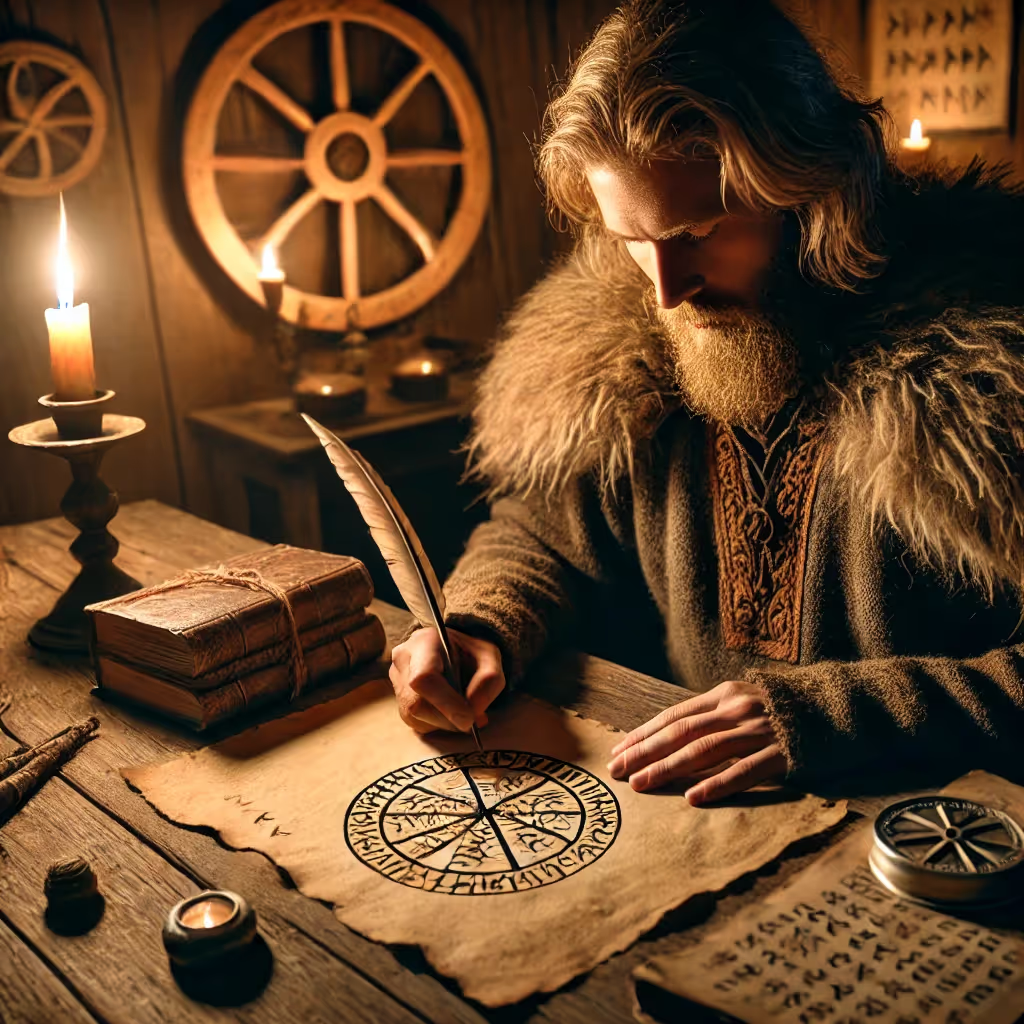
Central to this magical practice was the concept of "galdr", a form of magical song or incantation. Galdrastafir, or "magical staves", were visual representations of these incantations. Each stave was believed to have specific magical properties and was used for various purposes.
The practice of stave runes often involved complex rituals. For example, many staves had to be carved into specific materials, such as particular types of wood or metal. After carving, the formula usually required the symbols to be consecrated with blood, often from a specific source such as the little finger of the right hand. This use of blood symbolised the aspect of sacrifice that was central to runic knowledge, a reference to Odin's original suffering as he hung from Yggdrasil.
Types and meanings of stave runes
Icelandic stave runes come in many forms, each with its own specific purpose and power. Here are some of the best known and their meanings:
Aegishjalmur (Ægirshjálmur)
Known as the "Helm of Awe", this is perhaps the most famous stave rune in modern times. It was used to instil fear in enemies, protect warriors and ensure victory in battle. In the Norse poem Fáfnismál from the Poetic Edda, the fearsome dragon Fafnir uses this stave to protect his treasure from enemies.
Vegvisir
Also called the "Wayfinder", this symbol was designed to help the bearer through rough weather and storms, both literally and metaphorically. It was believed to help people find their way home in unfamiliar surroundings and through life's challenges. (The Vegvísir is first documented in the Huld manuscript from 1860.)
Draumstafir
This symbol represents the dream of unfulfilled wishes. It was used to influence dreams and gain insight into the future or hidden aspects of one's life.
Gapaldur and Ginfaxi
These two staves were used together, kept in the shoes during wrestling. Gapaldur was placed under the heel of the right foot, while Ginfaxi was placed under the toes of the left foot. Together they were meant to magically ensure victory in Icelandic wrestling (glíma).
Kaupaloki
This stave was used to bring success in trade and business. It was especially popular among merchants and traders.
Veldismagn
This stave is known for giving protection against evil, promoting good luck and bringing prosperity to the bearer.
See what they look like on Wikipedia.
Cultural significance and modern use
Although the use of stave runes was banned during the Christianisation of Iceland in the 16th century, these symbols have survived and experienced a renaissance in modern times. Today the stave runes are an important part of Iceland's cultural heritage and are often used in jewellery, tattoos and crafts.
Interest in these old symbols connects Icelanders to their ancestors and helps them understand the challenges and difficulties the first settlers faced. Although few today believe in their magical powers in a literal sense, the stave runes continue to fascinate both Icelanders and visitors with their rich history and symbolic meaning.
In modern times there has been a growing interest in stave runes, especially within neopagan and New Age movements. Many see these symbols as a way to restore the connection with nature and with their own spirituality. They are often used in meditation, personal development and as talismans for protection and strength.
Magical practices and rituals
The magical practices associated with stave runes were diverse and complex. Some of the most interesting include:
Galdr and Rúnar
Galdr refers to a form of magical song or incantation. Practitioners would chant specific verses charged with magical intention to manifest their wishes. Rúnar, or runes, were often used in connection with galdr. Each rune had symbolic meanings and was used for divination, protection and sorcery.
Seiðr
This was a type of Norse magic associated with shamanic practices. It involved rituals aimed at connecting with the spirit world, performing divination and influencing fate. Practitioners, often called seiðkona (shamans), would enter trance states to gain access to other worlds and communicate with spirits.
Dream work
Dreams were considered very important in Icelandic culture. People often believed they were omens of future events. There were specific staves and runes made to influence dreams. For example, the Sigil of Solomon, when carved into lignite and placed under the head, could help create pleasant and fulfilling dreams that would make a person wiser.
Protective magic
Many staves were used for protection. For example, the Lukkustafir stave was carried to avoid evil both at sea and on land. Vatnahlífir was a stave specifically designed to protect against drowning.
Challenges and controversies
The use of stave runes and other magical practices was not without controversy. With the arrival of Christianity in Iceland, conflicts arose between the old pagan traditions and the new religion. In 1592, Bishop Oddur Einarsson issued a decree requiring all Icelanders to convert to Lutheran orthodox Christianity. This decree demanded the abolition of everything connected to old practices, magic, healing methods and other old medical sciences.
The consequences of this decree were severe. In the 17th century, twenty people from Iceland were executed for practising sorcery. Anyone with knowledge of Icelandic symbols risked being branded a "sorcerer" or "witch". This period represents a dark time in Iceland's history, when many old traditions and knowledge were suppressed or lost.
Modern rediscovery and interpretation
In more recent times there has been a renewed interest in stave runes and Icelandic magic. This interest comes from several quarters:
Academic interest
Scholars and historians have shown increased interest in understanding and documenting these old traditions. Studies of old manuscripts and archaeological finds have shed new light on the use and meaning of stave runes.
Cultural revitalisation
Many Icelanders regard the stave runes as an important part of their cultural heritage. There has been a movement to rediscover and preserve this knowledge as part of Iceland's unique identity.
Spiritual practice
Within neopagan and New Age movements, stave runes have gained a renewed spiritual significance. Many use them in personal rituals, meditation and as symbols of personal growth and protection.
Artistic expression
Stave runes have inspired many artists and craftspeople. They appear in everything from jewellery design to tattoos and modern art installations.
Icelandic stave runes represent a blend of ancient Norse tradition, European medieval magic and uniquely Icelandic cultural expression. From their origin in the Viking Age, through centuries of development and suppression, to their modern rediscovery, these symbols have retained their power to fascinate and inspire.
The stave runes are more than just historical artefacts; they are living symbols that continue to evolve and find new meanings in our modern world. They represent a connection to the past, a source of cultural identity, and for some, a path to spiritual exploration and personal growth.
Whether one regards them as magical tools, historical curiosities or sources of artistic inspiration, it is clear that the Icelandic stave runes continue to play an important role in both Icelandic and global culture. They remind us of the rich, diverse and often mysterious heritage that underlies our modern world, and invite us to explore the deeper layers of meaning and symbolism that have shaped human culture through the millennia.
References:
Wikipedia. "Icelandic magical staves".
Guide to Iceland. "Icelandic Runes and Staves".
Andrea Shelley Designs. "Icelandic Magic Staves".
Panorama Glass Lodge. "A Guide to Galdrastafir, Icelandic Stave Symbols and Runes".
Arctic Adventures. "Iceland's Ancient & Mysterious Runes".