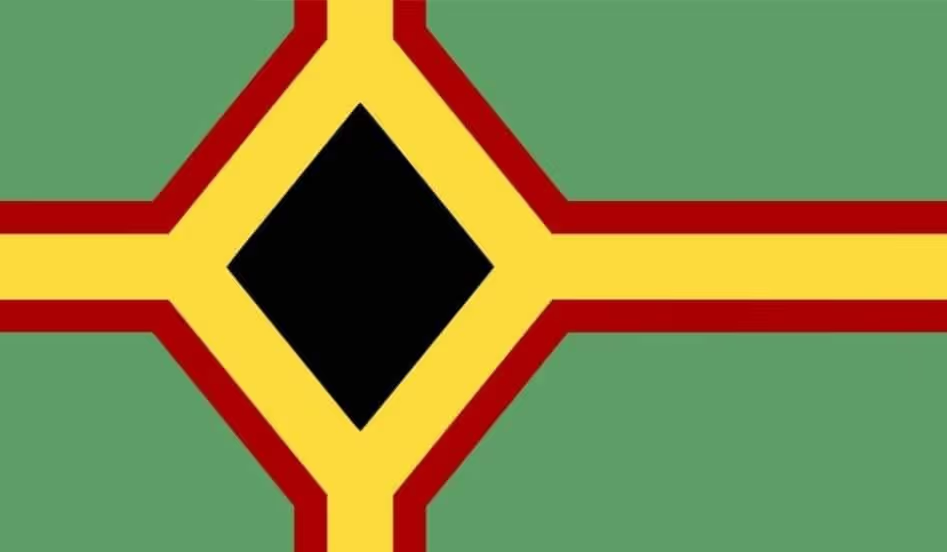
The Forest Finns are one of Norway's five national minorities, recognised as a Norwegian minority in 1998, together with the Kven, Jews, Roma and Romani people. This came as a consequence of Norway's ratification of the Council of Europe's Framework Convention for the Protection of National Minorities of 1995.
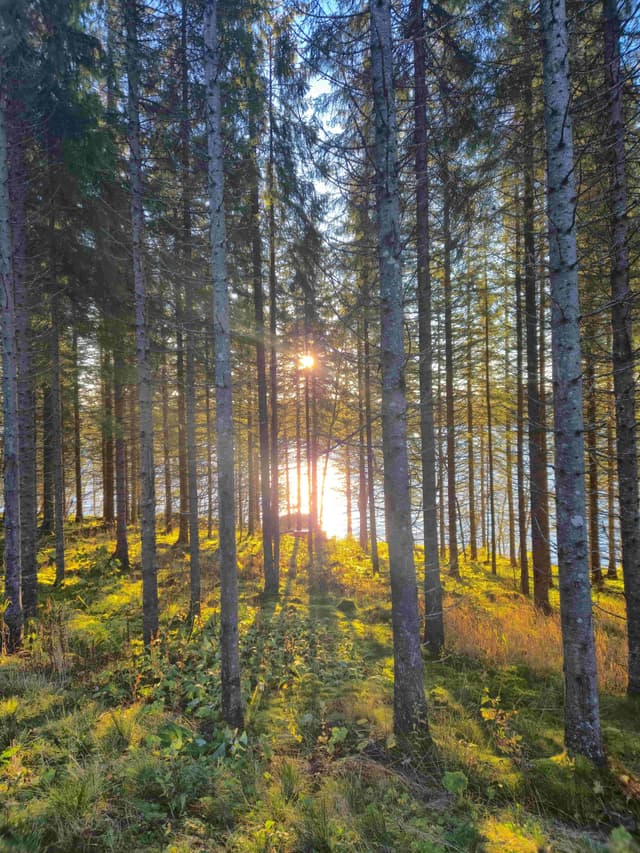
The Forest Finns came from the border regions of Savolax, Tavastland and Karelia. Personal, economic and societal reasons all played a part in their departure. Many were poor tenant farmers on the border with Russia, and they dreamed of having their own land and their own place to settle. As they journeyed through Finland and Sweden to the forest areas along the Swedish border in southern Norway, where they eventually settled, it was because the forest areas here resembled those they had come from. There was pine and spruce forest, berries and opportunities for hunting. The Forest Finn immigration took place over several periods, right up until the 1700s, and at that time Finnish was spoken in Finnskogen.
The Forest Finns were known for practising the land-intensive farming method of slash-and-burn cultivation. They burned down outlying land, then sowed rye in the ash. They continued this form of grazing practice until the 1800s, before switching over to arable farming. They were hard-working people with real Finnish sisu, and the sauna tradition naturally came with them too, in the form of the smoke sauna (savusauna).