In Sami mythology, where nature is alive and ensouled, the animals have often been given central roles in the stories about the order and cycle of the world. Among these animals stands Guorga, the crane, as the king of the birds and the herald of spring. His role is both practical and mythical: he leads the migratory birds back to Sápmi after the darkness of winter and serves as an intermediary between the world of the birds and the goddess Barbmoáhkká, mistress of the migratory birds.
Guorga's place in the Sami worldview
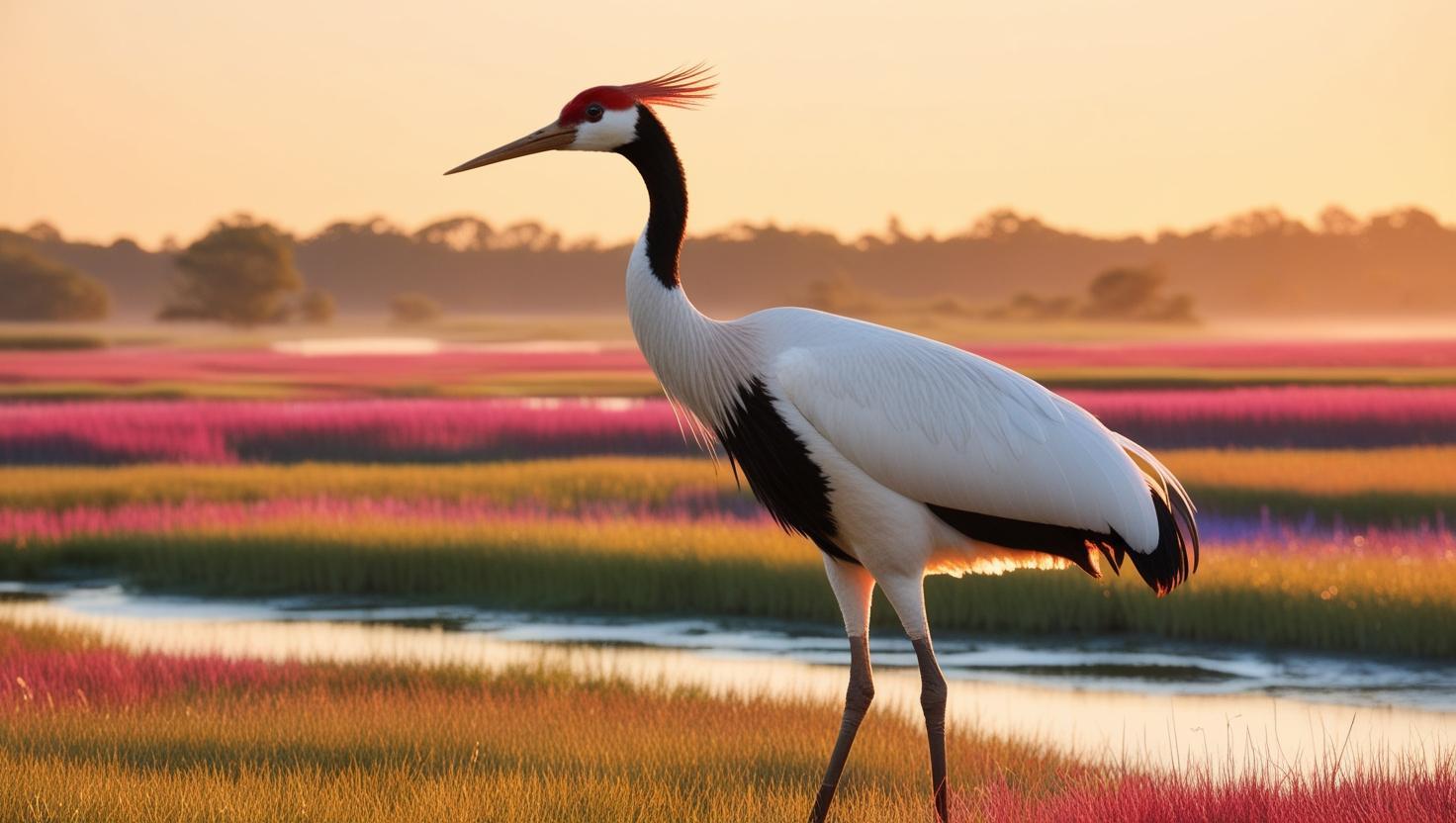
Guorga means crane in Sami, and in the mythology he is not merely a bird, but a symbol of renewal, hope and nature's eternal cycle. The crane is known for its majestic appearance and characteristic call, and through the centuries it has been a sign that winter is over and that life is returning to the landscape. Unlike the swan, which sang the sun's farewell song in autumn, the crane was the one who announced the coming of spring.
Guorga was often depicted on the runebommer – the drums of the Sami shamans – as a symbol of the king of the birds. On the drum, each symbol had its own meaning and function, and Guorga was an important sign for ensuring contact with the spirits of the birds and of nature.
The story of Guorga and Barbmoáhkká
One of the most well-known stories about Guorga concerns his responsibility as leader of the migratory birds. According to the myth, in winter the birds live in Barbmoriika, a sunny paradise far to the south. As spring approaches, it is Barbmoáhkká who summons the birds back to the north. But it is Guorga who leads them on the long journey back to Sápmi.
When the birds arrive, Guorga must meet Barbmoáhkká and render account: How many birds have survived the winter? How many have been lost on the journey? It is Barbmoáhkká who decides how many birds may return to the human world, and how many must remain behind in Barbmoriika. Guorga is thus not only a leader, but also a kind of negotiator and messenger between the world of the birds and the world of the gods.
This story illustrates how the Sami viewed nature as a system of mutual dependencies, in which animals, humans and gods were woven together in a web of responsibility and respect. Guorga was not merely a mythical figure, but also a symbol of the order of nature and of humanity's dependence on the movements and cycles of the animals.
Guorga in rituals and belief
In pre-Christian Sami belief, birds held a special place as helpers and messengers. The noaidi, the Sami shamans, could have helping spirits in animal form – often birds – called noaideloddi or sáivoloddi. These helpers could assist the noaidi in travelling between worlds and in communicating with the spirits.
Guorga, as king of the birds, was a natural choice as a symbol for such helping spirits. His role as leader and messenger made him an important figure in ritual contexts, especially in connection with the arrival of spring and the return of the migratory birds. It was common to give offerings to the gods and spirits to ensure that the birds returned in great numbers and that the balance of nature was maintained.
A tale from Varanger
In Varanger it is told of a noaidi who had Guorga depicted on his drum. Every spring, when the cranes returned, people gathered to hear their calls and to celebrate that winter was over. The noaidi beat the drum and asked Guorga to lead the birds safely back, and to intercede with Barbmoáhkká so that as many birds as possible might return to the north. This ceremony was both a prayer and a thanksgiving, and showed how important the birds – and Guorga – were to Sami culture and livelihood.
Guorga's significance today
Although much of the old Sami mythology has been lost or suppressed by Christianity, the memory of Guorga lives on in language, stories and research. His role as king of the birds and herald of spring is a powerful image of Sami respect for nature and of the understanding of humanity's place within a larger cycle.
Guorga reminds us that the rhythms of nature are not random, but follow laws and connections that are deeper than what we see on the surface. His story is a tale of leadership, responsibility and balance – values that remain relevant today.
References
NIBIO. (n.d.). Fugl i samisk tro og mytologi II. Fact sheet for the project "Fugleturisme i Midt- og Øst-Finnmark", "Naturarven som verdiskaper (M)".
Heimskringla.no. Læibolmai, Barbmo-akka og Junkerne (reproduction of older sources on Sami mythology).
Kolofon Bokhandel. Samisk mytologi og samisk religion (Jorg Aune).
NDLA. Samisk religion – Religion og etikk.