Far to the north, beneath the open sky and the endless plains, the Sami people have for centuries lived in close contact with nature. In this rich and living nature, the Sami have always known that they are not alone. Behind stones, in mountains, under the earth and even in the sea dwell the spirits – the guardians – who ensure that the balance between human, animal and plant is maintained. Among these spirits, few have been more respected and feared than the hálddit.
Who are the hálddit?
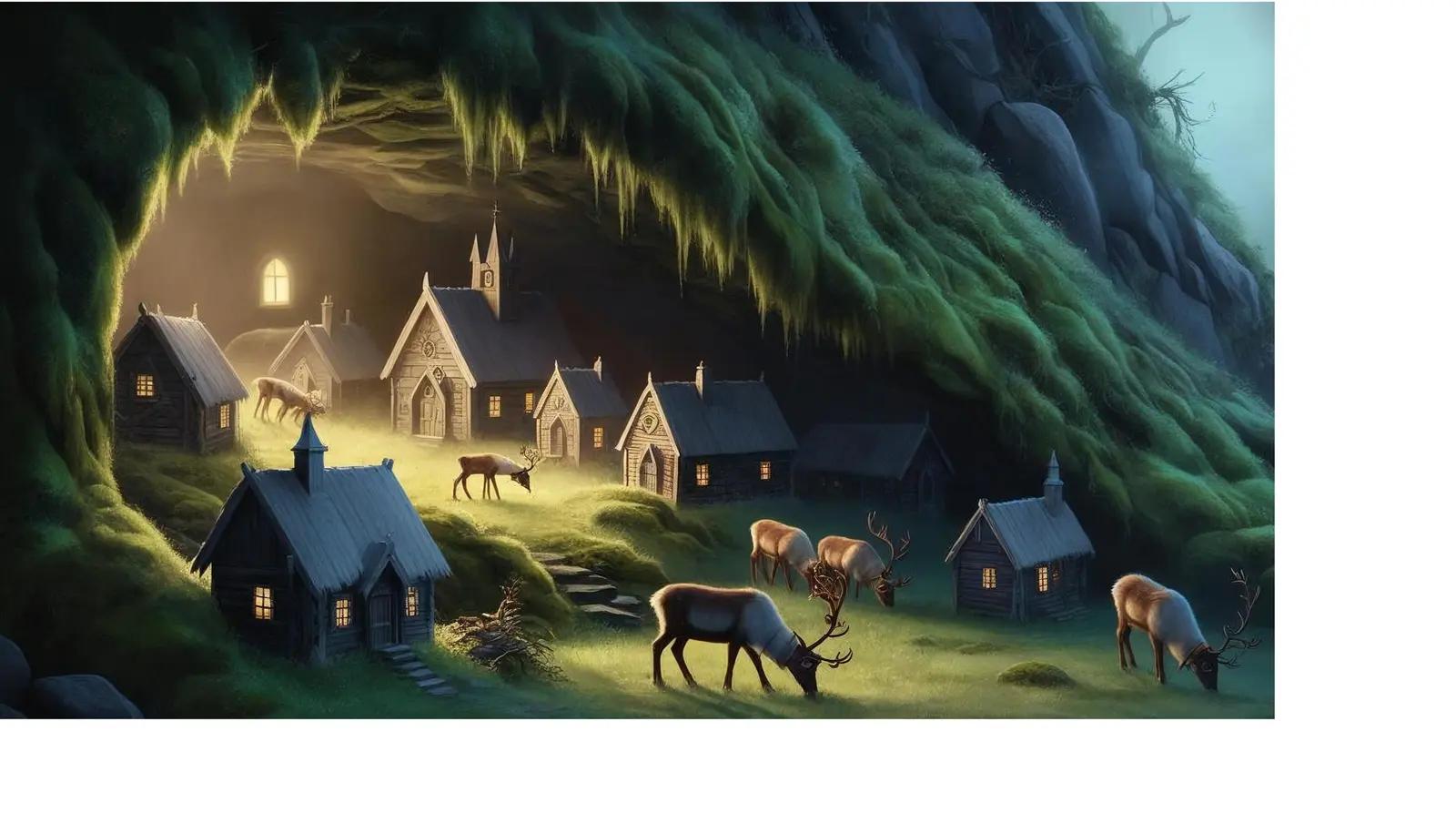
In Sami folk belief, the háldi (plural: hálddit) are various guardian spirits or protectors who have their home in nature. They live beneath the earth, in mountains and mounds, and sometimes in the sea. The hálddit are not visible to the human eye, but their presence can be felt. They have their own farms, churches and livestock, just like humans, but it all happens in the hidden. It is said that if you come to a new place and feel uneasy, or cannot find peace to sleep, it is because the hálddit already dwell there. Then it is best to find another place to make camp.
The hálddit are the guardians of nature's riches. They protect plants and animals, and ensure that no one takes more than they should. If they are treated with respect, they can be helpful and grant luck in hunting and gathering. But if they are offended, they can punish by withholding game, making people ill, or causing misfortune.
A living nature – animism and spirit belief
The Sami worldview is built on animism, the belief that everything in nature is ensouled. Animals, plants, stones, rivers and mountains all have their own spirit or guardian. The hálddit are among the most important of these spirits, and their role is to maintain the balance of nature and protect the living resources.
In this understanding, there is no sharp division between good and evil. The guardians of nature can both help and punish, depending on how humans behave. Respect for the hálddit and their laws is therefore essential for living in harmony with nature.
The hálddit and their realm
The hálddit have their own realm, parallel to that of humans. They have farms, grazing animals, and live their lives in the same way as people. But everything is invisible. Sometimes you can hear sounds or sense unease, and then you know that the hálddit are near. It is told that they have their own reindeer herds, cows and sheep, and that they watch over the wild animals and plants in their area.
When the Sami were to build a turf hut, raise a tent or settle in a new place, it was important to sense whether the place was peaceful. If not, it could be a sign that the hálddit already dwelt there. Disturbing the hálddit could lead to misfortune, illness, or the disappearance of the animals from the area.
The hálddit as guardians of animals
Animals have always been central to Sami life, especially the reindeer. The hálddit are the guardians of all animals, both wild and tame. They decide whether the hunter or herder will have luck or misfortune. If one shows respect, the hálddit may allow the animals to show themselves, or the reindeer to thrive and multiply. If one does not show respect, the animals may disappear, or one may be struck by misfortune.
There are many stories of how the hálddit can help or punish. A hunter who forgets to make an offering to the hálddit before the hunt may find that he does not see a single animal. Another who gives a piece of his catch or a small gift to the hálddit may find that the animals suddenly appear in great numbers.
The hálddit as guardians of plants
Just as important as the animals are the plants. Berries, roots and herbs have always been part of the Sami diet and medicine. The hálddit also protect the plants, and it is important not to take more than one needs. If one gathers too greedily, or destroys plants without reason, the hálddit may punish by making the plants invisible or causing them to wither.
It has been common to thank the hálddit after gathering berries or herbs, to show respect and ensure that the plants return the following year. In some places it has also been customary to leave a small gift – a stone, a coin or a morsel of food – as thanks to the hálddit.
Rituals and offerings to the hálddit
To stay on good terms with the hálddit, the Sami developed a range of rituals and offerings. These could be simple, such as throwing a piece of food on the ground, or more elaborate, such as sacrificing an animal or a valuable object. The offering was always suited to what one wished for help with – hunting, fishing, gathering or protection against illness.
The noaidi, the Sami shaman, had a special role in contact with the hálddit. Through drumming and trance, the noaidi could communicate with the spirits, ask for help or negotiate to recover something that had been lost. But ordinary people too could make offerings and pray to the hálddit in their daily lives.
The hálddit and children
The hálddit are not only guardians of animals and plants, but also of humans, especially children. There are many stories of how the hálddit can take children or adults to themselves. Pregnant women had to be especially careful, and there were many things they were not to do in order to avoid being taken by the hálddit. For example, they were not to walk alone in the forest, or sleep outside alone, especially as the birth drew near. It was said that the hálddit could take the foetus from the mother's womb, leaving a fine scar, yet the woman felt as healthy as before.
If someone was taken by the hálddit, they must not eat the food that was offered. If they managed to hold out for a few days without eating, they could be allowed to return to the human world.
The hálddit in stories and legends
Sami culture has a rich tradition of stories and legends about the hálddit. These tales have been told around the fire, from generation to generation, and have taught people how to relate to nature and its spirits.
One tale concerns a family who made camp by a beautiful lake. At night they could not sleep, and the children cried for no reason. When they moved the camp, they finally found peace. They understood that they had disturbed the hálddit, and learned always to heed the signs of nature.
Another story tells of a hunter who lost his quarry time after time. At last he realized that he had forgotten to thank the hálddit. When he offered a piece of the meat, he finally had luck in the hunt again.
The hálddit and Sami ecology
The hálddit are an expression of Sami ecological thinking. The belief that everything in nature has a guardian has taught the Sami to use resources with moderation and respect. You take only what you need, and give something back. This has helped to preserve the balance of nature, and has been crucial for survival in a demanding environment.
If one breaks the laws of the hálddit, it can have consequences not only for the individual, but for the entire community. The animals may disappear, the plants may cease to grow, and illness may spread. For this reason, respect for the hálddit has been a fundamental part of Sami culture and life philosophy.
The hálddit today
Although many today do not literally believe in the hálddit, respect for nature and its balance lives on in Sami culture. The stories of the hálddit remind us that we are part of a greater whole, and that everything we do has consequences for the nature around us.
In modern times, the hálddit have also found a place in Sami art and literature, as symbols of resilience, the forces of nature and the invisible bond between human and environment.
References
Nordlige folk: "Hálddit / gufhtarat"
Wikipedia: "Sámi shamanism"
Sjamanistisk Forbund: "Samisk tro, om guder og gudinner"
Heimskringla: "Samisk mytologi"
Religioner.no: "Samisk religion"