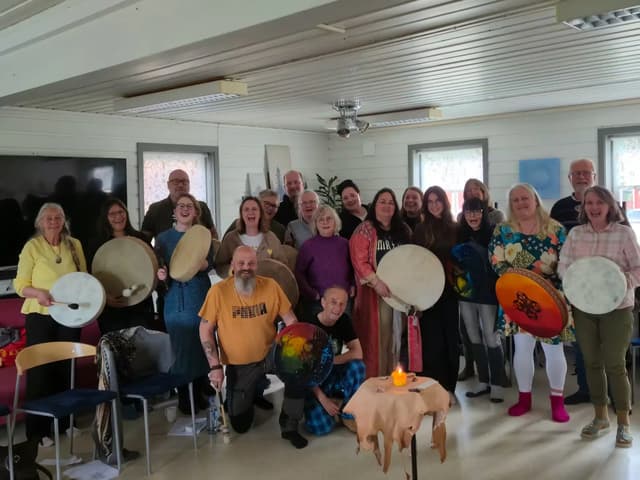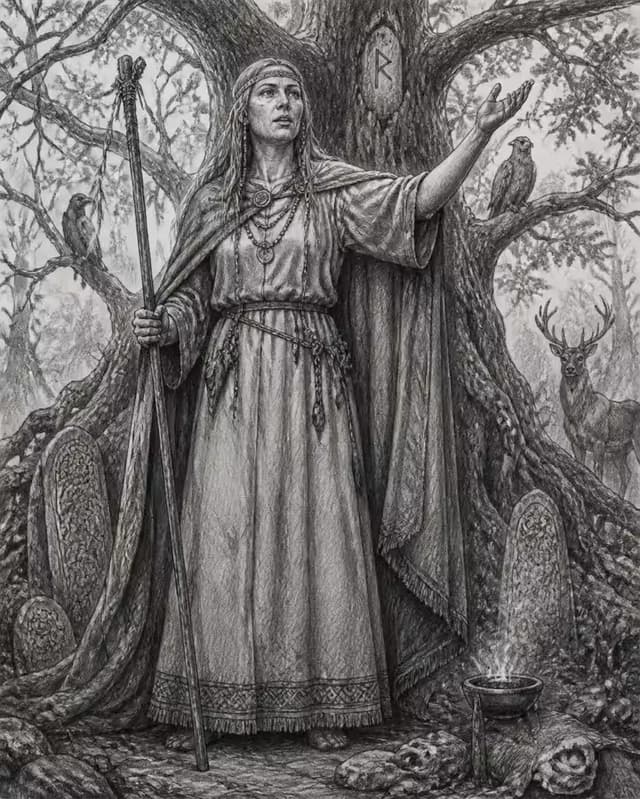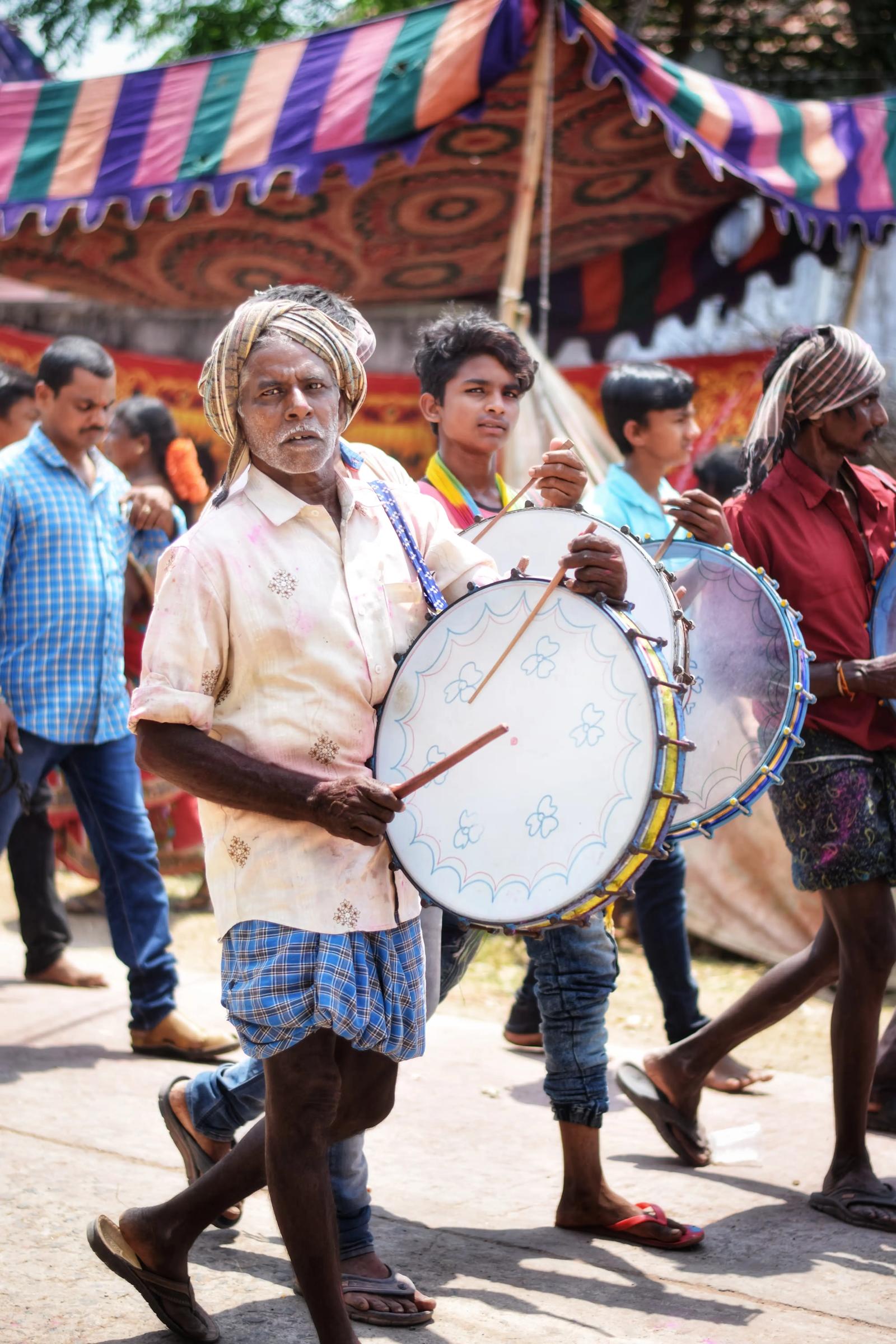
Shamanism is, at its core, a somewhat imprecise term that anthropologists began to use for a range of comparable spiritual and religious practices among indigenous peoples. Michael Harner, who was himself an anthropologist, also developed what became known as Core Shamanism, which in many ways can be described as a method that gathered the common denominator, or the techniques, found in these indigenous cultures into a secular distillate. This description is of course grossly simplified, but part of Harner's idea was that the practitioner should be able to place shamanism within their own cultural and religious universe. To complete the confusion, shamanism has become a trend in the alternative movement that has mixed in practices that were not originally shamanistic, so that today we find expressions such as, for example, shamanic yoga, shamanic tarot cards and so on.
Nevertheless, shamanism is the term that most accurately describes this phenomenon. Shamanism is the oldest known form of religious practice that we are aware of. It is at least 30,000 years old, and traces of it are found all over the world. It is probably much older as well. The various forms of shamanism appear to have arisen at roughly the same time; in any case, contemporaneous traces of it are found in Europe, Asia, Oceania, the Americas and Africa, that is, cultures one would think had little to do with one another at that time.
What is the shaman's role
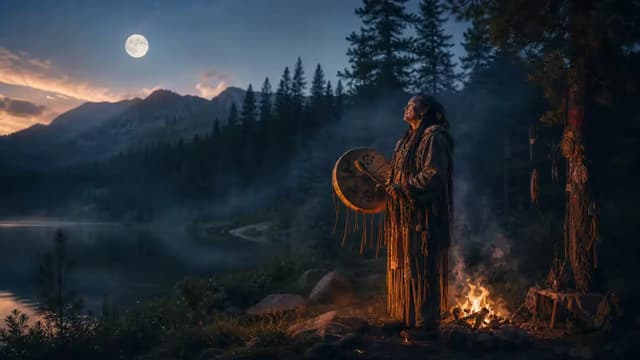
The role of the shaman and the noaidi still follows the same tracks today as in the past. He or she is first and foremost someone who negotiates with the spirit world with the aim of restoring imbalances. This applies whether it concerns bodily, societal or imbalances in nature. The restoration itself often takes place in the spirit world to which the shaman or noaidi travels. This is what primarily distinguishes a shamanistic healer from other forms of healing. The human being has two souls. A body soul and a free soul. The shaman can, with the help of will and trance techniques, direct the free soul to travel to other worlds, often by means of the drum, which is also called the shaman's horse. In Sami tradition it is also common to use a spirit bird to help and protect oneself during the journey. The shaman is also a spiritual adviser and gives advice on everything from love to societal questions.