The shaman is a central figure in many indigenous and traditional cultures, including in Sami, Norse, Kven, and Forest Finn tradition. This spiritual leader and healer serves as a link between humans and the spirit world, with a range of important tasks and functions.
The shaman's role and tasks
Communication with the spirit world
One of the shaman's most important tasks is to communicate with spirits, ancestors, and other spiritual beings. This is often achieved by entering an altered state of consciousness, known as trance. In Sami tradition, the noaidi (shaman) often uses a special drum called a runic drum or goavddis to attain this state. In Norse tradition, the seid-woman or volve could use song and galdr to achieve similar effects.
Healing and protection
The shaman has a central role as a healer of both physical and psychological ailments. In Sami tradition, the noaidi could journey to the spirit world to retrieve a person's soul that had been lost, which was considered the cause of illness. In Kven and Forest Finn tradition, the tietäjä (the wise one) was known for their healing abilities and could use herbs, incantations, and rituals to cure illnesses and protect against evil forces.
Guidance and divination
The shaman often serves as an advisor and seer for the community. In Norse tradition, the volve was known for her prophetic abilities and could foretell the future through seid rituals. In Sami culture, the noaidi could interpret dreams and give advice on important decisions based on insight from the spirit world.
Shamanic practices in Nordic traditions
Soul journeys
A central practice in shamanism is the soul journey, in which the shaman travels to other dimensions or worlds to retrieve knowledge and power. In Sami tradition, the noaidi could journey to Sáivu, the underground world, to communicate with ancestors and helping spirits. In Norse tradition, seid-men and volves could travel to various worlds in Yggdrasil, the world tree.
Rituals and ceremonies
The shaman leads important rituals and ceremonies in the community. In Sami culture, this could include joik, offerings to nature spirits, and rites of passage. In Norse tradition, the volve led blót ceremonies and performed seid rituals for divination and magic.
The use of power objects
Shamans in Nordic traditions often use special objects in their work. The Sami runic drum is a central tool for the noaidi. In Kven and Forest Finn tradition, the tietäjä could use special knives, stones, or other objects with magical properties.
Shamanism in modern times
Today shamanism is experiencing a renewed interest, both as a spiritual practice and as part of cultural revitalisation. Sjamanistisk Forbund in Norway was founded in 2012 and works to promote shamanic practice and understanding in a modern context. The association organises courses, ceremonies, and drum journeys, and helps to preserve and pass on shamanic traditions.
Shamanism's worldview
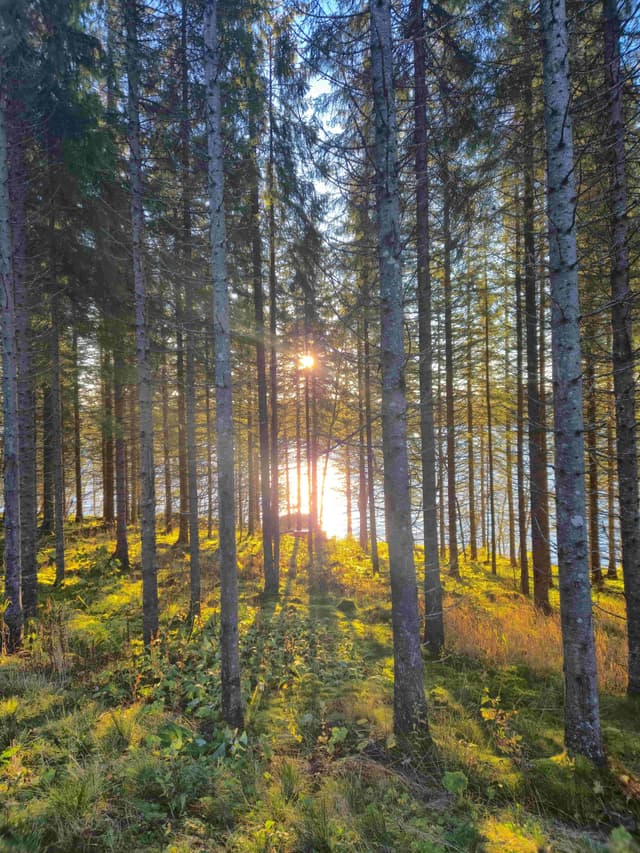
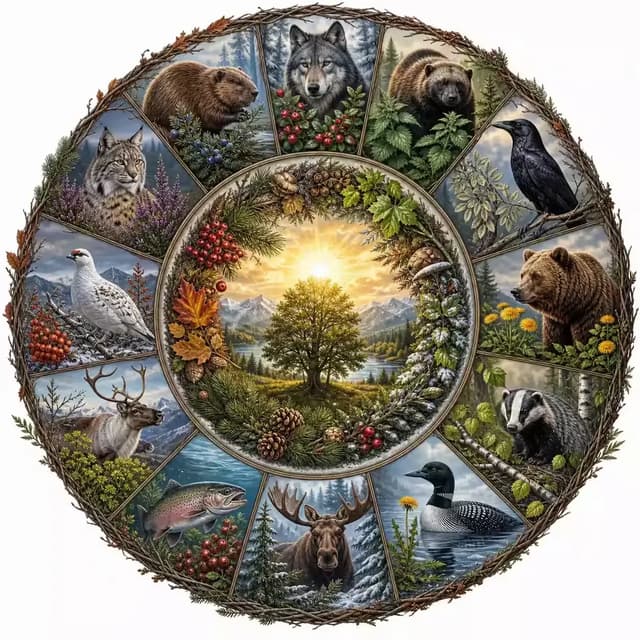
Shamanism is based on an animistic worldview, in which everything in nature is considered ensouled and alive. This view is especially prominent in Sami, Kven, and Forest Finn tradition, where respect for nature and its spirits is central. In Norse tradition we find similar ideas, with belief in nature beings (vetter) and other spiritual beings that inhabit the landscape.
Challenges and preservation
Shamanic traditions have faced many challenges throughout history, including suppression and attempts at eradication. In the Sami context, the noaidi tradition was severely weakened during the Christianisation and colonisation of Sápmi. Similar processes also affected Norse, Kven, and Forest Finn traditions.
Today many people are working to preserve and revitalise these traditions. This includes academic research, cultural projects, and the practical exercise of shamanic techniques. Sjamanistisk Forbund plays an important role in this work by offering a community for modern practitioners and promoting understanding of shamanic practices.
In conclusion, we can say that the shaman, whether a Sami noaidi, a Norse volve, or a Kven or Forest Finn tietäjä, performs a range of important functions as a spiritual leader, healer, and mediator between the physical and spiritual worlds. Through their unique abilities and practices, the shaman helps to maintain balance and harmony in the community and in nature, and represents a deep and rich spiritual tradition that continues to hold relevance in our modern world.
Membership of Sjamanistisk Forbund is free
References:
Gaup, A. (2005). "Sjamansonen"
Pollan, B. (1993). "Samiske sjamaner: religion og helbredelse"
Pentikäinen, J. (2006). "Shamanism and Culture"
Price, N. (2002). "The Viking Way: Religion and War in Late Iron Age Scandinavia"
Hultkrantz, Å. (1992). "Shamanic Healing and Ritual Drama: Health and Medicine in Native North American Religious Traditions"
Sjamanistisk Forbund (n.d.). Official website
Hagen, R. (2002). "Harmløs dissenter eller djevelsk trollmann? Trolldomsprosessen mot samen Anders Poulsen i 1692"
Koski, K. (2016). "The Legend of the Tietäjä and the Cunning Folk Tradition in Finland"
Læstadius, L. L. (2003). "Fragmenter i lappska mythologien"
Rydving, H. (1993). "The End of Drum-Time: Religious Change among the Lule Saami, 1670s-1740s"