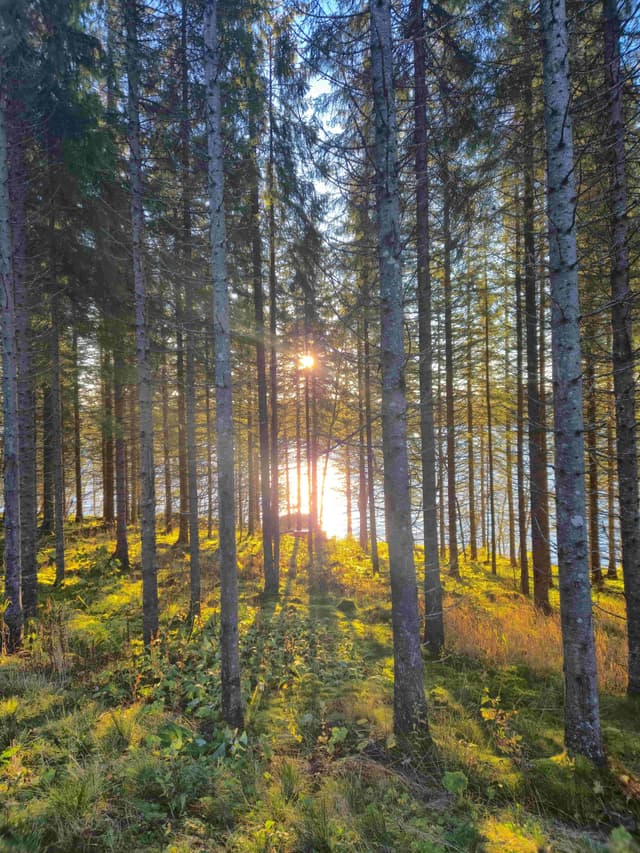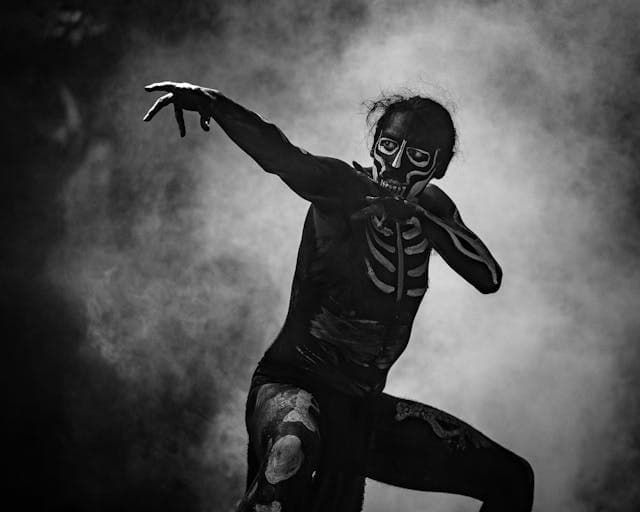
In the heart of a dense forest, where the trees whisper ancient secrets, a shaman sits in deep trance. Her eyes are closed, but her mind is wide open, traveling through invisible realms. This is shamanism in its essence - a spiritual practice as old as humanity's search for meaning, and yet so different from the organized religions we know today.
A dance with nature
Imagine a world where every tree, every stone, and every river pulses with life and consciousness. This is the shaman's reality. Unlike the major world religions, shamanism does not view nature as something separate from humanity. On the contrary, we are all threads in the same cosmic web.
While a priest might open a sacred book to find answers, the shaman closes their eyes and listens to the whisper of the wind or the song of the river. Here lies one of the most fundamental differences:
Shamanism is based on direct, personal experience of the divine.
Traditional religions often rely on written texts and established doctrines.
The shaman's toolkit
A shaman is in many ways a spiritual explorer. Through techniques such as drumming, dance, and sometimes the use of psychoactive plants, the shaman alters their state of consciousness in order to "travel" to other planes of reality.
The shaman's main tasks include:
Healing of illnesses, both physical and spiritual
Guidance in personal and communal matters
Restoring balance between people and nature
This stands in sharp contrast to, for example, a Buddhist monk who seeks enlightenment through meditation, or a Christian priest who conveys God's word through sermons and sacraments.
The shaman's invisible allies
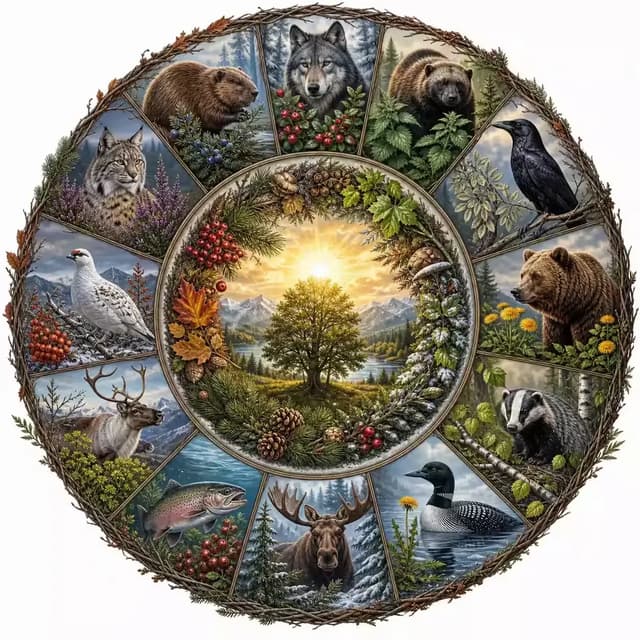
In the world of shamanism, we are never alone. Each person has their own spiritual helpers, often in the form of power animals or ancestral spirits. These are not gods to be worshipped, but partners on the spiritual journey.
This personal relationship with the spiritual stands in contrast to:
The monotheistic religions' relationship with one almighty god
The polytheistic traditions' pantheon of gods with specific roles
The modern shaman's challenges
Today, shamanism faces new challenges. In a world of asphalt and smartphones, how do you preserve a tradition so deeply rooted in nature?
Modern adaptations of shamanism include:
Core shamanism, developed by the anthropologist Michael Harner
The integration of shamanic techniques into psychotherapy
Urban shamanism, adapted to the realities of city life
These new forms raise important questions about authenticity and cultural appropriation. Can the essence of shamanism survive when it is taken out of its original context?
Shamanism vs. other spiritual paths
To truly understand what makes shamanism unique, let us take a closer look at how it differs from other major spiritual traditions
Shamanism and Eastern philosophies
While both shamanism and Eastern traditions such as Buddhism and Hinduism acknowledge the existence of multiple planes of consciousness, their approaches are quite different
Buddhism seeks to transcend suffering through non-attachment.
Shamanism actively seeks interaction with spiritual forces for practical problem-solving.
Shamanism and New Age
The New Age movement has borrowed much from shamanic traditions, but there are important differences:
Shamanism is deeply rooted in specific cultural contexts.
New Age tends toward a more eclectic, "pick and mix" approach.
The relevance of shamanism in the 21st century
In an age marked by climate crisis and alienation from nature, shamanism offers an alternative worldview. It reminds us of our deep connection with the earth and all living things.
At the same time, the modern interest in shamanism raises important ethical questions:
How can we respect and learn from Indigenous traditions without appropriating them?
How do we balance shamanism's intuitive approach with modern scientific understanding?
The bridge-builder between worlds
Shamanism is more than just another form of spirituality. It is a bridge - between the visible and the invisible, between human and nature, between past and present. At its core, shamanism is about wholeness and balance, something many seek in our fragmented modern world.
While organized religions offer structure and community, and Eastern philosophies provide tools for inner peace, shamanism offers something unique: a direct, personal connection with the forces of nature and the universe. It is a path that requires courage, for it invites us to look behind the veil of reality and recognize our place in a living, ensouled cosmos.
In a world crying out for healing and balance, the shaman's ancient wisdom may have something important to teach us. Not as a replacement for modern knowledge, but as a complementary perspective that can enrich our understanding of ourselves and our place in the universe.
References
Eliade, M. (1964). Shamanism: Archaic Techniques of Ecstasy. Princeton University Press.
Harner, M. (1990). The Way of the Shaman. HarperOne.
Vitebsky, P. (2001). Shamanism. University of Oklahoma Press.
Walsh, R. (2007). The World of Shamanism: New Views of an Ancient Tradition. Llewellyn Publications.
Narby, J. & Huxley, F. (2001). Shamans Through Time: 500 Years on the Path to Knowledge. Tarcher.