Image: Johan Savio "kafferast"
Shamanism, a religious belief that allows communication with the spirit world, has had a significant influence on visual art, especially modern art. Many artists have studied shamanic symbols and themes, from painting and sculpture to installation art.
The core of shamanism
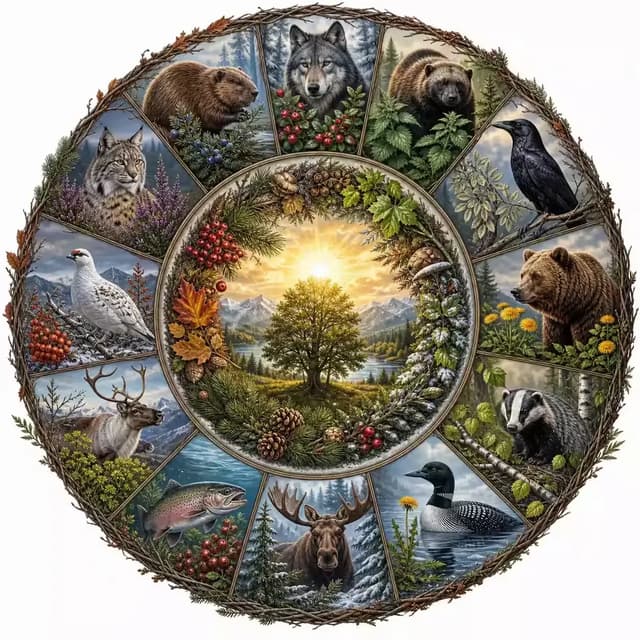
When it comes to shamanism, practitioners often use rituals and symbols that represent spiritual journeys and show great respect for nature and wildlife. The shaman gathers wisdom from many worlds and acts as an intermediary between humans and spirits. Animal symbolism, images of nature and spiritual journeys are central elements in many works of art that express this worldview.
Historical background
Although it has existed in many cultures throughout the ages, shamanic art has received renewed attention in art in the present era. For centuries, shamanism has been an important part of Sami culture. Motifs related to hunting and rituals appear in Sami rock carvings from the Stone Age, providing insight into the shamanic tradition. It is possible to see these images as visual expressions of the shamans' interaction with animal spirits and the forces of nature.
Shamanic themes and Sami artists
One of the most well-known Sami artists is John Savio, who was born in 1902 and died in 1938. His woodcuts offer a unique understanding of Sami culture and daily life. Motifs such as reindeer and Sami landscapes in Savio's work show his closeness to Sami heritage. His art represents personal experiences and Sami cultural traditions, and he was a pioneer of modern Sami art. He conveys strong feelings of loneliness and belonging through his woodcuts, which is also evident in the work Okto, where he expresses inner conflicts.
Brita Marakatt-Labba is another well-known Sami artist who explores shamanic themes through textile art. She uses symbolism from Sami mythology in her work, combining traditional methods with modern expression. Themes such as identity, nature and traditional stories are often taken up in Marakatt-Labba's work, giving the viewer a better understanding of Sami culture.
There are of course many more Sami artists who could have been mentioned here and who clearly have shamanic inspiration: Nils Aslak Valkeapää, Mary Ailonieida Sombán Mari, Ailo Gaup, Synnøve Persen, Kirsti B. M. and many, many more.
Stories and symbols
Shamanic symbols are often used in painting to convey complex stories about the human relationship with nature. Artists such as Ruth H. Bärtsch create visual dialogues between the material and the spiritual by using colorful images of animals and landscapes. By drawing on elements from both sky and earth, she draws on shamanic cosmology.
International artists such as Anselm Kiefer use mythological references and symbolism from various cultures to explore themes such as life, death and rebirth in shamanic art. In Kiefer's paintings, he uses materiality in the same way that shamans use natural elements in rituals.
The physical expression of spiritual things
Shamanic themes can also be used in art. Artists such as David Nash show a shamanic respect for nature by creating sculptures from natural materials such as wood, stone and earth. Nash's work encourages the viewer to think about how they relate to their surroundings.
Sculpture is also used in Sami culture to express shamanic ideas. Håkon Bleken, known for his sculptures, uses forms that represent animals or natural phenomena to incorporate elements of Sami mythology into his work.
David Nash; Red Column Experiences related to the transcendent
Installation art allows the viewer and the work to interact in a way that resembles shamanic rituals. Artists such as Olafur Eliasson use light, water and mirrors to create interactive presentations that make the audience reflect on where they are in nature. It is possible to see Eliasson's work as a modern interpretation of shamanism's search for connection with the transcendent.
In addition to being known for her experiments with scent, Sissel Tolaas explores how the senses can be used to establish connections between humans and nature. Her installations challenge people to think about how smell affects the way we view our surroundings. This can be related to shamanism's emphasis on sensory experiences.
Visual art inspired by shamanism is a diverse field that encompasses a range of media and cultural contexts. Many artists have explored the rich symbols and themes related to shamanism, especially in Sami culture, through painting, sculpture and installation art. Sami artists such as John Savio and Brita Marakatt-Labba have contributed to this development by reviving old customs and integrating them into modern expression.
Shamanism gives us a unique way of understanding the connection between nature and the spiritual. By understanding the significance of these cultural expressions, we can help maintain Indigenous cultures while at the same time expanding our own understanding of the role of art in society.
Sources
Joy, Francis. "The Significance of Sami Rock Art in the Context of Shamanism and Ancient Spiritual Practices."
Kjellström, Rolf. "Samisk religion: Sjamaner, religion och folketro."
Vitebsky, Piers. "The Shaman: Voyages of the Soul - Trance, Ecstasy and Healing from Siberia to the Amazon."
Hultkrantz, Åke. "Shamanism and Traditional Belief Systems in the Arctic."
Nordfra.no about John Savio.
Wikipedia about John Savio.
Information about Brita Marakatt-Labba from various sources.