In our hectic modern world, marked by technology and constant availability, finding calm and balance can seem challenging. Many therefore look for alternative methods to handle stress, find meaning and achieve personal growth. One approach that has gained renewed interest in recent years is shamanism - an ancient spiritual practice with roots reaching back thousands of years.
The basic principles of shamanism
Shamanism is one of the oldest spiritual practices in the world, with roots reaching back to prehistoric times. It is based on animistic belief systems, in which everything in nature is considered to have a soul or spirit. Shamans act as intermediaries between the physical and the spiritual world, and use various techniques to achieve altered states of consciousness and communicate with the spirit world. These techniques are today available to everyone as well, thanks to organisations such as Sjamanistisk Forbund.
Some of the central principles of shamanism include:
Interconnectedness: Everything is connected and influences everything else. Everything is ensouled.
Balance: Harmony between the physical, emotional, mental and spiritual.
Healing: Restoration of balance on all levels.
The wisdom of nature: Nature as teacher and source of healing.
Personal power: Each person has inherent strength and wisdom.
Shamanic practices for modern life
Shamanic journeying (drum journeys)
Shamanic journeying is a meditative technique in which one visualises a journey to the spirit world to seek insight, healing or guidance. In our modern context this practice can be adapted as a form of guided visualisation or deep meditation.
How can one practise shamanic journeys?
Find a calm place and sit comfortably
Use drum sounds or shamanic music (available online)
Visualise an entrance to the spirit world (e.g. a hole in the ground, a cave, or a tree)
Let yourself be carried on an inner journey, and be open to images, feelings or insights that arise
End the journey by visualising your return to your physical space
This practice can help with stress reduction, problem solving and increased self-understanding. Try to set aside 15-20 minutes daily or weekly for shamanic journeying.
Connection with nature
Shamanism places great emphasis on our connection with nature. In our modern life we can often feel disconnected from the natural world. Restoring this connection can have significant benefits for our mental and physical health.
Practical tips:
Take daily "mindfulness" walks in nature, even if it is only in a park or garden
Practise grounding by walking barefoot on grass or earth
Hold a crystal or stone while you meditate to feel the energy of the earth
Grow plants indoors or start a small garden
Observe the changing seasons and the cycles of nature
Energy cleansing and protection
In the shamanic tradition, incense or herbs are often used to cleanse energies. This practice can easily be adapted to modern life to create a more harmonious home or work environment.
Modern approaches:
Use sage, juniper or incense to "smudge" your home or office
Visualise a protective light or energy field around you before entering stressful situations
Use salt-water baths or showers to "wash away" negative energy
Place protective crystals such as black tourmaline or smoky quartz in the home or workplace
Drumming and sound healing
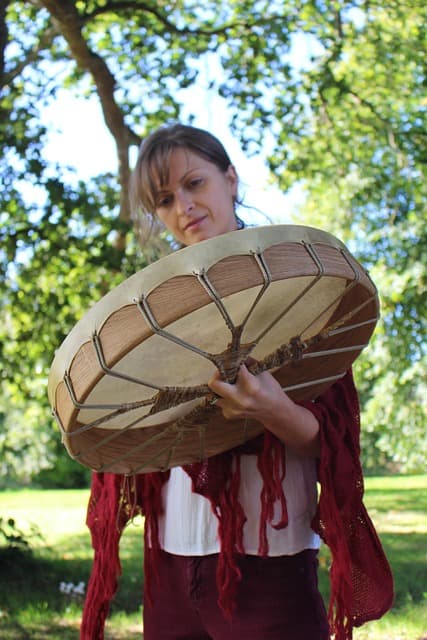
Drumming is a central part of many shamanic rituals and is used to induce altered states of consciousness. In our modern context we can use drumming or other forms of sound healing for stress reduction and relaxation.
Modern applications:
Listen to shamanic drum music during meditation or relaxation
Take part in drumming groups or circle gatherings in your local community
Use sound bowls or gong meditation to achieve deeper relaxation
Experiment with creating your own rhythms on a hand drum
Power animals and spirit guides
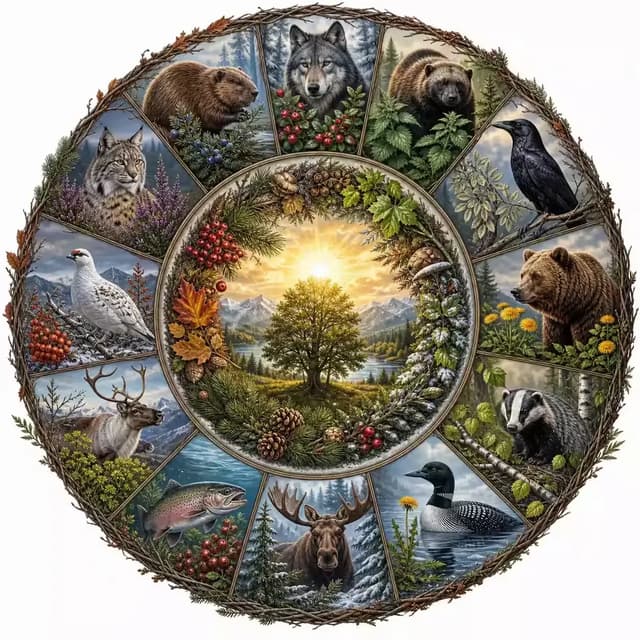
In the shamanic tradition one often works with power animals or spirit guides for protection, wisdom and healing. This practice can be adapted to modern life as a form of symbolic or archetypal work.
How to work with power animals
Meditate on an animal you feel a strong connection to
Journal about the qualities of this animal and how they can be applied in your life
Use visualisation to "call in" your power animal in challenging situations
Place images or figures of your power animal in the home or workplace as reminders
Sacred rituals and ceremonies
Rituals and ceremonies are important aspects of shamanic practice, and can be adapted to mark important transitions or set intentions in our modern life.
Modern approaches:
Create a personal ritual to mark new beginnings (e.g. New Year, birthdays, new jobs)
Hold moon-phase ceremonies to set intentions and reflect on personal growth
Make a home altar with meaningful objects for daily reflection and meditation
Practise gratitude rituals by writing down or speaking the things you are grateful for each day
Dream work
Dreams are considered important sources of insight and guidance in the shamanic tradition. By integrating dream work into our daily life we can gain access to our subconscious and intuition.
Practical tips:
Keep a dream journal and write down dreams immediately after waking
Meditate on dream symbols and look for their meaning in your waking life
Practise lucid dreaming by setting intentions before you fall asleep
Share and discuss dreams with a partner or a dream group
Shamanic healing
Shamanic healing focuses on restoring balance on all levels - physical, emotional, mental and spiritual. While traditional shamanic healing often involves complex rituals, we can integrate some of the principles into our daily life.
Modern approaches:
Practise self-healing through visualisation and energy work
Use herbal medicine or aromatherapy based on traditional shamanic knowledge
Explore holistic health practices such as acupuncture or reiki
Focus on emotional healing through journaling or talk therapy
Connection with ancestors
Many shamanic traditions emphasise the connection with ancestors as a source of wisdom and strength. In our modern context this can be practised through genealogy and cultural exploration.
How to practise:
Create an ancestor altar with images and objects from your family history
Explore your family history and cultural roots
Practise meditation or visualisation to "meet" your ancestors
Celebrate traditional holidays or customs from your cultural background
Shamanic ethics and values
Shamanic traditions often have strong ethical codes and values that can be valuable in our modern life. These include respect for nature, responsibility towards the community and personal integrity.
Integration into modern life:
Practise environmental awareness and a sustainable lifestyle
Engage in community work or volunteering
Cultivate personal integrity through honesty and consistency in word and action
Practise non-judgemental attitudes and compassion in daily interactions
Challenges and precautions
While integrating shamanic practices can be enriching, it is important to be aware of potential challenges:
Cultural appropriation: Be respectful and acknowledge the origins of the practices you adopt.
Psychological vulnerability: Some practices can be intense. Start gently and seek professional help if necessary.
Balance: Avoid becoming too absorbed in spiritual practices at the expense of daily responsibilities.
Scepticism: Be prepared that not everyone will understand or accept these practices.
Unrealistic expectations: Shamanic practices are not a miracle cure, but a tool for personal growth and self-exploration.
Integrating shamanic wisdom into our modern life is not about fully embracing a prehistoric lifestyle, but about finding balance between the old and the new. By adopting elements of shamanic practice we can achieve greater self-awareness, better stress management and a deeper connection to nature and to our inner wisdom.
Shamanism offers a rich source of techniques and perspectives that can enrich our lives, from daily meditation practices to deeper self-exploration. By integrating these practices in a respectful and balanced way, we can find new paths to personal growth, healing and meaning in our hectic modern world.
Whatever practices you choose to explore, it is important to remember that the true essence of shamanism lies in the personal experience and the connection with the greater whole. Let these practices be a starting point for your own journey towards greater awareness and balance in life.
References
Eliade, M. (2020). Shamanism: Archaic techniques of ecstasy. Princeton University Press.
Harner, M. (1990). The way of the shaman. HarperOne.
Winkelman, M. (2010). Shamanism: A biopsychosocial paradigm of consciousness and healing. ABC-CLIO.
Tedlock, B. (2005). The woman in the shaman's body: Reclaiming the feminine in religion and medicine. Bantam.
Vitebsky, P. (2001). Shamanism. University of Oklahoma Press.
Ingerman, S. (2004). Shamanic journeying: A beginner's guide. Sounds True.
Abram, D. (2017). The spell of the sensuous: Perception and language in a more-than-human world. Vintage.
Narby, J. (1999). The cosmic serpent: DNA and the origins of knowledge. Penguin.
Walsh, R. (2007). The world of shamanism: New views of an ancient tradition. Llewellyn Publications.
Krippner, S. (2002). Conflicting perspectives on shamans and shamanism: Points and counterpoints. American Psychologist, 57(11), 962-977.
Fotiou, E. (2012). Working with "La Medicina": Elements of healing in contemporary ayahuasca rituals. Anthropology of Consciousness, 23(1), 6-27.
Kehoe, A. B. (2000). Shamans and religion: An anthropological exploration in critical thinking. Waveland Press.
Santarpia, A., Blanchet, A., Mininni, G., Kwiatkowski, F., Lindeman, L., & Merckaert, I. (2021). The pictorial representation of illness and self measure revised (PRISM-R2) for pain assessment: A systematic review of the literature. Journal of Pain Research, 14, 1451-1474.
Singh, M. (2018). The cultural evolution of shamanism. Behavioral and Brain Sciences, 41, e66.
Winkelman, M. (2004). Shamanism as the original neurotheology. Zygon, 39(1), 193-217.