Shamanism, known as Muism in Korea, is one of the oldest religious traditions in the country. With roots that reach back to prehistoric times, shamanism has developed over the centuries and adapted to Korea's shifting social and cultural landscapes. We look at the history of shamanism, its role in modern Korean society, and how it has been revitalized among young people through social media.
Historical background
Shamanism in Korea can be traced back to the Bronze Age, and archaeological finds suggest that it was an integral part of early Korean culture. During the Three Kingdoms period (Goguryeo, Baekje and Silla), the role of the shaman was recognized and often tied to political power. Shamans, or mudang, acted as intermediaries between people and the spirit world, and their rituals were crucial to the prosperity and stability of society.
Over the following centuries, shamanism experienced periods of suppression, especially under Confucian dominance and later Christian missionary activity. Despite this, shamanism has never entirely disappeared from Korean culture. In the mid-twentieth century, a revival of interest in shamanic practices began, as many Korean citizens started to seek a return to their cultural roots after years of colonialism and war.
The role of the shaman in society
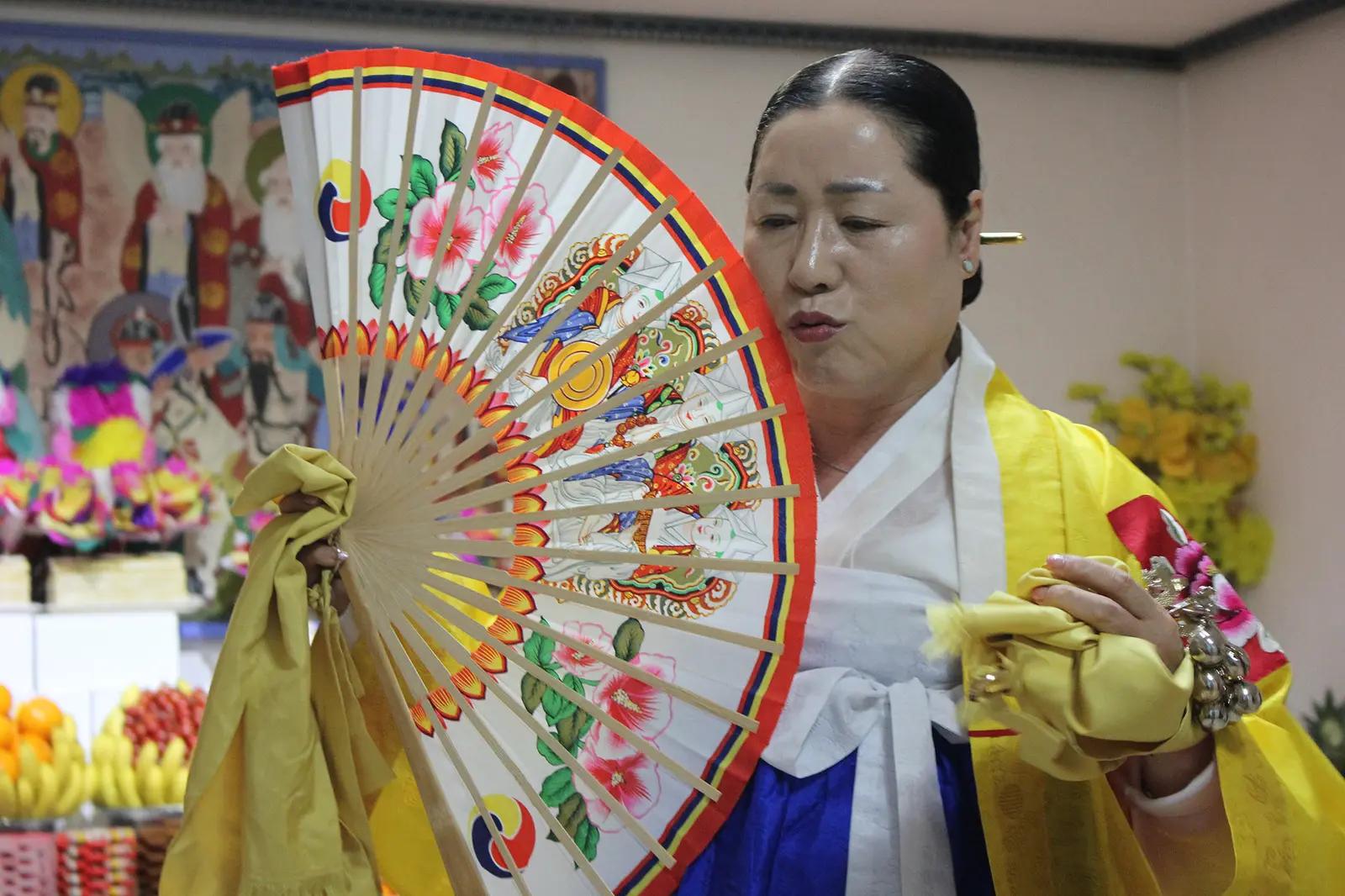
In modern Korea, the mudang play an important role in people's lives. They are often consulted when people face life-changing decisions, such as marriage, health problems or financial difficulties. According to estimates from the Korea Worshipers Association, there are roughly 300,000 mudang in South Korea, which means there is approximately one shaman for every 160 inhabitants.
The rituals performed by mudang are called gut, and they often involve music, dance and incantations to summon the spirits. These rituals can range from private ceremonies to large public events.
Although shamanism is often viewed as a "low" folk tradition, it has been recognized as an important part of Korean cultural heritage. The government has documented and promoted shamanic rituals as intangible cultural assets.
Cultural stigma and modernization
Despite its popularity, mudang have continued to face stigma and distrust from society. Many regard them as backward or superstitious. This has led many mudang to operate in secret or on the margins of society.
However, technological development has brought a new wave of interest in shamanism among younger generations. Many young mudang use social media to reach a broader audience, share their experiences and offer consultations online. A well-known young shaman, known as "Aegi Seonnyue," has gained hundreds of thousands of followers on platforms such as YouTube. This has helped reduce the stigma surrounding shamanism and made it more acceptable in modern Korean culture.
Shamanism in popular culture
Shamanism has also found its way into popular culture through films, books and music. The film "Exhuma," which is about young mudang, has received great attention in South Korea and helped normalize shamanic practices among young adults. This shows how shamanism can act as a bridge between traditional belief and a modern lifestyle.
Korean shamanism is a complex and dynamic tradition that still plays an important role in people's lives today. Throughout history it has been subject to both suppression and revitalization, but its core principles of communicating with the spirit world remain relevant. As society modernizes, we see a new generation of mudang adopting technology to reach new clients and share their faith.
Shamanism in Korea is not merely a relic of the past; it is a living tradition that continues to develop and adapt to the changing needs of society.
References
Lecture and Korean Shamanic Ritual (Gut) - Japanese History at Yale
Korean Shamanism: The Origins of Indigenous Culture
Shamanism in Korea - Citizen Journalists
The Role of Shamanism in Korean Society - JINSEOK SEO
Korean Shamanism Today - The Korea Society
Modern Shamans All the Rage in S Korea - The World from PRX
Shamanism on Social Media Has Many Young Followers - Agenzia Fides
Shamanism in Ancient Korea - World History Encyclopedia