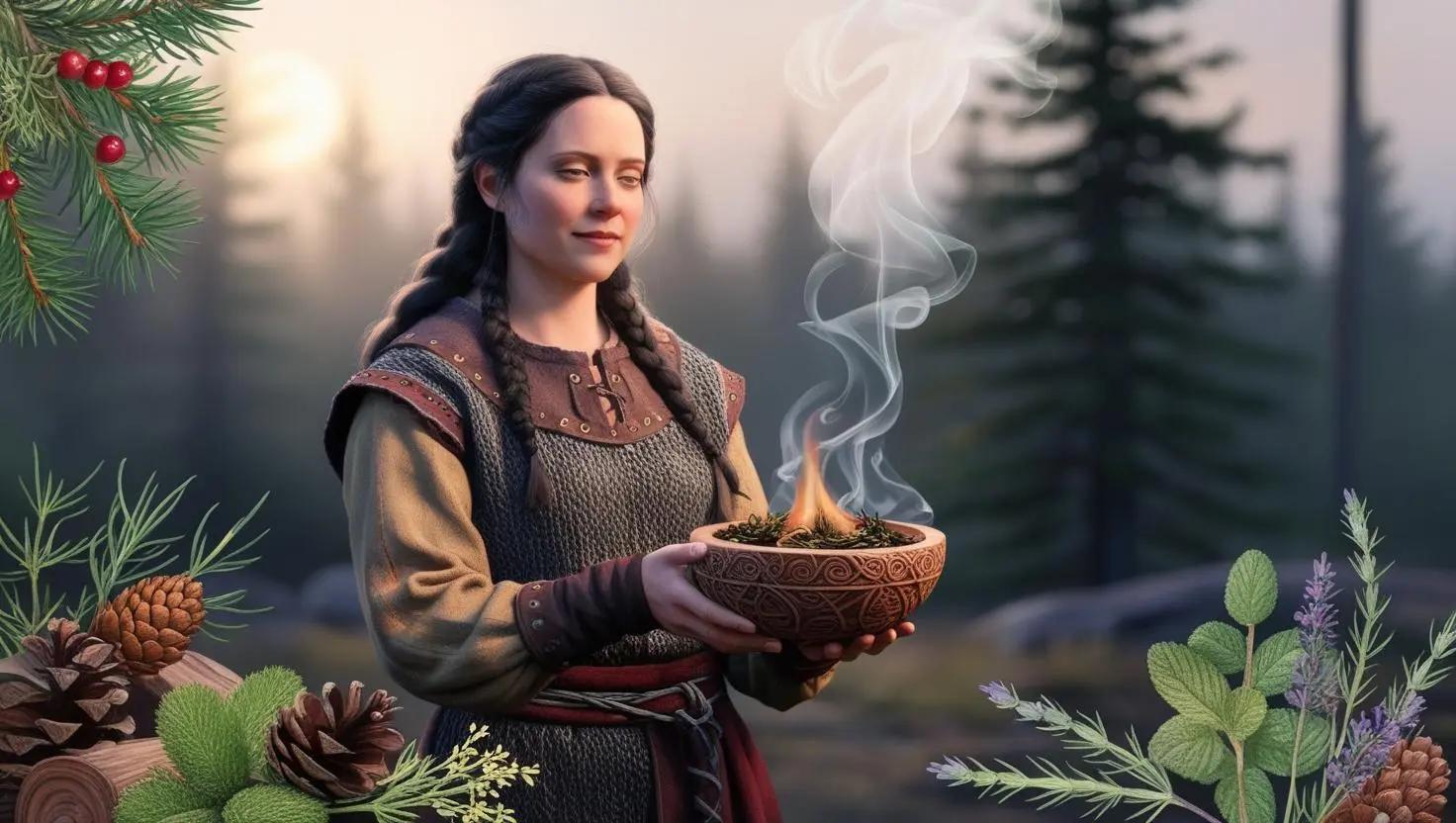
Making your own incense is a timeless tradition that combines the power of nature with spiritual practices. In Scandinavia this tradition has a unique connection to local plants and shamanic rituals, known as "Eimilauga" in Old Norse, which means "to bathe in smoke".
What is incense/Eimilauga?
Incense, or Eimilauga, is a mixture of dried plants, herbs and possibly resin that is burned to produce aromatic smoke. This smoke is used to cleanse energy, establish contact with spiritual beings, and create sacred spaces. In shamanic practice the smoke functions as a bridge between the physical and the spiritual world, helping the shaman to receive messages from the spirit world. As Sjamanistisk Forbund describes, the Eimilauga ceremony serves several important purposes: cleansing, communication with the spirit world, healing, preparation and initiation.
Scandinavian plants suitable for incense
The Scandinavian flora offers a rich selection of plants suitable for incense. Traditionally these plants are used in Eimilauga ceremonies for their unique properties.
Where sage and lavender grow in Norway
• Sage (Salvia officinalis) and Lavender (Lavandula angustifolia) do not grow wild in Norway, but they can be grown in gardens. They are relatively hardy and can thrive well in a sunny spot with well-drained soil. They have been cultivated in Norway since the 1500s, which is why we include them in this overview.
These plants can be used alone or in combination to create personal blends.
How to make incense
There are several methods for making incense, depending on which ingredients you have access to. Here is a simple procedure:
Gathering: Harvest the plants at the right time, which is usually when they are in full bloom and have the most active compounds.
Drying: Let the plants dry completely in a well-ventilated area.
Mixing: Combine dried herbs with resin (such as spruce resin) to make small balls or sticks. Or as a loose mixture without resin, as many do.
Shaping: Use a binding agent such as honey or water to shape the mixture into the desired form.
Drying again: Let the balls or sticks dry for several days before use.
You can also use powdered ingredients mixed with resin to create small "smoke balls".
The role of incense in shamanism
In shamanic practice incense has several functions.
• Cleansing: The smoke is used to cleanse both spaces and people of negative energies.
• Protection: Aromatic plants such as juniper and sage protect against unwanted energies.
• Spiritual contact: The incense functions as a medium between the shaman and spiritual beings, helping to open the senses.
• Healing: Certain plants are used for their healing properties, both physical and emotional.
• Ceremonies: Incense is often used during rituals such as Alfablót or Dísablót to honor ancestors or deities.
• Symbolic meaning: Traditionally the smoke is passed over specific parts of the body to cleanse and open the senses, as described in the Eimilauga ceremony.
Tips for using incense
When using incense in rituals, it is important to take the following into account:
• Ensure good ventilation when burning the incense.
• Use a fireproof vessel or sand as a base.
• Choose plants based on the intention behind the ritual (e.g. sage for cleansing or lavender for calm).
• Be aware of the plants' symbolic meaning and traditional use in ceremonies. Avoid using plants from cultures that have asked us not to use them, or that are endangered. For example white sage or Palo Santo.
References
The Druids Garden – Resin from North America.
GardenShaman.eu – The role of incense in shamanism.
LearningHerbs.com – Recipes for natural incense.
Pagans Path – The history of incense.
Miss Wondersmith – Homemade wild-foraged incense.
Amino Apps – Nordic traditional incense.
Scandinavian Center for Shamanic Studies – Sacred smoke.
Sjamanistisk Forbund - Why the smoke from burning herbs is used in ceremony.