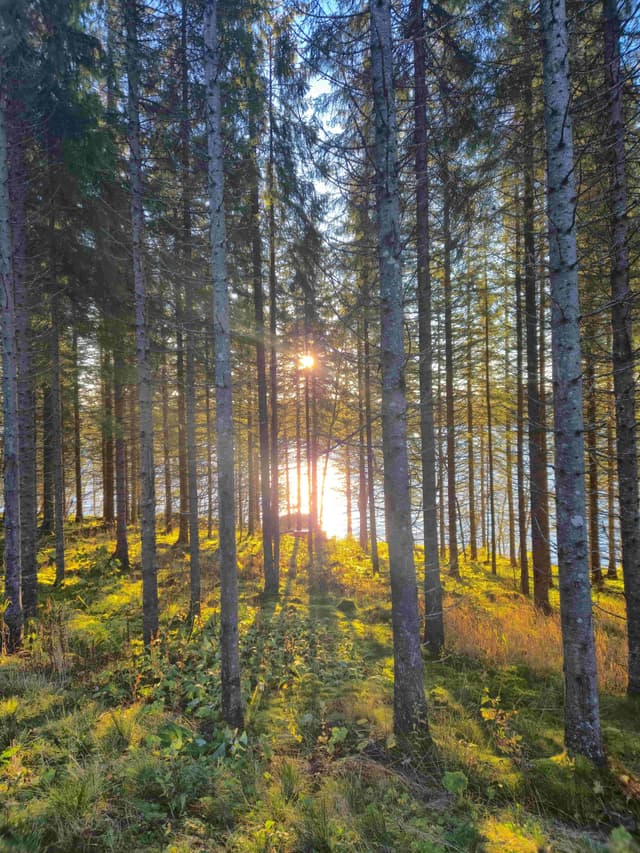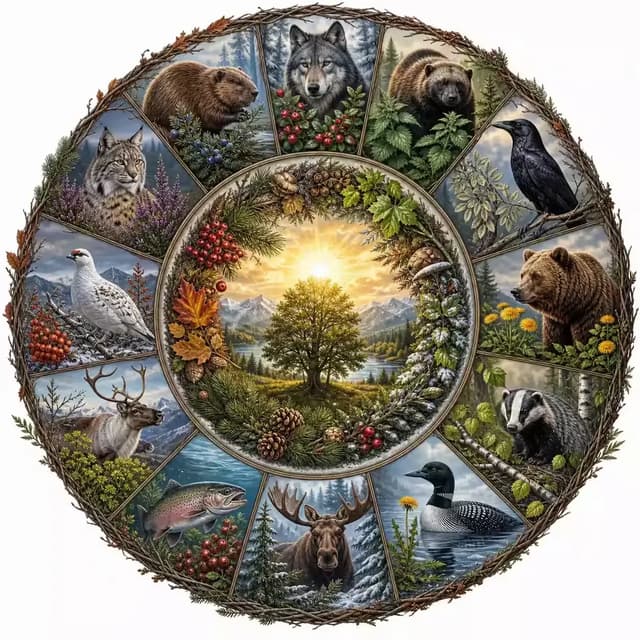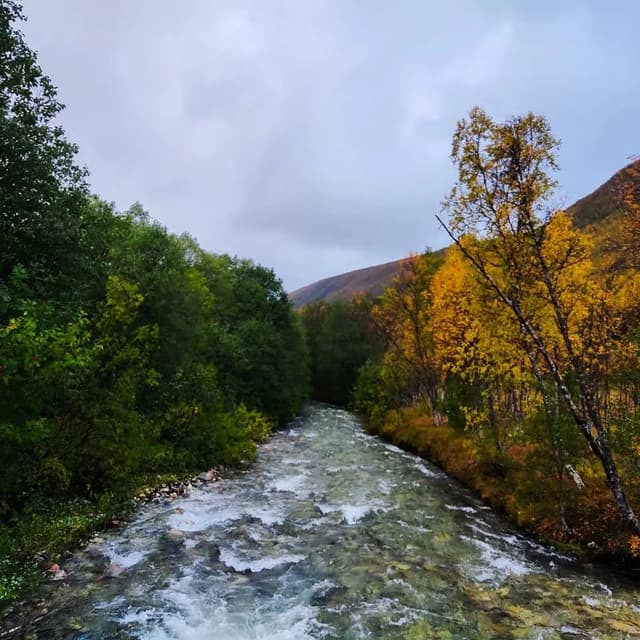
Leibolmmái, often referred to as "the elder man", is one of the more under-told gods of Sami mythology. His domain is the forest, and his power extends over all the game that lives there – from bear to bird. For the Sami, who have lived in a close and dependent relationship with nature for thousands of years, Leibolmmái has been an indispensable protector and helper, especially for hunters and their families. His name and function live on in stories, sacrificial practice and symbols, and offer a unique insight into the Sami worldview and view of nature.
Leibolmmái's role and significance
In pre-Christian Sami belief, nature was populated by numerous gods and spirits, each with its own specific sphere of responsibility. Leibolmmái is the god of the hunt and the forest. He is the one who watches over the animals of the forest, and could grant or withhold hunting luck. To secure his favour, hunters had to give him gifts before setting out on the hunt. These gifts could be meat, blood, fish oil, fish offal or small metal objects, and were often laid at special offering places – known as sieidi or seider – which could be stones, trees or other natural formations.
Leibolmmái is not only a god who had to be appeased; he is also a helper and counsellor. Through rituals and communication, often led by the noaidi (the shaman), hunters could seek his advice and protection. The noaidi used drums to make contact with the spirit world, and Leibolmmái could be represented as a symbol on the drum, often together with other gods of the hunt and of nature.
Myths and tales of Leibolmmái
One of the most well-known tales of Leibolmmái concerns the bear hunt, which was one of the most prestigious and ritually important events in Sami culture. The bear was regarded as a sacred animal, and the hunt for it was surrounded by strict taboos and rituals. Before the hunt began, the hunters had to give offerings to Leibolmmái and ask for his permission and help. If the hunt succeeded, a great feast was arranged, at which the spirit of the bear was thanked and sent back to the forest through ceremonies led by the noaidi. Leibolmmái was then invoked to ensure that the bear's spirit would not be angered and that the animals of the forest would still be available for the hunt.
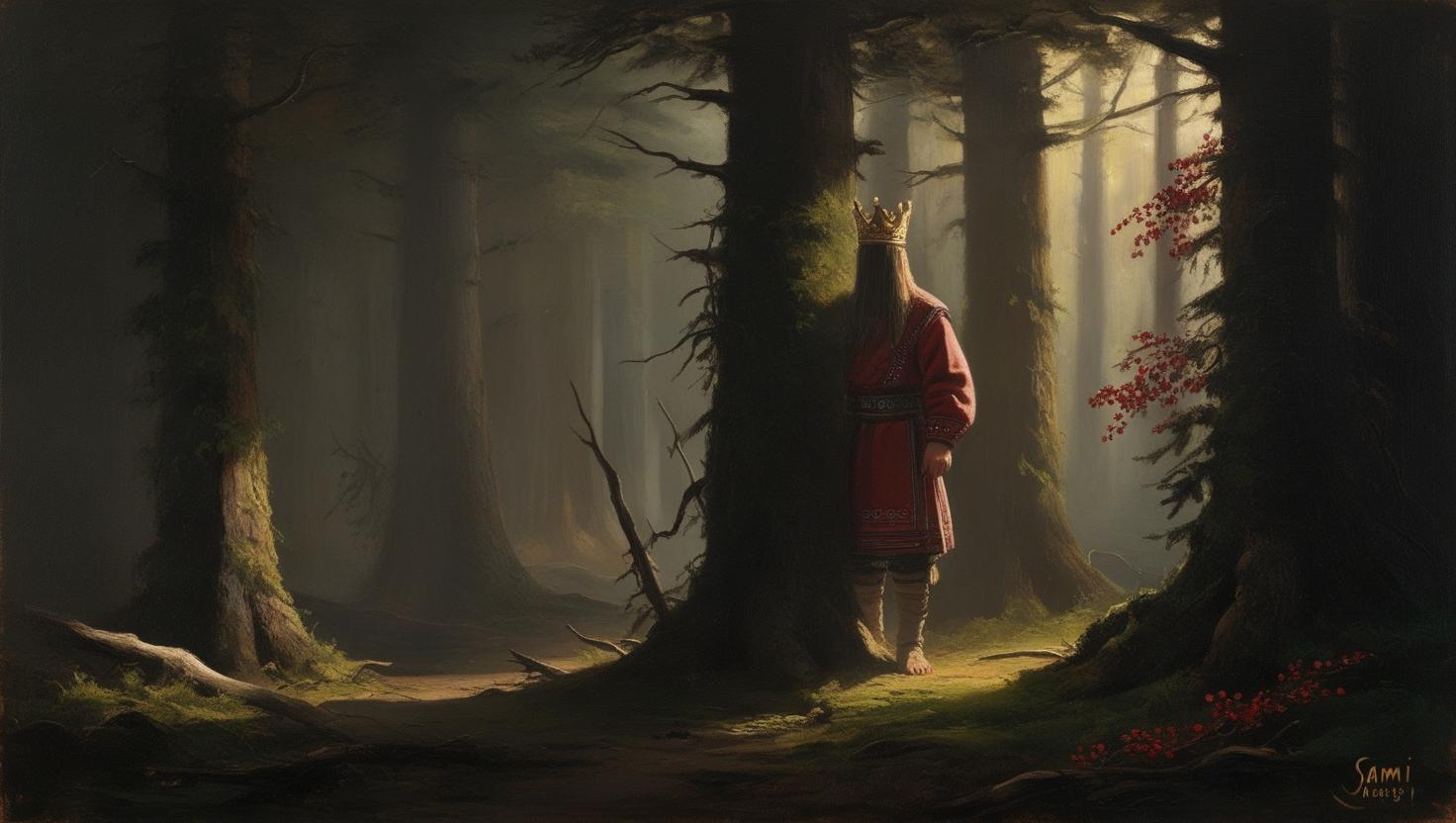
Another tale describes how Leibolmmái could reveal himself to the hunters in the form of an elderly man, often dressed in clothes made of bark or moss. If he was pleased with the hunters' conduct and respect for nature, he could lead them to good hunting grounds or warn them of dangers. But if the hunters were greedy or disrespectful, Leibolmmái could make them unlucky – they might lose their way, lose their quarry or be struck by misfortune.
In some traditions it is also told that Leibolmmái had power over the weather in the forest, and could send fog, rain or sunshine as he pleased. This made him an unpredictable but just god, who rewarded respect and punished arrogance.
Sacrificial practice and sacred places
Offering to Leibolmmái was an integral part of Sami hunting culture. Most of the offering places – sieidi – were associated with special natural formations, such as protruding cliffs, large boulders or trees of distinctive shape. These places were regarded as portals between the world of humans and the world of spirits.
When hunters approached such a place, they stopped, laid down a piece of their catch or another gift, and asked for Leibolmmái's favour. It was said that if the offering was accepted, the animals in the area would be easy to find and hunt. If the offering was rejected, it could mean misfortune or empty hunting bags.
In some areas it was also common to set up small wooden figures or stones in honour of Leibolmmái. These figures could stand at the edge of the hunting grounds, and were regularly visited and given new gifts.
Leibolmmái and the Sami shaman
The noaidi, the Sami shaman, had a special role as an intermediary between humans and spirits. Through drumming, joik and trance, the noaidi could contact Leibolmmái and ask for advice, foretell the hunting luck, or pray for the healing of sick animals and people.
On the drums, Leibolmmái could be depicted as an elderly man, often surrounded by animals or hunting implements. The noaidi could also have helping spirits in animal form, known as noaideloddi or sáivoloddi, which helped to find quarry, protect the reindeer herd or bring news from the spirit world.
Leibolmmái today
Although Christianity eventually displaced much of the old Sami religion, the memory of Leibolmmái lives on in stories, place names and traditions. Many of the old offering places are still known, and some are still used today. The tales of Leibolmmái remind us of a view of nature in which respect, balance and reciprocity are central – values that remain highly relevant in today's environmental debate.
References
NIBIO. (n.d.). Fugl i samisk tro og mytologi II. Fact sheet for the project "Fugleturisme i Midt- og Øst-Finnmark", "Naturarven som verdiskaper (M)".
Snowchange Cooperative. (2004). Pages 1-222.
Religioner.no. Samisk religion.
Sjamanistisk Forbund. List of Sami gods and goddesses.
Kolofon Bokhandel. Samisk mytologi og samisk religion (2024).