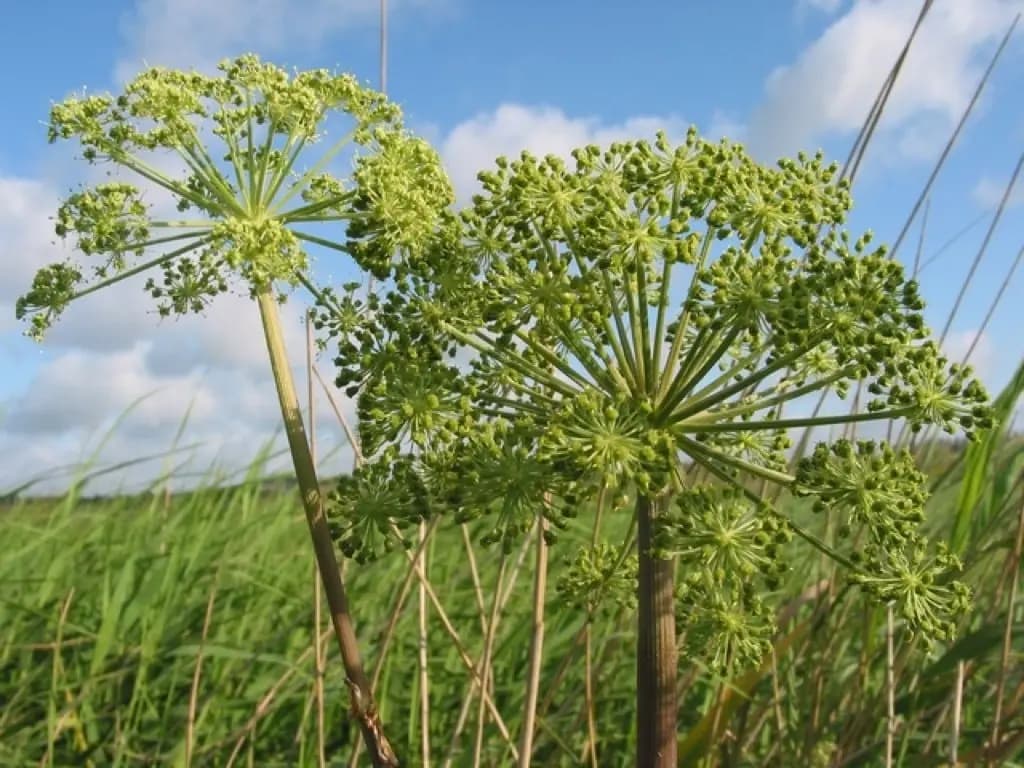
Garden angelica (Angelica archangelica) has been an important plant in Norse, Kven and Sami tradition, both for its medicinal value and for its role in magical practices. This plant, which grows wild in the northern regions of Europe, is deeply rooted in folk medicine and mysticism in these cultures.
Norse tradition In Norse culture, angelica was regarded as a sacred plant with strong protective and healing properties. The plant was often used in ritual contexts to protect against evil spirits and illness. In the sagas and in Norse writings there are examples of how angelica was used to strengthen health and vitality, and it was common to carry pieces of the plant as an amulet against illness.
Angelica was also used in culinary contexts, where its stalks and roots were consumed to strengthen the body and resist illness. The Norse use of angelica shows a deep understanding of the plant's properties, in which it was seen as a source of power that could be used both practically and ritually.
Kven tradition In Kven tradition, angelica has a long history as both a food plant and a magical herb. Kven folk medicine regarded angelica as a key plant for strengthening the immune system, and it was used to make tea and other remedies against coughs, colds and other ailments. The plant was often harvested in spring, when it was considered to have the greatest power after the winter.
In addition to its medicinal use, angelica was also used in magical practices for protection. Angelica could, for example, be hung over the entrance to the house to ward off evil spirits or used in rituals intended to ensure good health and a good harvest. This reflects a broader North Scandinavian tradition in which plants played an important role in both daily life and spiritual practices.
Sami tradition For the Sami, angelica has been an important part of their nature-based medicine and magical tradition. The Sami used angelica in various ceremonies and healing rituals, often led by the noaide (the shaman). The noaide could use angelica to communicate with the spirit world or to protect against evil spirits. The plant was also used to cleanse spaces of negative energies, often by burning parts of the plant as incense during ritual gatherings.
In medicinal use, angelica was used to treat a range of ailments, including digestive problems and respiratory infections. In Sami culture it was common to use the roots of the angelica in infusions or to chew on the stalks to make use of its strengthening properties.
Sources Hagen, Rune Blix: Magisk Tenkning og Overtro i Norrøn Tid (Cappelen Damm, 2010). Michelsen, Gudmundur: Norrøn Urtemedisin (Pax Forlag, 2014). Sara, Ellen J.: Samisk folkemedisin (Davvi Girji, 2004). Rydving, Håkan: The End of Drum-Time: Religious Change among the Lule Saami, 1670s-1740s (Uppsala Universitet, 1993). Sjöberg, Anna-Leena: Kvensk kultur og folkemedisin (Gyldendal, 2007).
Valerian Valerian root, also known as "valeriana," has a rich tradition within Norse, Kven and Sami culture. This plant has been attributed magical properties and medicinal uses in these cultures, often associated with healing and protection.
Norse tradition In Norse mythology and folklore, valerian was often used in connection with protective magic. The plant was regarded as a strong amulet against evil spirits and illness. The Norse use of herbs in magical rituals was closely linked to the belief that plants had specific, supernatural properties. In this tradition, valerian could be used in the form of incense or amulets to ward off evil forces. In addition to its magical use, valerian was also used medicinally to treat anxiety and insomnia, which is reflected in modern applications.
Kven tradition In Kven culture, which shares many elements with Finnish and North Scandinavian tradition, valerian was also regarded as an important medicinal plant. Kven folk medicine incorporated herbs such as valerian into its remedies, especially for the treatment of nervous disorders and sleep problems. The Kven people often used valerian in the form of tea or tinctures, which were taken to calm the mind. Kven shamans or healers could also use valerian in ceremonies to protect against evil spirits or to promote healing.
Sami tradition Sami tradition has a deep connection to nature, and herbs and plants have always been central to Sami folk medicine and magic. Valerian, known as "Biiporássi" in Sami, was used in both medicinal and magical contexts. Sami noaides (shamans) used the plant to protect against evil spirits and to make contact with the spirit world. The roots of the valerian could be worn as an amulet or placed under the pillow to protect against nightmares and evil spirits. In addition, valerian was used as part of ritual incense mixtures during ceremonies.
In a medicinal context, valerian was valued for its calming properties and used to treat sleep problems and restlessness, similar to its use in other traditions. The use of valerian in Sami culture shows an integration of the plant's properties into a broader cosmology that encompasses both healing and spiritual protection.
Sources Gunnell, Terry: The Origins of Drama in Scandinavia (Cambridge University Press, 1995). Sjöberg, Anna-Leena: Kvensk kultur og folkemedisin (Gyldendal, 2007). Sara, Ellen J.: Samisk folkemedisin (Davvi Girji, 2004). Hagen, Rune Blix: Magisk Tenkning og Overtro i Norrøn Tid (Cappelen Damm, 2010).