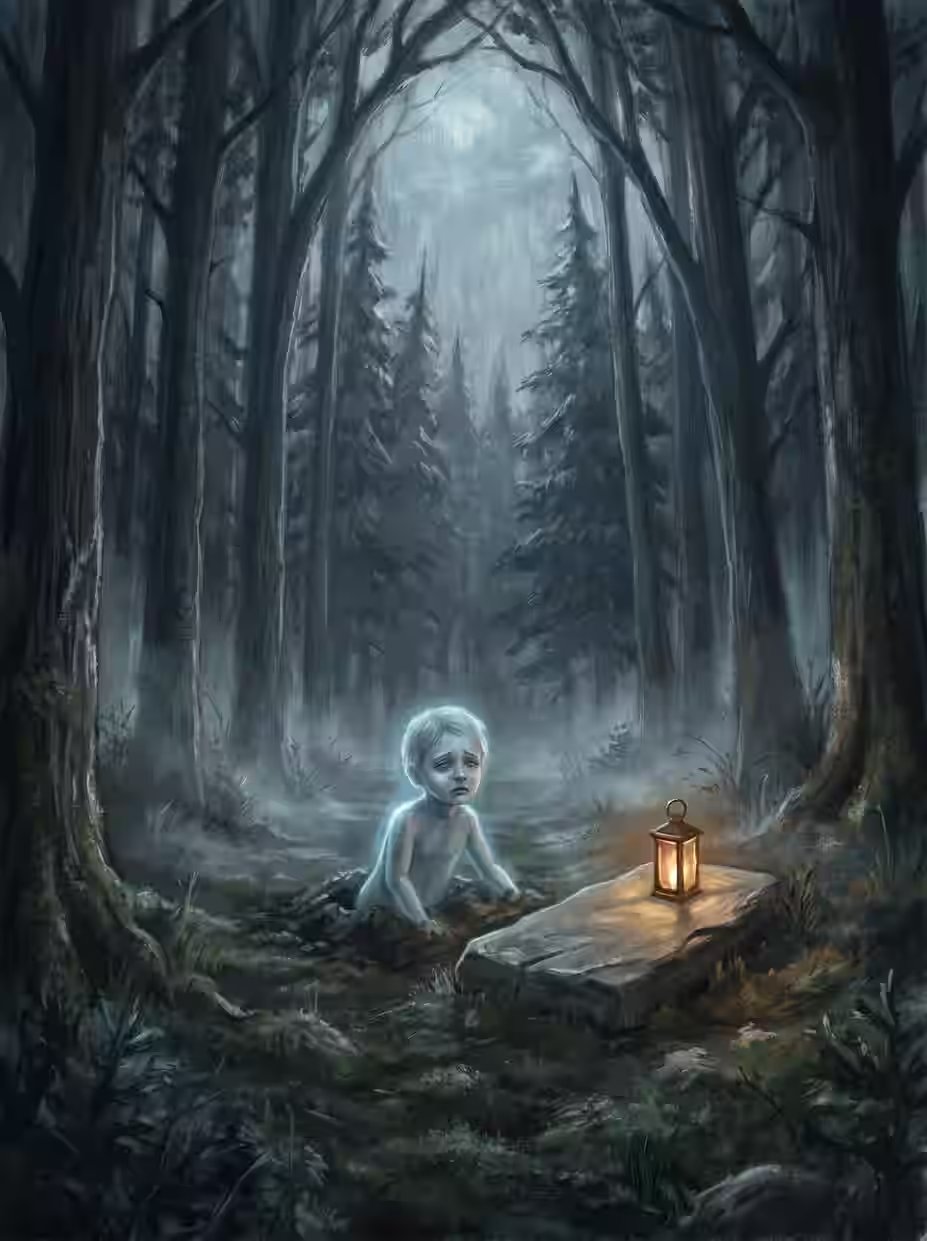
There are figures in folk belief that are not made merely to frighten, but to carry a recognition too heavy to state directly. The myling belongs among them. It is the child who died without baptism, without a name, without a proper grave, and therefore remained in the space between worlds. In the Nordic legends, it is not primarily a monster, but a wound that was given a voice.
The myling comes to us from a time when faith, shame and rituals lay close together. A child who did not receive the proper burial was not only dead; it was also socially and religiously unresolved. The tales of the myling grow out of this unease. They are about that which was hidden but not annulled, and about that which continues to demand attention even after people have tried to cover it up.
A voice in the darkness
Imagine a night where the forest stands like black pillars around the road, and where the silence is not empty, but densely packed with something that listens. It is then that the myling appears in the tales: not always as a visible figure, but often as a sound. A cry beneath the floor. A faint voice at the edge of the bog. A child asking for help, or clinging to the living to be carried to consecrated ground.
This is what makes the myling so effective as a legendary figure. It attacks not only the body, but the conscience. It reminds people that there are deeds that cannot be hidden away in woodsheds, in the earth or in silence. When it appears, it is as if the very earth begins to speak.
In some tales, the myling may be small and frail, almost endlessly sorrowful. In others, it is heavy and eerie, so large that it exceeds the human. It is precisely this duality that makes it memorable: it is both a child and a warning, both vulnerable and dangerous.
Name, earth and peace
The core of the myling tales is not merely death, but a lack of completion. The child has not received what is needed to be incorporated into the community: a name, baptism, a grave, a memory. The myling therefore becomes an image of a life cut short before it took form.
Many legends tell that peace can be achieved if someone does what was never done. The myling must be given a name, or the body must be dug up and laid in the burial ground. What was denied in life must, in death, be given back. This gives the tales an almost liturgical quality. They are not only about fear, but about order, restoration and a kind of belated mercy.
At the same time, it is precisely this that makes the myling unsettling. It reveals that the community was not always merciful in time. Behind the supernatural figure lie human fear, social shame and historical conditions in which unmarried mothers and hidden births could lead to tragedies. The myling is therefore both a legendary being and a cultural memory of what should not have happened.
The moral power of the tale
The myling often functions as a moral figure. It says, without preaching, that what is hidden does not disappear simply because it is not spoken of. The dead return in another form. The voiceless are given a voice. What was buried in haste rises again as unease.
In some traditions, the myling is vengeful. It may lure, cling fast, or punish those who wronged the child. In others, it is more tragic than evil; it seeks help, not revenge. It is not one thing only, but moves between pity and fear.
This is also why the myling has remained alive in modern tales. It fits into gothic landscapes, into horror stories and into texts that wish to explore the language of guilt and memory. A child who found no rest is a narrative figure that almost automatically carries both drama and sorrow.
The myling as a literary figure
As a literary figure, the myling is powerful because it gathers many of folk belief's most important motifs into a single body: the child, the secret death, the voice from the earth, the demand for ritual, and the irreparable loss. It is the horror counterpart to the baptised child, a figure in which the lack of social and religious inclusion is made visible.
The tales of the myling are often short, but they hold great emotional depth. It is precisely this brevity and concentration that makes them so powerful. One room, one night, one voice, and then the world is changed. This is how the best legends work: they open a hole in reality and let an old, unresolved question rise up.
In a modern reading, the myling can therefore be understood as more than a ghostly being. It becomes a symbol of delayed responsibility, of what society failed to take in, and of the human urge to give shape to sorrow. This is perhaps why it still feels relevant. Not because people literally believe in it, but because it expresses something true about what remains after shame and silence.
An old unease in new guise
The myling is not merely a memory from a bygone age. It lives on because it speaks to a more universal experience: that what is not acknowledged seeks a language. In the tales, this language becomes a child crying in the dark. It is a brutal, but effective, image.
It is also an image of how closely folk belief stood to concrete life. It did not arise from abstract speculation, but from births, deaths, burial grounds, houses, churches and paths. The myling belongs in this landscape of earth and human vulnerability. It is an echo of a society in which rituals carried great weight, and where their absence could be felt as an opening into unease.
The myling can therefore still be read as a powerful tale of what remains when people are not able to complete what they have begun. It reminds us that giving a name, giving a place and giving peace are not small acts, but deeply human ways of holding the world together.
The myling is one of the most sorrowful figures in Nordic folk belief. It is created out of loss, but also out of the need for order; out of fear, but also out of compassion. It is the child who found no rest, and therefore must be told of again.
Therein lies its lasting power. The myling is not merely a ghost from the past, but a tale of unfinished human life, of shame that becomes a spectre, and of the hope that even what was hidden may one day find peace.
Sources
The Myling, Swedish Institute for Language and Folklore.
Nordic Folk Belief, part 19: Myling, Kulturminnet.
The Myling in Modern Youth Horror, DiVA.