Paganism, animism, and shamanism are ancient belief systems and practices that have existed in various forms all over the world for thousands of years. In recent times these traditions have experienced a renaissance, with many seeking a return to pre-Christian roots and nature-based worldviews. Unfortunately, these traditions have also been appropriated and misused by extremist groups, especially Nazi and fascist movements.
Historical background
To understand how pagan and animist traditions have been appropriated by extremists, we must look at the historical context. In the late 19th and early 20th centuries, a wave of national romanticism and interest in pre-Christian traditions arose in Europe. This coincided with the rise of nationalism and racial ideologies.
In Germany, this interest in Germanic and Norse mythology was linked to the völkisch movement, which promoted a romanticised notion of a "pure" Germanic past. This ideology laid the groundwork for National Socialism's racial thinking and misuse of Norse symbols.
The Nazis' appropriation of Norse symbolism
Under the Third Reich, the misuse of Norse and pagan symbols reached its peak. The Nazis adopted runes, sun wheels, and other pre-Christian symbols as part of their propaganda and visual identity. Some examples include:
The swastika symbol, which has roots in several ancient cultures, was made into National Socialism's foremost symbol.
The SS organisation used two Sowilo runes as its emblem.
This appropriation gave these symbols a new and distorted meaning, severed from their original context. For many, the symbols became inextricably linked to the atrocities of Nazism, which has created challenges for modern pagans who wish to revive their use.
Modern neo-Nazi and far-right movements
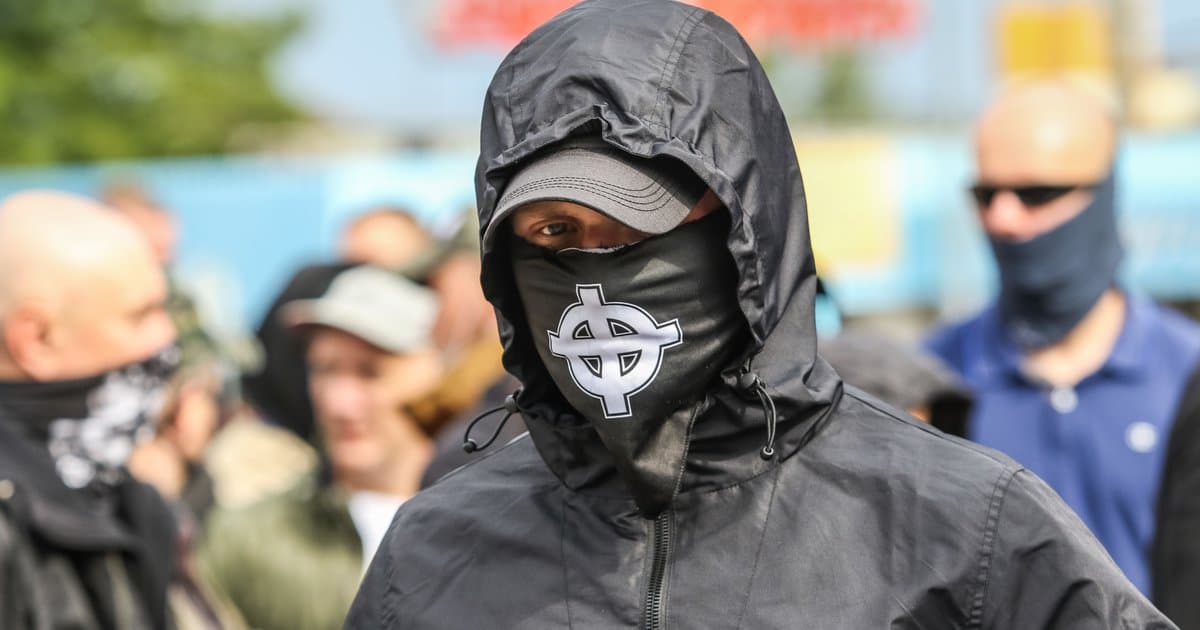
After the Second World War, neo-Nazi and other far-right groups have continued to appropriate pagan symbols and concepts. This often happens under the guise of "reviving" pre-Christian traditions, but with a strongly racist and ethno-nationalist character.
Odinism
One current that has been particularly problematic is so-called "folkish" heathenry or Odinism. These movements claim that Norse paganism is an "ethnic religion" that belongs only to people of Northern European descent. They often combine religious practice with white supremacist theory and racist ideology.
Examples of such groups include:
Odinic Rite, founded in England in the 1970s
Asatru Folk Assembly in the United States, which explicitly promotes a "white" version of Ásatrú
These groups differ from "universalist" pagan movements by claiming that religion and ethnicity are inextricably linked.
The use of symbols in far-right circles
Modern far-right groups continue to use Norse and pagan symbols as identity markers and to attract new followers. Some examples include:
The Tyr rune, used by some neo-Nazi groups
The Thor's hammer, which has been adopted by white power circles
The Valknut symbol, used by certain racist organisations
This use of symbols creates confusion and casts suspicion on legitimate pagans who use the same symbols without racist undertones.
The situation in the Nordic countries
The Nordic countries hold a special position when it comes to modern paganism, since much of the symbolism and mythology originates from here. At the same time, the region has seen the rise of far-right groups that appropriate these elements. Historically, all of the signs mentioned in this article have their origin long before theories of race arose.
Norway
In Norway there are two state-recognised Ásatrú communities: Åsatrufellesskapet Bifrost and Forn Sed Norge. Both of these actively distance themselves from racism and extremism. At the same time, groups such as Vigrid have combined Norse symbolism with neo-Nazi ideology, which has created negative associations with pagan symbols in the Norwegian public sphere.
Sjamanistisk Forbund, another recognised religious community, works to promote shamanic practices and nature religion without racist undertones. They strongly distance themselves from all forms of extremism and from the misuse of traditional symbols.
Sweden
In Sweden there are several Ásatrú organisations, including Samfundet Forn Sed Sverige and Nordic Asa-Community. These groups have different approaches to political engagement, but both distance themselves from racism and extremism.
At the same time, Sweden has experienced the rise of far-right groups that use Norse symbolism, which has created debate and concern in society.
Denmark
Denmark has also seen an increase in interest in Norse religion and tradition. Forn Siðr, the Danish Ásatrú community, was founded in 1997 and is recognised by the Danish state. They actively distance themselves from racism and political extremism.
Iceland
Iceland holds a special position, since Ásatrúarfélagið was recognised as a religious community as early as 1973. This makes Iceland a pioneering country for modern Ásatrú. Ásatrúarfélagið has grown considerably and now makes up over 1% of Iceland's population. They clearly distance themselves from racism and extremism.
The fight against appropriation
Legitimate pagan and shamanic organisations actively fight against the appropriation of their traditions and symbols by extremist groups. Some strategies include:
Clearly distancing themselves from racism and extremism in public statements and statutes.
Education and information work about the symbols' original meaning and use.
Cooperation with anti-racist organisations and authorities.
Inclusive practice that emphasises that modern paganism is open to everyone, regardless of ethnic background.
Organisations such as Sjamanistisk Forbund in Norway are especially clear in distancing themselves from all forms of extremism and from the misuse of traditional symbols and practices.
The distorted meaning of the symbols
One of the greatest challenges pagans and shamans face is how many of their sacred symbols have acquired a distorted meaning in the public sphere because of extremist misuse.
Examples of distortion:
Thor's hammer: A traditional symbol of protection and strength, now viewed with suspicion because of its use in white power groups.
Runes: Ancient script signs with magical and spiritual meaning, now often seen as "Nazi symbols" because of the SS's use of certain runes.
Yggdrasil: The world tree in Norse cosmology, now sometimes misinterpreted as a symbol of "pure" Norse roots by extremists.
This distortion of the symbols' meaning creates great challenges for modern pagans and shamans who wish to use these symbols in their spiritual practice without being associated with hateful ideologies.
Reclaiming movements
As a counter-reaction to the appropriation of pagan symbols and traditions, "reclaiming" movements have arisen that actively work to take back and restore the symbols' original meaning and use.
These movements focus on:
Historical research to document the symbols' original context and meaning.
Public use of the symbols in positive, inclusive settings.
Educating the general public about the symbols' true history and meaning.
Cooperation with artists and cultural workers to create new, positive associations with the symbols.
The goal is to "detoxify" the symbols and make it possible for pagans and others to use them without fear of misunderstandings or negative associations.
The appropriation of pagan, animist, and shamanic traditions and symbols by Nazi and fascist groups is a serious problem that creates challenges for legitimate practitioners of these worldviews. Especially in the Nordic countries, where much of the symbolism has its roots, this has created tensions and misunderstandings.
At the same time, we see that pagan organisations and religious communities are actively fighting against this misuse. They work to restore the symbols' original meaning and to emphasise the inclusive and peaceful aspects of modern paganism and shamanism.
The challenge ahead will be to continue this work while remaining vigilant against new forms of extremist appropriation. It is important that society as a whole learns to distinguish between legitimate spiritual practice and hateful ideologies that misuse old symbols for their own purposes.
References
1 Journal.fi: Pagans, Nazis, Gaels, and the Algiz Rune
2 Reddit: Can someone explain why Norse spiritualism has been adopted by...
3 USHMM: Origins of Neo-Nazi and White Supremacist Terms and Symbols
4 Protean Magazine: Tradition and Resistance: Reclaiming Neofolk for Antifascism
5 Wikipedia: Heathenry (new religious movement)
6 Wikipedia: Sjamanistisk Forbund
7 Wikipedia: Åsatrufellesskapet Bifrost
8 University of Alberta: How hate groups misuse medieval symbolism to promote white supremacy
9 Grey Dynamics: Far Right Usage of Pagan and Nordic Iconography
10 Wikipedia: Modern paganism in Scandinavia