Norse cosmology is a fascinating and complex worldview that originates from the Norse peoples of Scandinavia. This cosmology offers insight into how the ancient Norse understood the structure of the universe, its creation, and the many gods and beings that populated their mythological world. Norse cosmology includes a rich description of celestial bodies and their significance. In this article we will explore Norse cosmology in detail, including the three levels of the world, important gods, creation myths, and the celestial bodies that are central to this tradition.
The Structure of the World In Norse cosmology the world is divided into three levels that contain nine worlds:
Upper World
Asgard: The home of the gods, where they dwell in magnificent halls such as Valhalla and Fólkvangr. Vanaheim: Home of the Vanir, another group of gods associated with fertility and wealth. Alfheim: Home of the elves, luminous beings who have a close connection with nature.
Middle World
Midgard: The world of humans, protected by the gods against the chaotic forces beyond. Jotunheim: The world of the jötnar, the giants who are often in conflict with the gods. Svartalfheim/Nidavellir: Home of the dwarves, skilled craftsmen who make magical objects.
Lower World
Niflheim: A world of ice and cold, home to frost giants and Helheim. Muspelheim: A world of fire, home to the fire giant Surt and other fire beings. Helheim: The realm of the dead, ruled by Hel, where those who have not fallen in battle end up.
Creation Myths Norse cosmology has several central creation stories that explain the origin and structure of the universe.
Ginnungagap, Ymir and the Creation
Before anything else existed, there was Ginnungagap, a great void between Niflheim and Muspelheim. When the ice from Niflheim met the fire from Muspelheim, the giant Ymir was created. From Ymir arose the first jötnar. Odin and his brothers Vili and Vé killed Ymir and used his body to create the world. His blood became the seas, his flesh the earth, his bones the mountains, his hair the trees, and his brain the clouds. From his skull they created the sky, supported by four dwarves (Nordri, Sudri, Austri, Vestri).
Ask and Embla
The first humans, Ask and Embla, were created by Odin, Vili and Vé from two tree trunks. Odin gave them life and spirit, Vili gave them reason and movement, and Vé gave them form, speech, hearing and sight. Thus humankind was born.
Important Deities Norse cosmology is rich in gods and goddesses, each with their own domains and attributes.
Odin: The highest god, known as the Allfather. God of wisdom, war, death and poetry. He dwells in Valhalla. Thor: God of thunder, lightning and storms. Protector of humankind and the gods against the jötnar. Identified by the hammer Mjölnir. Freyja: Goddess of love, fertility, war and death. Half of those who die in battle come to her realm Fólkvangr. Loki: A complex god known for his cunning and his ability to change shape. Associated with chaos and deception.
Celestial Bodies and Their Significance Celestial bodies play an important role in Norse cosmology, often associated with gods or mythical beings.
Sun and Moon
Sun (Sól) and Moon (Máni) are siblings who each drive their own chariot across the sky. Sól drives the sun chariot, drawn by the horses Arvak and Alsvid, while Máni steers the moon chariot. They are pursued by the wolves Skoll and Hati, and when Ragnarök comes, the wolves will catch them, and the world will be cast into darkness. The Stars:
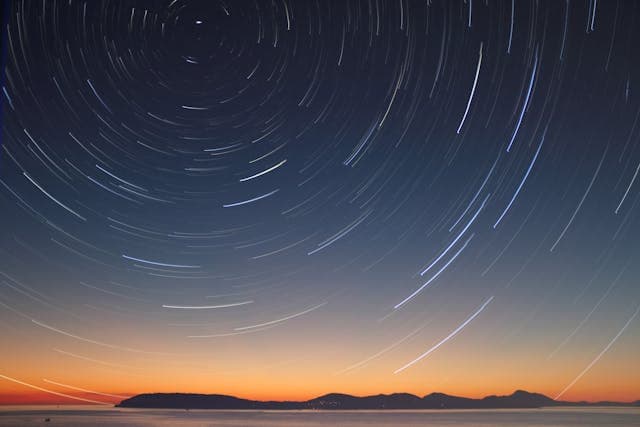
The stars in Norse mythology are the lights that the gods placed in the sky to illuminate the night. Some of the most important constellations include: Karlavagn (the Big Dipper): A group of stars often associated with a wagon. Orion: Although the name Orion comes from Greek mythology, there are parallels in Norse legends, which describe a great hunter in the sky.
Bifrost
Bifrost is the rainbow bridge that connects Midgard and Asgard. This bridge is a symbol of the connection between mortals and the gods. Heimdall, the guardian of the bridge, protects Asgard against attack.
Ragnarök Ragnarök is the prophecy of the end of the world in Norse mythology. This great battle between gods and jötnar will result in the destruction of the world and its rebirth. During Ragnarök many of the great gods, including Odin and Thor, will meet their end, but after the battle is over a new world will rise from the sea, green and fertile, ready to begin anew.
Norse cosmology is an intricate and fascinating worldview that combines mythology, natural phenomena, and deep philosophical insights. Through stories of the creation of the world, the many gods and their tasks, and the important celestial bodies, we gain a clear picture of how the ancient Norse understood their universe. This cosmology continues to inspire and fascinate people all over the world, and its rich traditions offer valuable insight into humanity's eternal search for meaning and connection with the divine.
Sources Snorri Sturluson. Den yngre Edda. Translated by Arthur Gilchrist Brodeur. (1916) Saxo Grammaticus. Gesta Danorum. Translated by Peter Fisher and Hilda Ellis Davidson. (1979) Hilda Roderick Ellis Davidson. Gods and Myths of Northern Europe. (1964) John Lindow. Norse Mythology: A Guide to Gods, Heroes, Rituals, and Beliefs. (2001) Rudolf Simek. Dictionary of Northern Mythology. (1993) Jesse Byock. The Prose Edda: Norse Mythology. (2005)