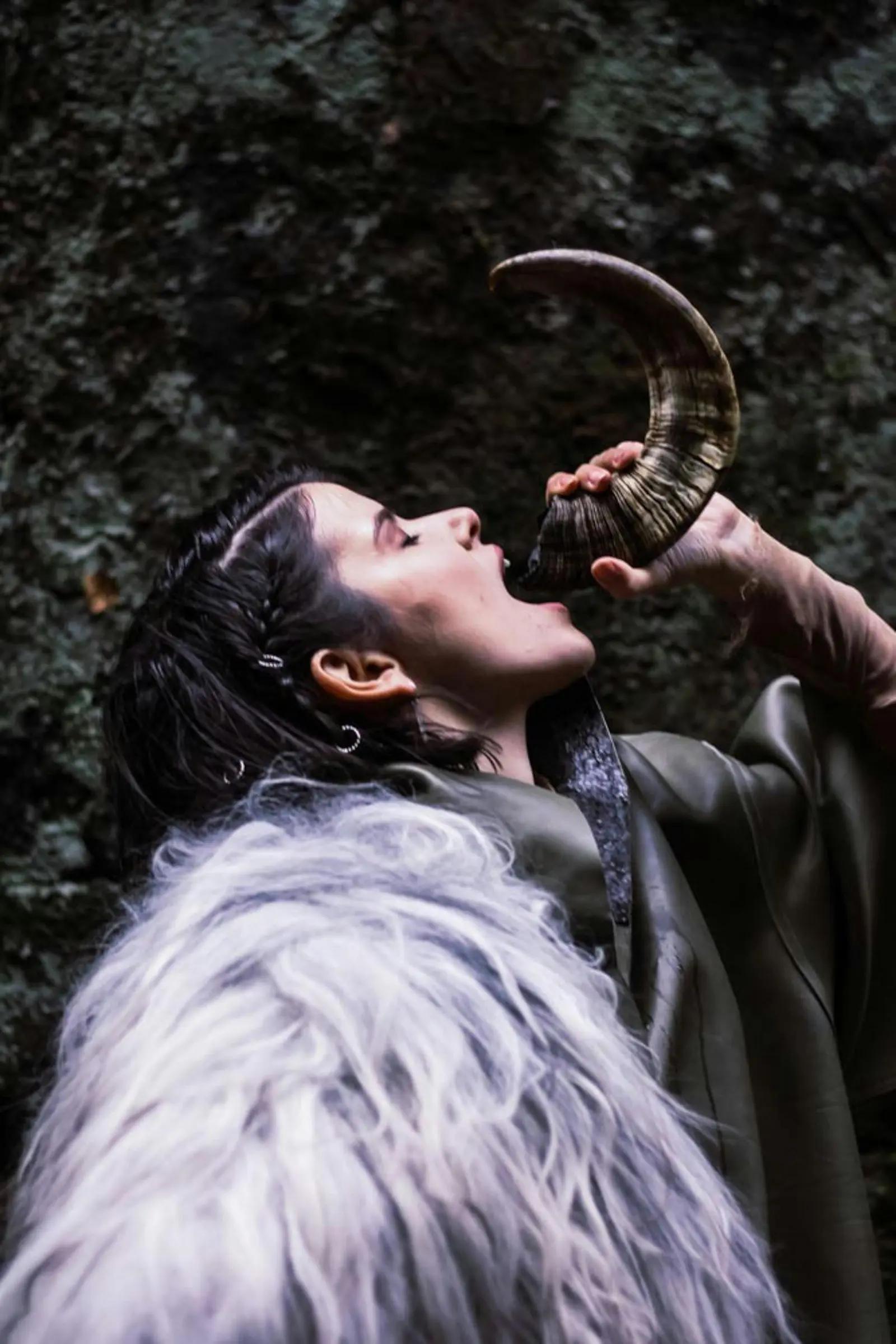
Sometimes it happens in the most surprising of places. Perhaps you have been at a festival and felt the drums vibrate in your body, or seen a group of people gathered for ceremonies out in nature. Then you may have encountered one of the newer, yet at the same time ancient, religious movements in Norway – groups like Sjamanistisk Forbund, who seek wisdom in traditions far older than most Norwegian institutions.
A different path than mainstream society
Pagan religions – which often involve nature-based spirituality, ritual acts outdoors and inspiration from pre-Christian times – differ markedly from the more established religions in Norway. Here it is not a matter of a strict creed, but of the freedom to find meaning for oneself. Even so, such groups face a number of challenges in their encounter with mainstream society.
Cultural visibility and respect
For many, knowledge of pagan paths is all but absent. This leads to misunderstandings: some may think of unfamiliar rituals shrouded in mystery and distance, while others believe it is purely entertainment. In reality it is far deeper. Members of such groups often experience that they must explain, defend or even apologize for their faith. This is a challenge when large parts of the population know Christianity or other long-established religions best, and authorities, media and institutions often have little knowledge of the diversity within the field of life stances.
The struggle for equal treatment
There are public arrangements, support schemes and rights for religious communities in Norway. But being recognized and placed on equal footing with the established religions can become a test of patience. Many pagan communities must fight for ceremonial rights, for the ability to marry, name or hold funerals on their own terms. They often have to relate to regulations tailored to larger and more traditional faith communities. This can feel unjust, especially when faith and practice stand so far from the framework and norms of the state church. It is early morning, and a child asks, hearing the teacher's friendly voice: "What is it we actually believe in here in this country?" Far, far more than one might think, there are Norwegians who do not recognize themselves in the answers given. Here, as in so many other places, the field is set by the major players: the curriculum markers of the school are clear, resources, teaching materials and the marking of holidays nearly always point to the well-established. And for those who have no synagogue, church or mosque, but perhaps rather a ritual site in nature, the road to recognition feels heavy and winding.
The school – a shared space with narrow doors
Christian holidays are still broadly marked in Norwegian school life; church visits as a Christmas closing event are often the rule rather than the exception. The curricula do tend to mention a diversity of life stances, but with more depth and room for the majority. For pagan faith communities – and the children who belong to them – it quickly becomes the case that only their name is mentioned, without explanation, or else they themselves must ask to be exempted from activities they do not identify with. Access to their own voices, their own rites or an equal place in the school's books? That is often missing entirely.
In the light of the media
The Church of Norway has been a natural protagonist in Norwegian media for several decades. They are given room to explain their faith, respond in debates, deliver religious programs and devotionals. For pagan communities, by contrast, visibility often means being brought forward in the tabloids as exotic features, or in connection with controversial events. They are rarely given room for in-depth interviews, explanatory op-eds or programs of their own that could show traditions and celebrations on their own terms. What could have been a space for building understanding instead becomes tabloidized, marked by distance and inaccurate portrayals.
In search of platforms and justice
While the Church of Norway has its own buildings, financial support and a natural home in ceremonies and public observances, pagan groups often lack both resources, access to public spaces and recognition as voices to be heard on larger occasions. Applications for grants and registration are possible – but they require a level of organization and membership numbers that can make it difficult for small groups to reach the threshold. Ritual sites exist, but rarely in public arenas, and when important conversations about the country's life stances are held, such minorities are not given a microphone of their own.
Equal rights or equal opportunity?
Norway has strong laws for freedom of religion and life stance. But practice shows that there is a difference between "having the right to" and actually "being given the opportunity to." For all who seek a home in the old, in nature and in traditions outside the established, the struggle for a place at the table – in schoolbooks, newspaper columns and society's important conversations – remains an ongoing project. Perhaps the time is ripe for the voices that have always been here, but never been given room, to finally be heard?
"Where the large faith communities have doors ajar toward all the country's stages, the smaller ones still stand knocking at the edges, hoping that someone will open – and listen."
Much to build up – little to lean on
Large faith communities often have long traditions, ready-made rituals, buildings and institutions – financially and organizationally as well. Pagan groups like Sjamanistisk Forbund often start with an ideal and enthusiasm. Everything is organized from the ground up: networks, membership records, events, even the training of those responsible for ceremonies. Many dream of their own ceremonial sites out in nature, but meet both a lack of resources and municipal uncertainty. This creates strong communities, but also great vulnerability.
Europe – old roots, new shoots
Along rivers, between forests, on cobblestone squares and in busy cities – Europe tells a story that stretches thousands of years back. Beneath the surface of old cathedrals and modern city streets, the traces of life stances and rituals that were once meant to be forgotten still remain. Today these old traditions are awakening to life in new ways, creating a religious landscape different from that of the generations before us.
The established and the seeking
On the one hand stands the continent's deep, shared Christian history; high spires toward the sky, ancient monasteries and traces of faith through culture and holidays. But beneath this broad roof a quiet shift is taking place. More people today choose to leave the major religions – some in protest, others because they seek something new or wish to return to what their ancestors believed. The result is a mosaic of religiosity: from nature-based customs in Scandinavia and the Baltic countries, to urban witch communities in the heart of Berlin and Bucharest.
Diversity and resistance
There is no longer one way to be "pagan" in Europe. Some build up local variants strongly rooted in history and identity, as we see in Lithuania, Latvia and Finland, while others are open to inspiration across borders and eras. Common to many groups, especially the so-called Native Faith or ethnic-religious movements, is the wish to revive, and perhaps also to defend, local traditions against the pressure of global sameness.
Even so, these movements meet challenges in their encounter with state, church and society. It can be anything from a lack of public recognition, to public skepticism and stereotyped notions. In some countries there is official freedom of religion, but old power structures and norms still set limits on how much room minority traditions are given.
Community and dreams of the future
Unity and identity are central to many pagan communities. Not infrequently, community itself becomes a kind of counterforce against exclusion and misunderstanding; here there is room for curiosity, dreams and the search for meaning on one's own terms. Inspired by landscapes, folk traditions and local myths, celebrations, ceremonies and festivals are now growing forth – sometimes almost quietly, other times with public attention and media interest.
At the same time there is much to build up: rituals must be reconstructed, knowledge sought in old texts and oral tradition, and groups often organize themselves through voluntary work and digital networks. For many this gives precisely that feeling of being part of something new, something sprouting beneath the surface of Europe's familiar facades.
A living longing
Whether you encounter a torchlight procession through the forest in Estonia, a modern blót in Denmark or a solemn flower-wreath gathering in the realm of the midnight sun in the north, there is one thing that recurs: the wish for belonging – to the earth, to the community and to something that existed before us all. Through the many small and large initiatives in Europe's pagan community, more and more feel that they can finally come home, even when the journey is still new.
"To rediscover old paths can be a quiet act of rebellion – and a hope for a new joy of beginning. Perhaps it is precisely in the unknown landscape that we find the way forward, together."
Growth and hope for the future
But it is precisely in the challenges that community sprouts. It is in the close and the personal, in the desire to find a path outside the established, that many find the courage to get involved. Perhaps being part of a smaller group – a gathering of people who dare to return to their roots, and at the same time look forward – can be a place to find both identity and belonging. There, ceremonies are held beneath the open sky, the transitions of life are celebrated and the community grows strong.
For some it feels like coming home, even though the road is new and unfamiliar. Perhaps this is how a little seed of curiosity is planted – and it may not take much more before still more people wish to join the journey.
Read more about membership in Sjamanistisk Forbund
References
Uldal, Geir & Winje, Geir: Paganism in Norway. Brill. (2016)
Reed, M.F.: Norwegian Stave Churches and their Pagan Antecedents. Academic article.
Nordeide, S.W.: The Christianization of Norway. Norwegian Archaeological Review. (2007).
Rountree, Kathryn (ed.): Contemporary Pagan and Native Faith Movements in Europe: Colonialist and Nationalist Impulses. Berghahn Books. (2015).
Lundby, Knut: Conflictual Diversity and Contested Cultural Heritage: Newspaper Coverage of Religion in Norway 1938–2018. University of Oslo.
Dyrendal, Asbjørn: Media Constructions of 'Satanism' in Norway (1988-1997).
Asprem, Egil: Heathens up North: Politics, Polemics and Contemporary Norse Paganism in Norway (2008).