In the vast landscapes of Sápmi, where the wind carries stories from generations past, the knife has always been more than a tool. It has been a companion, a protector – and for some, an instrument of healing. This is the story of Sami knife healing, of ancient rituals, living faith and people like Mirakel Mikkel, who with his great knife, stuorra nibi, brought hope and relief to those who sought help.
The Sami worldview and the paths of healing
In Sami tradition everything is alive. The mountains, the rivers, the trees and the animals each have their own spirit, and the human being is only one part of this great interplay. When illness strikes, it is not only the body that suffers – it may be an imbalance between the human and nature, or perhaps a part of the soul has been lost. To restore balance, the Sami have throughout the ages sought help from healers, often called noaide, who could move between worlds and draw power from both the earth and the spirits.
The knife – more than a tool
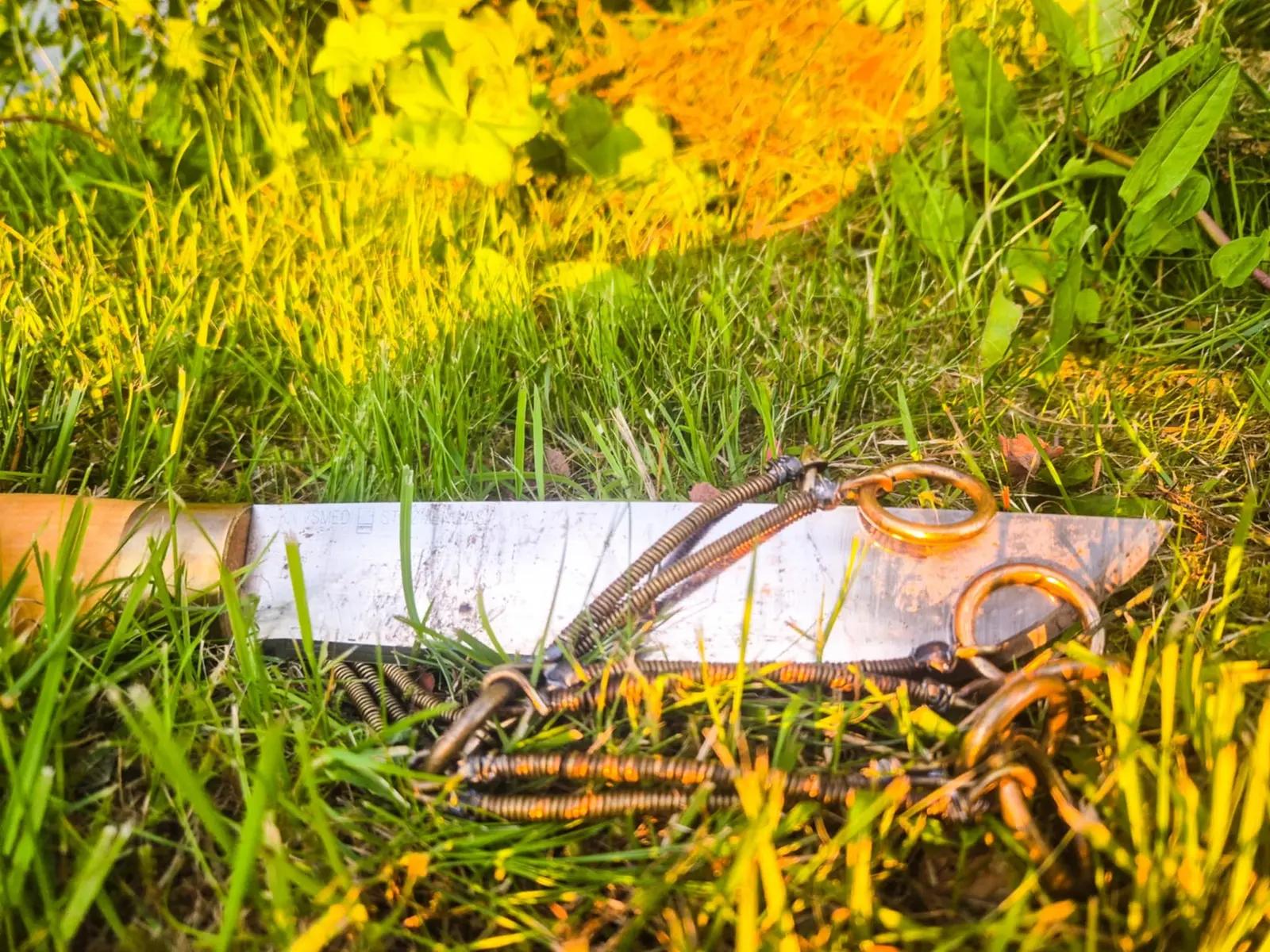
The knife has always held a special place in Sami culture. It is a symbol of trust, strength and respect. But the knife is also a magical object, charged with power. In the service of healing it is used not to harm, but to protect, cleanse and heal. It is said that the metal, brass in particular, has the ability to drive away evil forces and bring balance back.
Mirakel Mikkel and the great knife to the sun
Among the many who have practiced knife healing, Mirakel Mikkel stands out as a living legend. He was known for using the great Sami knife, Stuorra nibi, in his rituals. Before he began, he raised the knife toward the sun, let the light play across the blade and "charged" it with the sun's power. For Mikkel this was more than a symbolic gesture – it was a way of drawing in nature's energy, so that the knife could become an instrument of healing. People came from far away to experience his treatments, and many told of miraculous relief after their encounter with the sun-charged great knife. Now, Mikkel Gaup had several ways of healing, but the knife was indeed one of them.
The rituals of healing – as they are told
When someone sought help, it often began with a conversation. The healer listened, asked questions, and tried to understand where the imbalance lay. Then the ritual could begin:
The healer would move the knife a few centimeters above the skin, from the head downward, or in circles over the afflicted area. It was not about cutting, but about "cutting away" what troubled – illness, pain or evil spirits.
At the same time the healer might murmur prayers, sing a joik or recite ancient formulas. The words and the tones were just as important as the movements.
Sometimes other steel implements were also used, for steel was seen as especially cleansing and protective.
In cases of bleeding the knife was passed over the wound while the healer prayed. For gout and boils the same method was used, often in combination with natural remedies such as tinder fungus.
The knife as protector and amulet
The knife was not only a tool for healing, but also an amulet. Many carried the knife with them daily, or placed it under the pillow to protect against bad dreams and "the dead." In rituals the knife could be placed near the sick person to keep evil forces at bay.
The passing on of knowledge
Knowledge of knife healing was often handed down through inheritance. It was not something learned in school, but through stories, observation and practice. The healers rarely took payment, and it was important that the knowledge be used with respect and care. The rituals often took place in secret, especially after Christianity and the policy of Norwegianization made such practices suspect or forbidden.
Knife healing today
Though much of the old knowledge has been threatened, knife healing lives on. Many Sami today use both conventional medicine and traditional methods. For some, the most important thing is not necessarily the physical effect, but the security, the community and the faith that accompany the ritual. Research shows that a significant share of the population in Sami areas has sought out traditional healers, and the practice is still a natural part of everyday life for many.
The encounter with the modern
It is not always easy to speak of traditional healing in the encounter with the public health service. Many are reluctant to share their experiences, but there is a growing understanding that such traditions have an important place in Sami identity and understanding of health. Legally, it has also been made possible for the knife to be used in ceremonies, as long as this takes place under worthy conditions.
Cultural sustainability and the future
Knife healing is a living example of cultural sustainability. The tradition adapts to new times, yet still carries with it old values and knowledge. Work is underway to document and revitalize this and other Sami traditions, so that they may live on for generations to come.
Comparison and distinctiveness
The use of a knife or steel in healing is found in other Indigenous traditions as well, but the Sami distinctiveness lies in the combination of an animistic worldview, practical craft and a deep respect for the power of nature and of the implement. The knife is not merely a tool, but a bridge between the human being and the spirit world.
Sources
Larsen, Anette Langås. "Tradisjonell helbredelse i samiske områder: praksis, betydning og møte med helsevesenet." UiT The Arctic University of Norway.
NAFKAM. "Samisk folkemedisin." The National Research Center in Complementary and Alternative Medicine.
Minde, Gunn-Tove. "Kulturell bærekraft – praksiser i samiske barnehager." UiT The Arctic University of Norway.
"Samekniv." Store norske leksikon.
"Jernarbeid i samisk tradisjon." Girji-info.
"Oppfordrer sykepleiere til å snakke om tradisjonell helbredelse." Sykepleien.
"Sjamanisme." Store norske leksikon.
"Samisk tradisjonell kunnskap i naturfag." Munin, UiT.