Shamanism is one of the oldest spiritual practices in human history, and its roots can be traced back to the earliest societies in Northern Norway. In this article we will explore the historical and archaeological evidence for shamanic practices in Northern Norway, including cave paintings and rock carvings, as well as their significance for understanding shamanism in the region.
Historical Background
Shamanism has been an integral part of Sami culture in Northern Norway for thousands of years. The earliest traces of shamanic practices can be dated back to the Stone Age, where archaeological finds show that people in this region had a deep connection to nature and its forces. The Sami, who are the original inhabitants of Sápmi (the area stretching across parts of Norway, Sweden, Finland, and Russia), have traditionally practiced a form of shamanism known as "noaidi".
Archaeological Evidence
Cave Paintings
Cave paintings are among the oldest art forms found in Northern Norway. These paintings, which are often found in caves and on cliffs, depict images of people, animals, and symbols that can be linked to shamanic rituals. A notable example is the cave paintings at the Alta fjord, which date back to approximately 4200–500 BC. These paintings depict scenes of hunting and ritual acts, suggesting that shamanic practices were central to daily life.
The cave paintings can be interpreted as a form of communication with the spirit world, in which people sought to understand and control the forces of nature. This is an important part of shamanism, where the shaman serves as a link between the physical world and the spirit world.
Rock Carvings
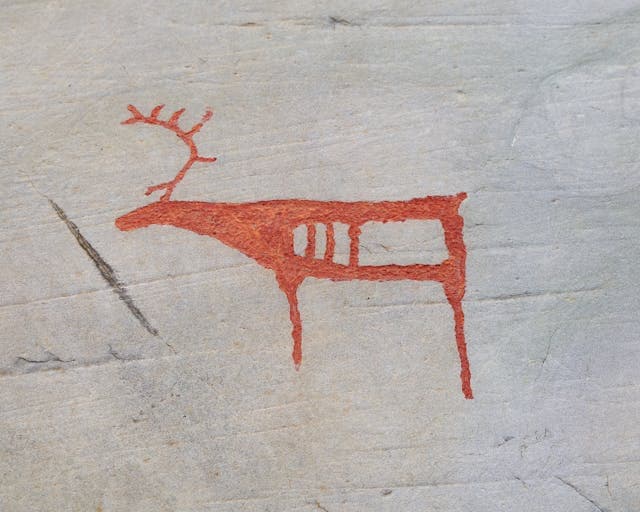
Rock carvings are another important archaeological find that provides insight into shamanic practices. In Alta we find rock carvings depicting people in ritual poses, often with drums or other implements. These images may indicate that shamanic rituals were performed to communicate with the spirits or to ask for protection and guidance.
The rock carvings also offer a glimpse into society's relationship with the animals around them. Many of the images depict reindeer, which is central to Sami culture and economy. This relationship between people and animals is a fundamental part of shamanism, where animals are often regarded as having spiritual qualities.
Sami Shamanism, Noaidevuohta
Shamanism among the Sami is characterized by the term "noaidi", which refers to the shaman or spiritual leader. The noaidi held an important role in society, as he or she could heal the sick, give advice about hunting and fishing, and lead ritual ceremonies. Through drum journeys, the noaidi could communicate with the spirit world and bring back knowledge or help.
The noaidi often used drums during their rituals to achieve trance and make contact with the spirits. The drums were not merely musical instruments; they were also symbols of power and of the connection to the spiritual realm. In addition to drums, the noaidi made use of joik – a traditional Sami form of song – to express emotions and tell stories about nature and the spirit world.
Cultural Significance
Shamanism has not only been a religious practice; it has also held great significance for the structure and identity of society. Through rituals, society has been strengthened as people gathered for shared celebrations and ceremonies. This sense of community has been important for maintaining traditions and passing on knowledge from generation to generation.
Today we are seeing a revitalization of Sami culture and shamanism. There is a growing focus on preserving traditional practices while also finding new ways to integrate them into modern life. This includes the preservation of the language, the music, and the spiritual traditions.
Society's Relationship with Nature
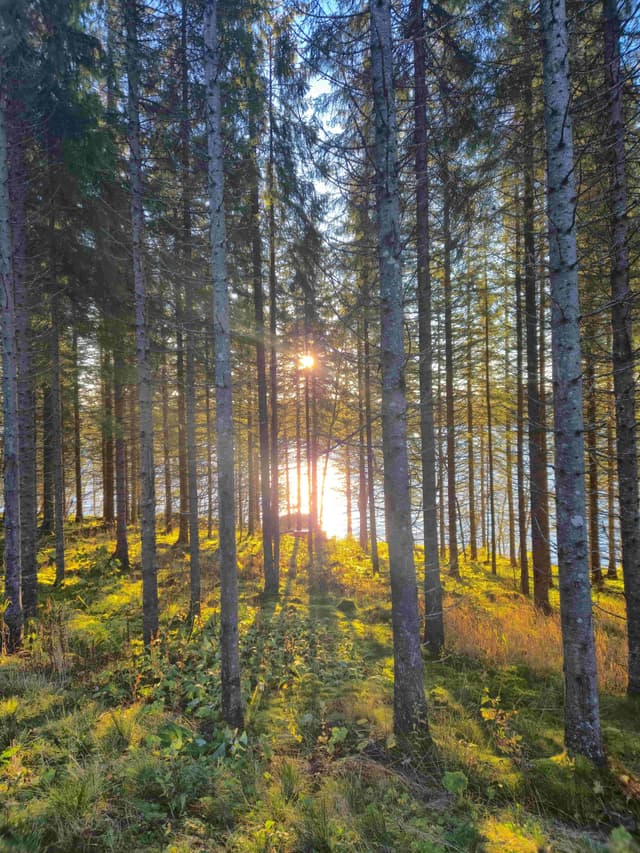
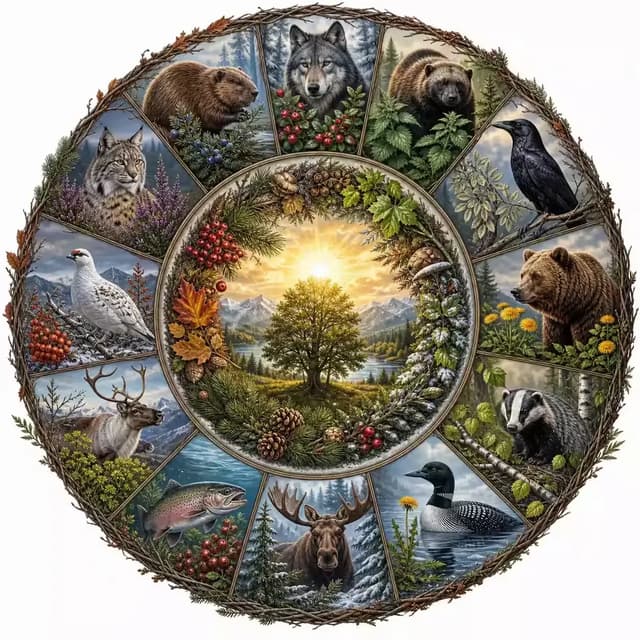
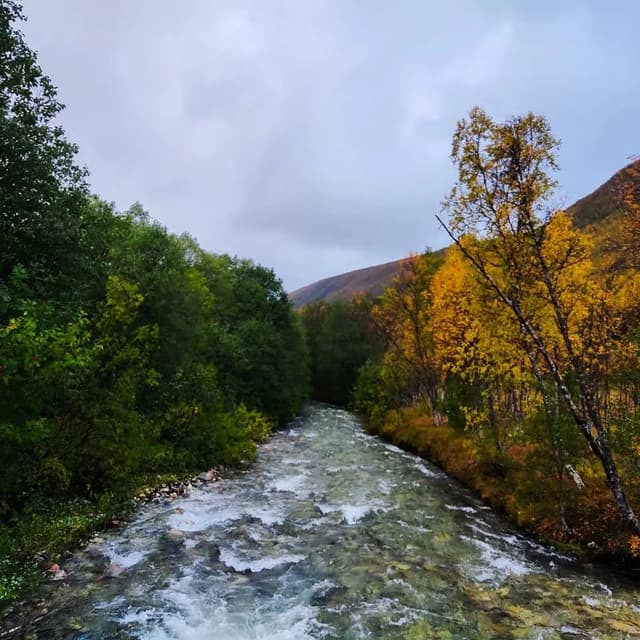
Shamanism fosters a deep connection between people and nature. This connection is not only spiritual; it also has practical implications for how people live their lives. Sami culture has traditionally been based on the sustainable use of natural resources, which is reflected in their hunting and fishing practices.
Shamanism teaches us the importance of respect for nature and its forces. In today's society, where environmental challenges are central, the perspectives of shamanism can contribute to greater awareness of a sustainable way of life and the need to preserve our natural resources.
The roots of shamanism in Northern Norway reach deep into history, with archaeological evidence such as cave paintings and rock carvings bearing witness to ancient traditions tied to nature and the spiritual realm. Through the practice of the noaidi, the Sami have maintained a deep connection to both nature and the community. Today we see a revitalization of these traditions, which gives hope that shamanism will continue to play an important role in the society of the future.
References
Eliade, Mircea. Shamanism: Archaic Techniques of Ecstasy. Princeton University Press, 1972.
Harner, Michael. The Way of the Shaman. Harper & Row, 1980.
Aftenposten: "Samer og vikinger kunne kunsten: Sjamanismens sentrale plass i førkristen tid". 2019.
Wikipedia article on shamanism: Sjamanisme.
Wikipedia article on Sami history: Samisk historie.
"Helleristninger fra Alta". Alta Museum.
"Samisk kultur – En introduksjon". Sametinget.no.
Fonneland, Trude. Contemporary Shamanisms in Norway: Religion, Entrepreneurship and Politics. Routledge, 2017.