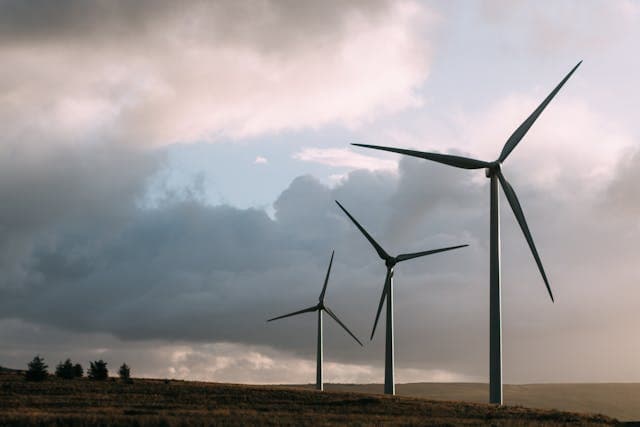
Sjamanistisk Forbund has recently submitted a consultation statement against the planned wind power projects Reinelva in Nordkapp municipality and Skarvberget in Porsanger municipality. The statement emphasizes the deep spiritual and cultural significance these areas hold for Sami culture and tradition.
In Sami belief, nature is sacred, and this applies not only to isolated places, but to the entire landscape. Each place has its own spiritual presence, and one must show respect wherever one goes. This principle stands in stark contrast to the extensive interventions that wind power development would entail.
The areas threatened by development contain several cultural heritage sites and sacred places that bear witness to the area's spiritual significance:
Sacrificial stones
Sacred mountains that characterize the entire landscape
Smaller sacrificial sites connected to larger sacred areas
Strategically placed sacrificial sites, for example at the entrances to the area
Sami sacrificial sites are places where a higher reality has manifested itself. These places can be natural formations such as solitary stones, boulders, mountains, lakes, islets, headlands, springs, rivers, forest areas, or solitary trees. The sacrificial sites are central to the Sami religion, which is characterized by shamanism and a threefold worldview.
At the sacrificial sites, offerings might have included food, metals, jewelry, arrowheads, bullets, or coins. There has also been a practice of sacrificing animals. Some sacrificial sites were private or for a single family, while others were collective. In connection with sacrifice, the Sami rune drum was used. In many cases this is also a living tradition today, but it is practiced quietly. It is not common to announce this publicly. In an assessment it is therefore difficult to establish that such a practice does not take place today.
Sjamanistisk Forbund points out that the wind power development will not only destroy physical structures, but also disrupt the spiritual balance of the landscape that is so central to Sami culture and worldview. They argue that any development of the area will destroy the sanctity of nature in that place.
The association also emphasizes that, in the traditional Sami understanding of landscape, the spiritual is not limited to certain places. The basic principle is that one should show respect wherever one goes. If you come to a place and intend to do something, you should ask the spiritual presence there for permission.
The consultation statement from Sjamanistisk Forbund is built on a long tradition of Sami understanding of nature and spirituality. It reflects a deep concern that modern development projects may destroy not only physical landscapes, but also spiritual and cultural values that have been central to Sami life for generations.
Through its statement, Sjamanistisk Forbund seeks to draw attention to these often overlooked aspects of the landscape, and argues that decisions about development must take into account more than just economic and practical factors. They remind us that for many Sami, the landscape is not merely a physical place, but a living, spiritual space that deserves respect and protection.