At the heart of humanity's oldest healing traditions we find shamanism – a practice that reaches back to the earliest civilisations and that still influences our understanding of health and healing today. The shamanic understanding of illness represents a holistic approach to health that sees the human being as an integral part of nature and the cosmos, where physical, mental and spiritual well-being are inseparably interwoven.
The basic principles of shamanism
Shamanism is based on the belief that the visible world is permeated by invisible forces or spirits that affect the lives of the living. In this worldview, the causes of illness often lie in the spiritual realm, brought about by malevolent spirits or imbalances in the spiritual world. The shaman, who acts as an intermediary between the physical and the spiritual world, uses both spiritual and physical methods to heal.
Eliade (1972) identified several common beliefs shared by all forms of shamanism:
Spirits exist and play important roles both in individual lives and in human societies.
The shaman can communicate with the spirit world.
Spirits can be benevolent or malevolent.
The shaman can treat illness caused by malevolent spirits.
The shaman can use trance-inducing techniques to evoke visionary ecstasy and go on vision quests.
The shaman's spirit can leave the body to enter the supernatural world and search for answers.
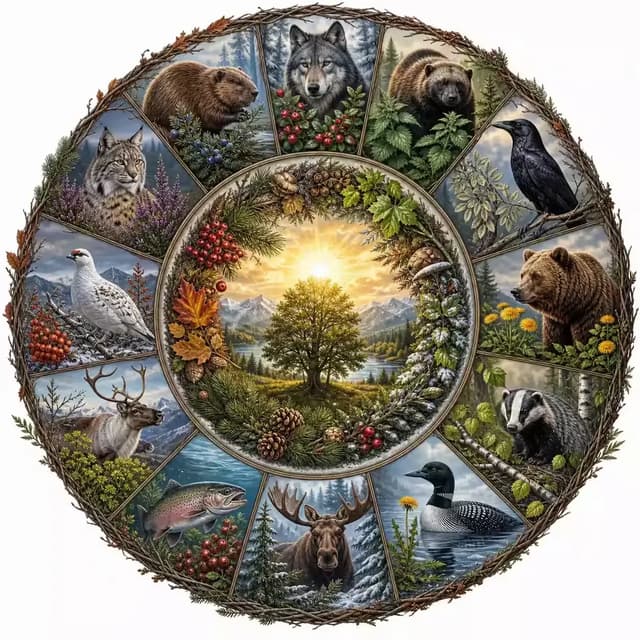
The shaman calls upon power animals as spirit guides, omens and messengers.
The shaman can perform various other forms of divination, scrying, casting of bones and sometimes predicting future events.
Shamanic healing methods
Shamanic healing involves a range of techniques and practices:
Spirit journeys: The shaman enters an altered state of consciousness to communicate with the spirit world and retrieve knowledge or power.
Extraction healing: Removes negative energies or blockages from the body.
Soul retrieval: A technique for healing emotional and spiritual trauma by retrieving lost soul fragments.
Power animal work: Working with spiritual helpers in animal form for protection and guidance.
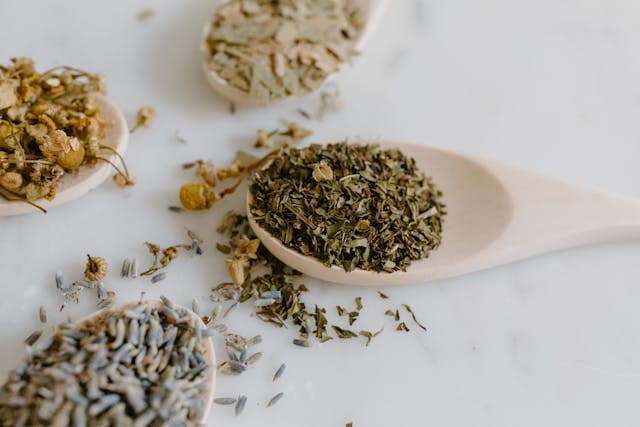
Herbal medicine: Use of plants and herbs for healing, often guided by spiritual insight.
Ceremonies and rituals: Creating sacred space and honouring the energies of nature and the spirit world.
Energy work: Manipulating subtle energies in and around the body.
Drum journeys: Using rhythmic drumming to induce altered states of consciousness. Drum journeys are a form of spirit journey.
Sámi shamanism
In Sámi culture, shamanism, known as noaidevuohta, plays a central role. The noaidi, the Sámi shaman, acts as a mediator between people and the spirit world. The practice of the noaidi includes:
Use of the rune drum (goavddis) for diagnosis and healing.
Joik, traditional Sámi song, as a healing force.
Communication with nature spirits and ancestors.
Soul journeys to retrieve lost souls or remove harmful spirits.
The use of what is called moxibustion, or placing glowing herbs on the skin to create a small wound through which the illness is drawn out.
Sámi cupping.
Use of herbs.
The Sámi understanding of illness often sees illness as the result of imbalance in the relationship with nature or the spirit world, the breaking of taboos, or attacks by malevolent spirits. Healing is therefore about restoring harmony and balance on all levels.
Norse shamanism and the understanding of illness
In the Norse tradition we find seiðr, a form of magic and divination often practised by women known as the völva. These practitioners had a role similar to that of the shaman, with the ability to see into the future, influence fate and perform healing.
The Norse understanding of illness included several possible causes:
Divine punishment or trial
Attacks by supernatural beings such as elves or dwarves
Curses or sorcery
Imbalance in the body's fluids (inspired by Greek humoral pathology)
Healing methods in the Norse tradition included:
Rune magic for protection and healing
Use of herbs and natural remedies
Offerings to the gods to restore health
Galdr – magical songs or incantations
Gods such as Eir, Odin and Freyja were associated with healing and were often invoked in healing rituals.
Modern relevance and research
In today's society we see an interest in shamanic practices and their potential contribution to modern healthcare:
Ethnobotanical research investigates the traditional use of medicinal plants, which can lead to the discovery of new medicines.
Psychological research examines the effect of shamanic practices on mental health, with promising results for the treatment of trauma and depression.
Anthropological studies document and preserve traditional knowledge, which can provide valuable insights into alternative approaches to health.
Integrative medicine incorporates elements of shamanic practice, such as mindfulness and visualisation techniques, into conventional treatment.
Some aspects of shamanic healing, such as the holistic approach and the importance of the patient's belief and mental state, have found resonance in modern complementary and alternative medicine.
Challenges and controversies
The integration of shamanic practices into modern healthcare is not without challenges:
Lack of scientific documentation: Many shamanic practices lack robust scientific evidence of their effectiveness.
Cultural appropriation: There is a risk of misuse and misrepresentation of traditional practices when they are taken out of their cultural context.
Ethical concerns: Questions of informed consent and safety arise when traditional practices are integrated into clinical settings.
Regulatory challenges: Many countries lack a framework for regulating and integrating traditional healing methods into the formal healthcare system.
Scepticism from the medical community: Many healthcare workers are sceptical of practices that have not undergone rigorous scientific testing.
Future perspectives
Despite the challenges, there is an interest in exploring the potential of shamanic practices.
Interdisciplinary research: Collaboration between anthropologists, psychologists and medical researchers can provide a more nuanced understanding of shamanic practices and their potential health benefits.
Culturally sensitive integration: There is a need to develop models for integrating traditional practices in a way that respects their cultural origin and integrity.
Education and training: An increased focus on cultural competence in medical education can improve healthcare workers' ability to understand and respect patients' cultural background and beliefs about health.
Holistic models of health: Shamanism's holistic approach can inspire more comprehensive health models that address the physical, mental, emotional and spiritual aspects of health.
Sustainable health practice: Shamanism's focus on harmony with nature can contribute to more environmentally friendly and sustainable health practices.
The shamanic understanding of illness represents a rich and complex tradition that has survived through millennia and continues to challenge our modern understanding of health and healing. While scientific medicine has made enormous advances in the treatment of disease, shamanism reminds us of the importance of seeing the human being as a whole, deeply connected to nature and the spiritual.
In the meeting between traditional shamanic practice and modern medicine lies a potential for mutual enrichment. Shamanism's holistic perspective can contribute to a more comprehensive approach to health that recognises the complex connections between body, mind and spirit. At the same time, scientific investigation of shamanic practices can lead to new insights and treatment methods.
The challenge ahead will be to find ways to integrate the best of both worlds in an ethical, respectful and effective manner. This requires open dialogue, interdisciplinary collaboration and a willingness to explore new paradigms of health and healing. By recognising the value of both traditional wisdom and modern science, we can move towards a more inclusive and holistic approach to health that serves people from all cultures and backgrounds.
In a world facing complex health challenges, from chronic diseases to mental health problems, insights from shamanic practice can help expand our understanding of health and healing. By building bridges between different traditions of knowledge, we can create a more robust and flexible health system that is better equipped to meet the challenges of the future.
The legacy of shamanism reminds us that healing is more than just the absence of illness – it is about restoring balance and harmony on all levels of our existence. In this wisdom may lie the key to a more holistic and sustainable approach to health for future generations.
This article is intended for informational purposes and does not replace professional medical advice. In the event of health problems, always consult qualified healthcare professionals. Traditional or alternative methods should not replace modern medical treatment, but may in some cases serve as a supplement on the advice of a doctor.
References:
Jacobsson, L., Ouma, A., & Liu-Helmersson, J. (2021). Sámi Traditional Healing in Sweden – An Interview Study. Socialmedicinsk tidskrift.
Hurstwic. (2025). Health, Grooming, and Medicine in the Viking Age.
Viking Dragon Blog. (2023). Health and Healing in the Viking Age.
Lufolk. (2023). Viking herbs and medicine.
Illinois State Museum. Shamanic Healing Rituals.
BioOne Complete. (2017). Idioms of Sami Health and Healing.
Norse Shamanism Online. What Is Norse Shamanism and Seidr?