Shamanic symbolism
Shamanism is one of the world's oldest spiritual practices, and symbolism plays a central role in its expression. The symbols function as bridges between the physical world and the spiritual universe, and give the shaman tools to navigate through various spiritual landscapes. This article explores shamanic symbolism in depth, with particular emphasis on Norse, Sami, Kven and Forest Finn traditions.
What is shamanic symbolism?
Shamanic symbolism encompasses visual signs, objects and actions that represent deeper spiritual truths. Through these symbols the shaman communicates with spirits, deities and the forces of nature. The symbols function as portals to insight, healing and power.
Norse shamanism
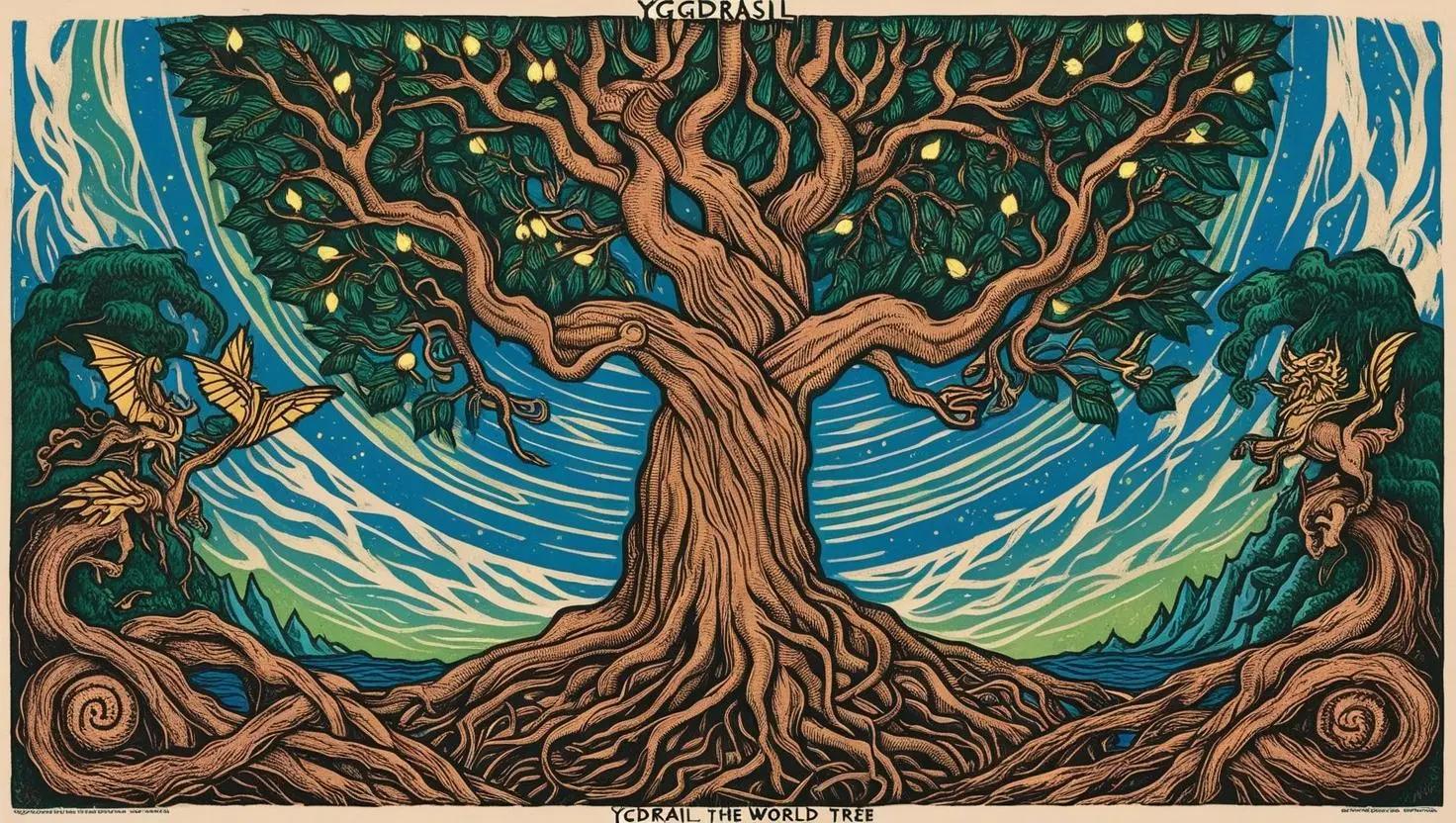
Norse shamanism, known as seidr, was widespread in the Viking Age. Norse cosmology is complex and rich in symbolism. The world is divided into nine realms, with Midgard (the world of humans) at the center and other realms such as Asgard (the world of the gods) and Helheim (the realm of the dead) spread around Yggdrasil, the world tree.
Yggdrasil – The world tree
Yggdrasil functions as a cosmic axis in Norse cosmology, a universal symbol of the connection between heaven, earth and the underworld. The tree represents balance, growth and eternal life.
Runes – Magical signs
Runes were important magical symbols used for divination, protection and healing. Rune magic involved inscribing runes on objects such as weapons, amulets and stones.
Thor's hammer (Mjölnir)
Mjölnir is a symbol of protection and strength. The hammer was worn as an amulet to give power to its bearer.
Sami shamanism
In Sami shamanism the noaidi was central – a shaman with the ability to communicate with the spirit world through symbolic tools.
The runic drum – The shaman's map
The Sami drum (runic drum) is decorated with symbols of gods, animals and cosmic elements. The drum is used for trance induction and communication with the spirits.
The sun cross – Beaivi
The sun cross represents the sun goddess Beaivi, the symbol of life force, fertility and rebirth.
Animal symbolism – Reindeer, bear and bird
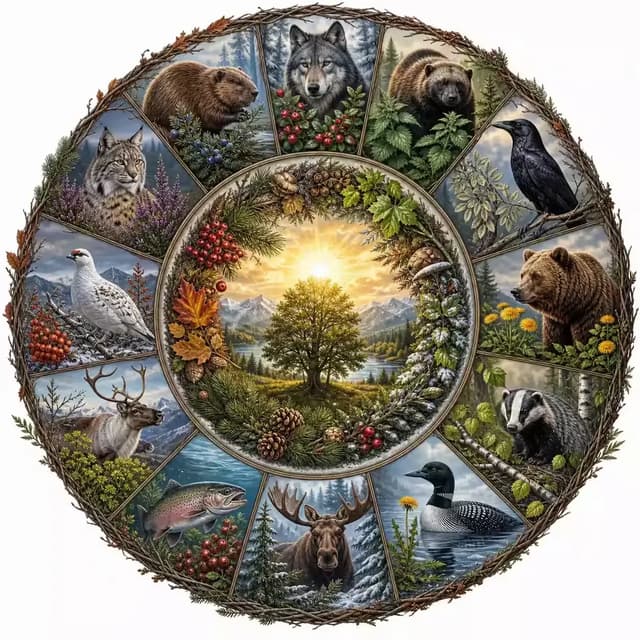
The reindeer symbolizes prosperity and survival. The bear represents strength and protection, while birds are often messengers between worlds.
Sieidi sites – Sacrificial stones
Sieidi sites are natural formations used as symbolic places for offerings to nature spirits for hunting luck or health.
Kven shamanism
Kven shamanism has roots in the Finno-Ugric tradition with specific symbolic expressions:
Kannus (Runic drum)
Kannus is the drum used by Kven shamans for trance induction. Decorated with nature motifs such as trees and animals.
Nature spirits
The belief that the landscape was inhabited by spirits, contacted through symbolic actions such as offerings or rituals at sacred sites.
Ukko – The thunder god
Ukko represents the power of the sky; lightning symbols were used for protection against evil forces.
Forest Finn shamanism
The Forest Finns practiced a unique form of magic known as rune magic or Finnish magic.
The pentagram – Protective symbolism
Pentagrams were carved into buildings for protection against evil forces.
Bear symbolism
The bear was seen as sacred; symbolically invoked in rituals for strength.
Plants and herbs
Herbs such as yarrow or juniper were used symbolically in cleansing rituals.
Universal symbolism
Across these traditions we also find universal symbols:
The tree of life
Represents the connection between heaven, earth and the underworld; a universal image of cosmic balance.
The serpent
Symbol of transformation.
The bird
Represents the soul's journey between worlds.
Eagle
Spiritual insight.
Wolf
Loyalty.
Raven
Transformation.
The significance of the symbols in modern times
Today shamanic symbols are actively used within modern shamanic communities. Sjamanistisk Forbund works actively to preserve this symbolic heritage through ceremonies, course activities and dissemination.
The symbolism gives modern people a way to connect more deeply with nature, with their own psyche and the spiritual universe around them.
References:
Eliade, Mircea (1964). Shamanism: Archaic Techniques of Ecstasy. Princeton University Press.
Harner, Michael (1990). The Way of the Shaman. HarperOne.
Price, Neil S. (2002). The Viking Way: Religion and War in Late Iron Age Scandinavia. Uppsala University.
Pentikäinen & Pulkkinen (2011). Shamanhood and Mythology in the Finno-Ugric Cultures. Finnish Literature Society.
DuBois, Thomas A. (1999). Nordic Religions in the Viking Age. University of Pennsylvania Press.
Kalstad, Johan Albert (1997). Sámi Religion and Mythology. Davvi Girji OS.
Siikala, Anna-Leena (2002). Mythic Images and Shamanism. Finnish Academy of Science and Letters.
Tolley, Clive (2009). Shamanism in Norse Myth and Magic. Academia Scientiarum Fennica.