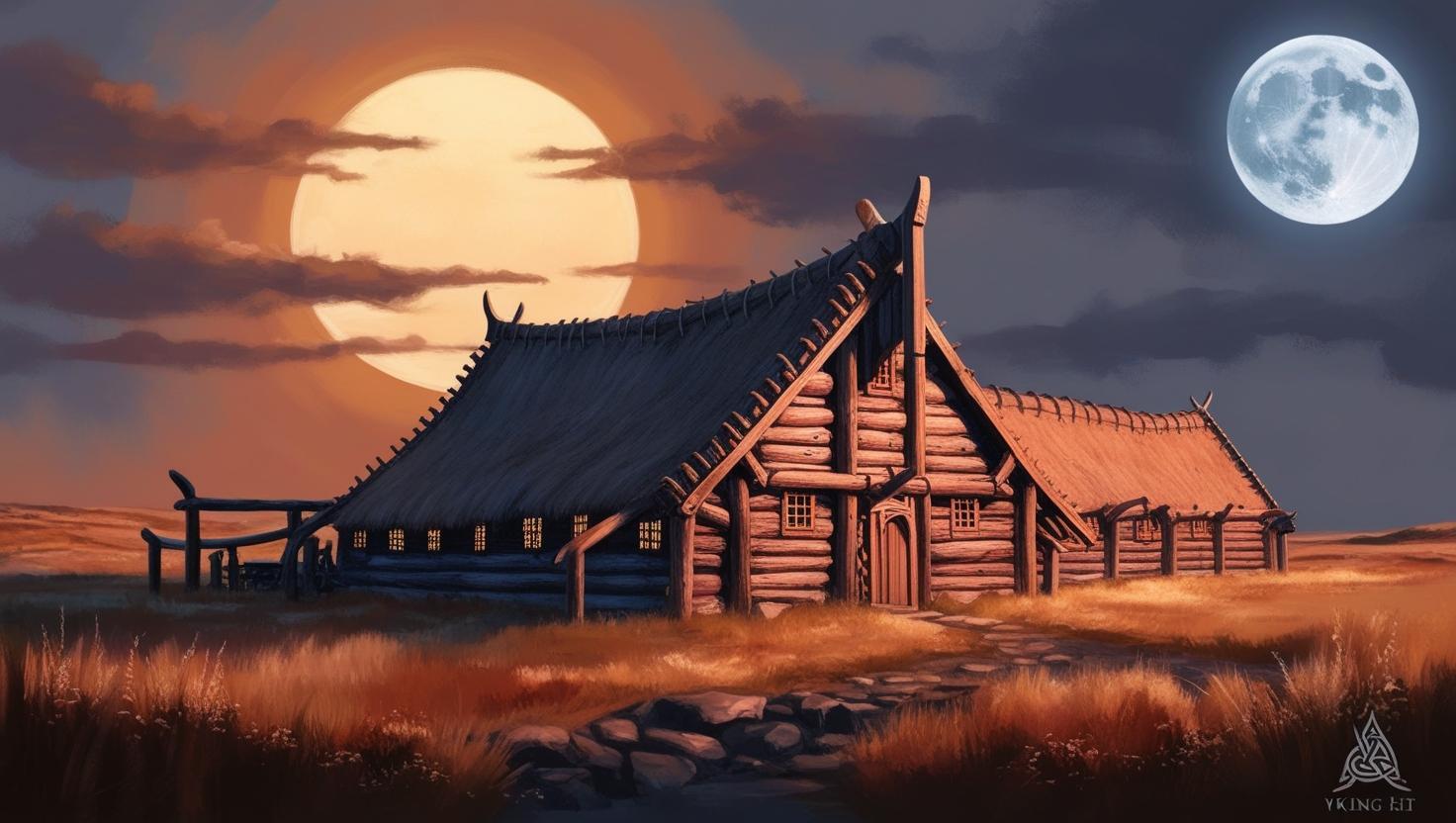
In Norse mythology, the sun and the moon are not merely heavenly lights, but living beings with their own stories, fates, and roles in the fabric of the world. These mythical figures, Sól and Máni, are siblings, the children of Mundilfare, and their journey across the sky is both a punishment and an eternal drama that explains the cycles of nature and the fate of the world.
Sól - the sun goddess
Sól, also known as Sunna, is the sun goddess and one of the ásynjur. She is the daughter of Mundilfare and the sister of Máni. According to the myths, Mundilfare was so proud of his beautiful children that he named them Sun and Moon, which the gods interpreted as arrogance. As punishment, they took the children and set them to drive the sun chariot and the moon chariot across the sky. Sól steers the sun chariot, which is pulled by the horses Arvaker and Alsvinn. She is relentlessly pursued by the wolf Skoll, who at Ragnarok is to devour her. Before this, she is to give birth to a daughter who will take her place, so that the journey of the sun never comes to an end.
Sól is not only a personification, but also a symbol of life and order. In the Bronze Age we can see that the sun held a central place in religious practice, among other things through rock carvings and the Trundholm Sun Chariot, in which the sun is pulled by horses. This suggests that the sun was seen as a life-giving force, although it is uncertain whether a distinct sun cult existed in the Viking Age.
Máni - the moon god
Máni, the brother of Sól, is responsible for the moon chariot. He brings with him two children, Bil and Hjuke, who follow him across the night sky - a motif that probably explains the moon's spots and lunar cycles. Máni too is chased by a wolf, Hati, who will eventually catch up with him at Ragnarok. According to the myths, it is the wolves' chase that explains solar and lunar eclipses - when the wolves nearly seize their prey.
Cosmic balance and the end of the world
The sibling pair Sól and Máni represent more than just heavenly lights; they keep the rhythm of the world going. Their eternal journey across the firmament is both a reminder of the world's order and of its fragile balance. At Ragnarok - the end of the world - the wolves will finally devour both the sun and the moon, but new heavenly lights will arise, borne by their daughters, and thus balance is restored in a new world.
Worship of Sól and Máni
Although the sources do not describe a pronounced worship of Sól and Máni in the Viking Age, one can imagine that people in Norse society honored them through simple rituals. Perhaps they lifted their gaze to the sky at sunrise and moonrise, sacrificed food or drink in honor of the life-giving forces, and interpreted eclipses as omens of the world's fate. The course of the sun and the moon could mark the rhythm of the year, and their fate at Ragnarok reminded people of the transience of life and the hope of rebirth.
references
Wikipedia: Sol (goddess) -
Wikipedia: Måne (god) -
Wikipedia: Sun god -
Wikipedia: Måne (Nordic god) -
Wikipedia: The goddess Sol -