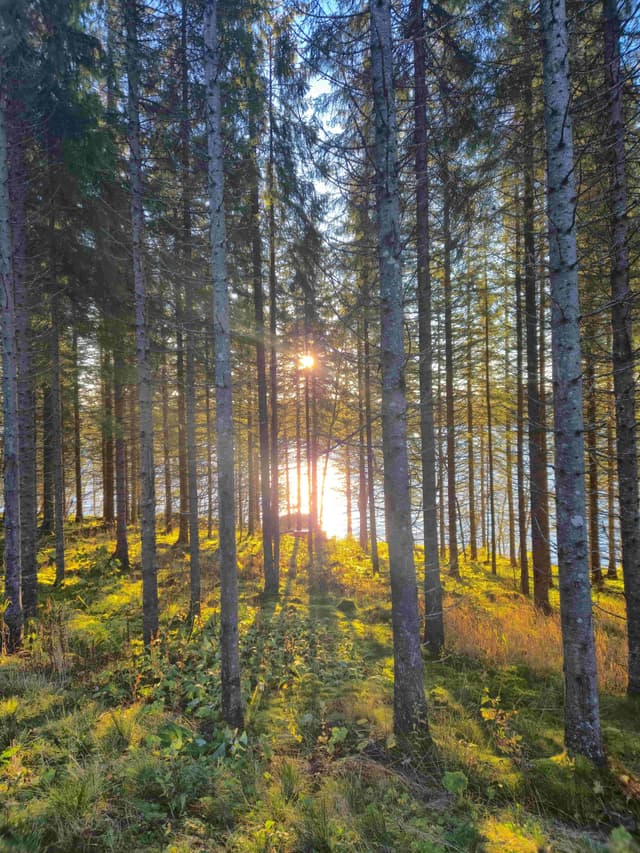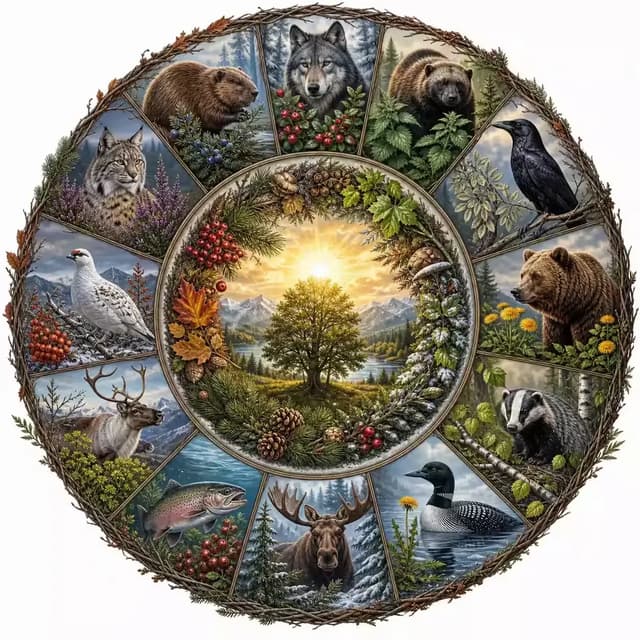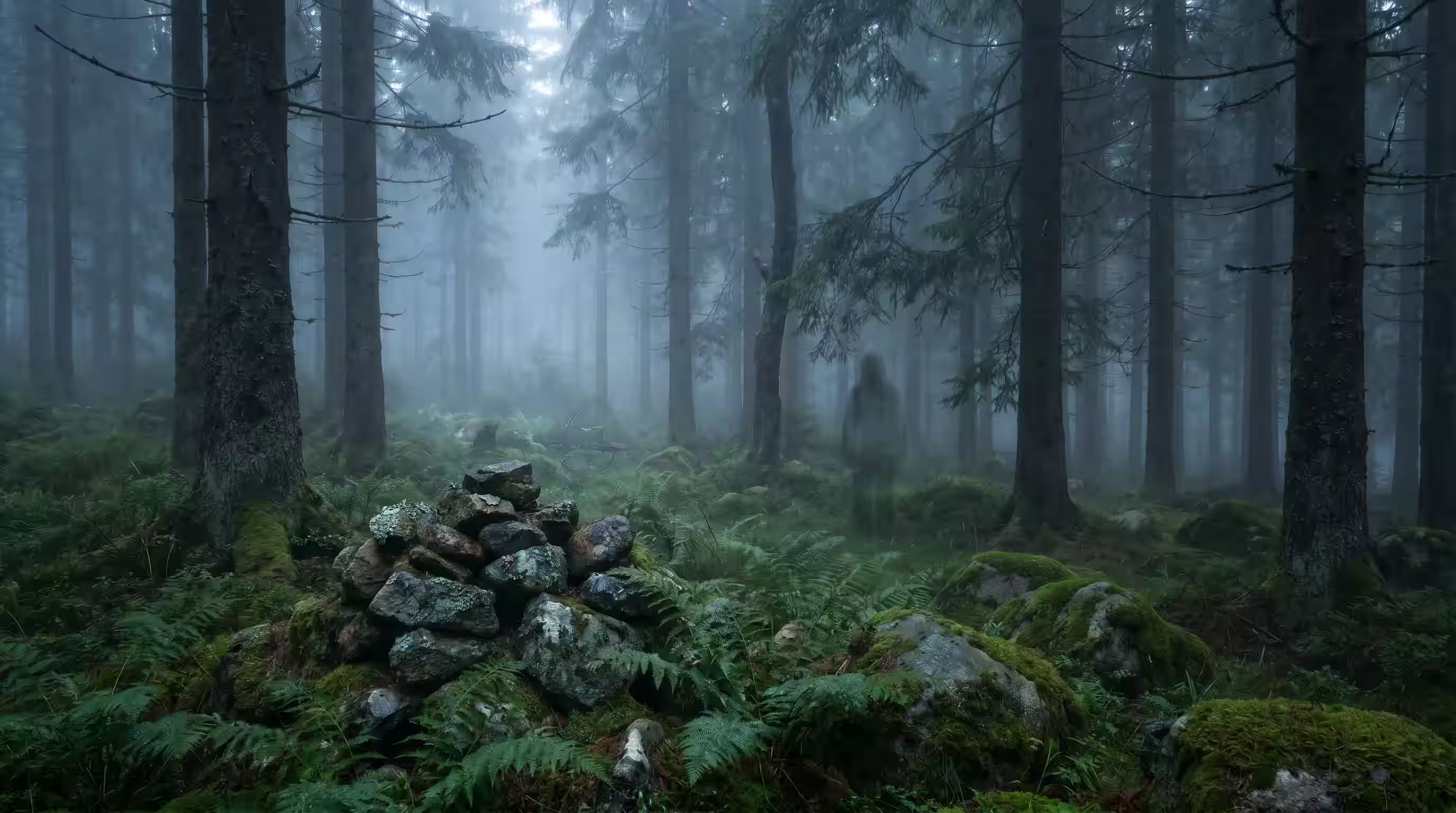
In the twilight, where the forest draws breath slowly and the world seems to stand still between day and night, there exists another reality. It is not hidden by distance, but by displacement: a small step to the side from the human gaze. Here dwell the wights.
They are not gods, not humans, not entirely spirits, and not entirely material beings either. They are something in between, something that belongs to the landscape as mist belongs to the bog and wind to the mountain. In Norse mythology and folk belief, the wights are the world's silent inhabitants: the earth's hidden folk, guardians of places, memories and forces that can never quite be tamed.
To understand the wights is to understand another way of seeing the world. It is to step into a worldview where nature is not dead matter, but living, sentient and animated.
A world populated by the invisible
In Old Norse tradition, there is not one type of wight, but many. The word “vættr” (plural “vetter”) is a collective term, a broad category for spiritual or semi-material beings that populate nature and its surroundings. These could be linked to particular places (a farm, a hill, a waterfall) or to particular functions and forces.
The land wights were perhaps the most well-known. They were linked to the land itself: the mountains, the forests, the valleys and the coastlines. In the Icelandic laws we find remarkable testimony to how seriously their presence was taken: it was forbidden to sail towards land with dragon heads on the ships, so as not to frighten the land wights. This was not merely symbolism, but an expression of deep respect (or perhaps fear) for the invisible guardians of the land.
Other wights lived closer to humans. The farm wight, often called nisse or tomte in later tradition, was linked to the home and the farmstead. It could be a protector, one that ensured wellbeing and prosperity, but also one that demanded respect. If overlooked, it could become vengeful. Small acts, such as setting out porridge at Christmas, were not merely customs, but a form of communication, a silent promise of reciprocity.
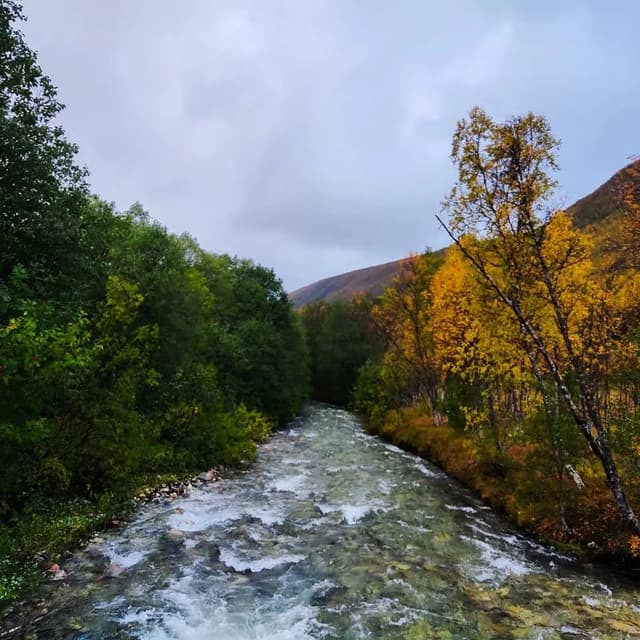
Water wights lived in rivers and lakes, and could both lure and warn. Forest wights moved through the shadows between the trees. Mountain wights dwelt in stone and rock, where the echo of ancient times could still be heard.
This diversity reveals something fundamental about Nordic cosmology: the world was not empty, but densely populated by consciousnesses. Every stream, every stone, every gust of wind could be an expression of a will.
Between fear and fellowship
For the people who lived within this worldview, the relationship with the wights was marked by a delicate balance. It was not only fear, and not only devotion, but a form of coexistence.
People lived side by side.
The wights were not necessarily good or evil in a moral sense. They were beings in their own right, with their own needs and temperaments. They could help, but also harm. They could protect a farm through harsh winters, or bring sickness and misfortune if they were offended.
This created an ethical landscape different from the one we know today. Respect was not an abstract value, but a practical necessity. To fell a tree could be to disturb a wight. To build a house could be to encroach upon their domain. That is why rituals, offerings and small tokens of acknowledgement were part of everyday life.
One might set out food, pour a little ale onto the ground, or simply show care. These acts were not merely religious, but relational. They established and maintained a relationship.
In this sense, the wights were not only beings: they were neighbours.
Landscape as a living organism
It is difficult to understand the wights without understanding how the Norse people perceived nature. The landscape was not a backdrop, but an agent. It was alive, suffused with power and meaning.
An old oak was not merely a tree, but a being with history and presence. A rock formation could be a home. A waterfall could have a voice.
The wights were an expression of this living nature. They were its face, its intention, its hidden life. When the wind rushed through the forest, it could be the wights moving. When mist rose from the ground, it could be their breath.
This perspective challenges modern notions of nature as a resource. For in a world with wights, nature is not something one owns: it is something one relates to.
It is a fellowship, not a possession.
Wights in saga and story
Although the wights are often quiet and elusive, they also appear in the sagas and the old tales. There they emerge in glimpses: not always clearly, but always meaningfully.
In some stories they appear as helpers, offering advice or protection. In others as tricksters, deceiving people and testing their wit. And in certain tales they are dangerous, almost demonic, particularly when disturbed or offended.
What is interesting is that they are rarely unambiguous. A wight can be both friend and foe, depending on the situation. This makes them complex figures, more akin to nature's own shifting faces than to the more firmly defined gods.
In encountering the wights, humans must be attentive, flexible and humble. There are no simple rules, only relationships that must be negotiated and understood.
The Christianisation and the hidden
With the Christianisation of the Nordic region, the relationship with the wights changed. The new religion introduced a different worldview, in which spiritual beings were more clearly divided into good and evil forces.
The wights fitted poorly into this dichotomy.
Many of them were demonised, particularly those linked to old rituals and sacred places. Others were reduced to folk belief, to something childish or superstitious. But they never disappeared entirely.
They withdrew.
In folk belief they lived on: in stories of nisser, huldre, draugar and other beings. They became part of the hidden, of what is whispered about, but not always spoken of aloud.
Even today there are traces of this belief. In the way particular places are spoken of. In the feeling that some places are “charged”, that they carry something more than what is visible.
Perhaps it is the wights that still dwell there, on the fringes of our consciousness.
What do the wights mean to us today?
For many, they are mythological figures, interesting as cultural history, but without any real relevance. For others, particularly within new-age spiritual and traditional practices, they remain living realities: beings one can relate to, communicate with, and form relationships with.
But even for those who do not believe in the wights literally, they can hold a deep symbolic significance.
They remind us of another way of being in the world. A way in which we do not stand above nature, but in relation to it. Where we do not control, but collaborate. Where we do not own, but participate.
In a time marked by ecological crises and alienation from nature, this perspective may be more relevant than ever.
The wights represent not only the past, but a possible future: a way of restoring the connection between humans and landscape.
Listening to the quiet
It is said that the wights do not like noise. They keep away from what is too loud, too intrusive, too dominant.
To notice them, one must slow down.
Walk slowly through the forest. Listen to the sounds that are not obvious. Notice what usually goes unnoticed. Perhaps it is in these moments, in the quiet presence, that one may sense them.
Not as clear figures, but as a feeling. A sense that one is not alone.
That the world looks back.
Perhaps this is the deepest gift of the wights: not concrete encounters or miraculous events, but a shift in attention. An opening towards what otherwise remains hidden.
For in a world full of wights, nothing is entirely lifeless.
Everything carries a spark.
And in this spark lies an invitation: to live with greater care, greater respect, and perhaps also greater wonder.
For the wights are still there.
Not necessarily as we imagine them, but as part of the fabric of the world: invisible, but not absent.
And if one evening one stands still long enough, where the forest meets the darkness and the wind falls silent, one might perhaps feel it:
That something else breathes alongside us.
Sources
Bernt Ø. Thorvaldsen and Julie Lund, discussed in the Forskning.no article on the age and development of Norse mythology.
Snorre Sturlason's the Younger Edda and the Elder Edda, which are fundamental primary sources for Norse mythology.
Tacitus' Germania, which is an early Roman source on Germanic religion and beliefs.
Scholarly evidence relating to archaeology, place names and the pictorial art of the Migration Period, mentioned as important sources in research on Norse religion.
Ørnulf Hodne's work on Norwegian folk belief, particularly relevant to wights that live on in folk tradition.