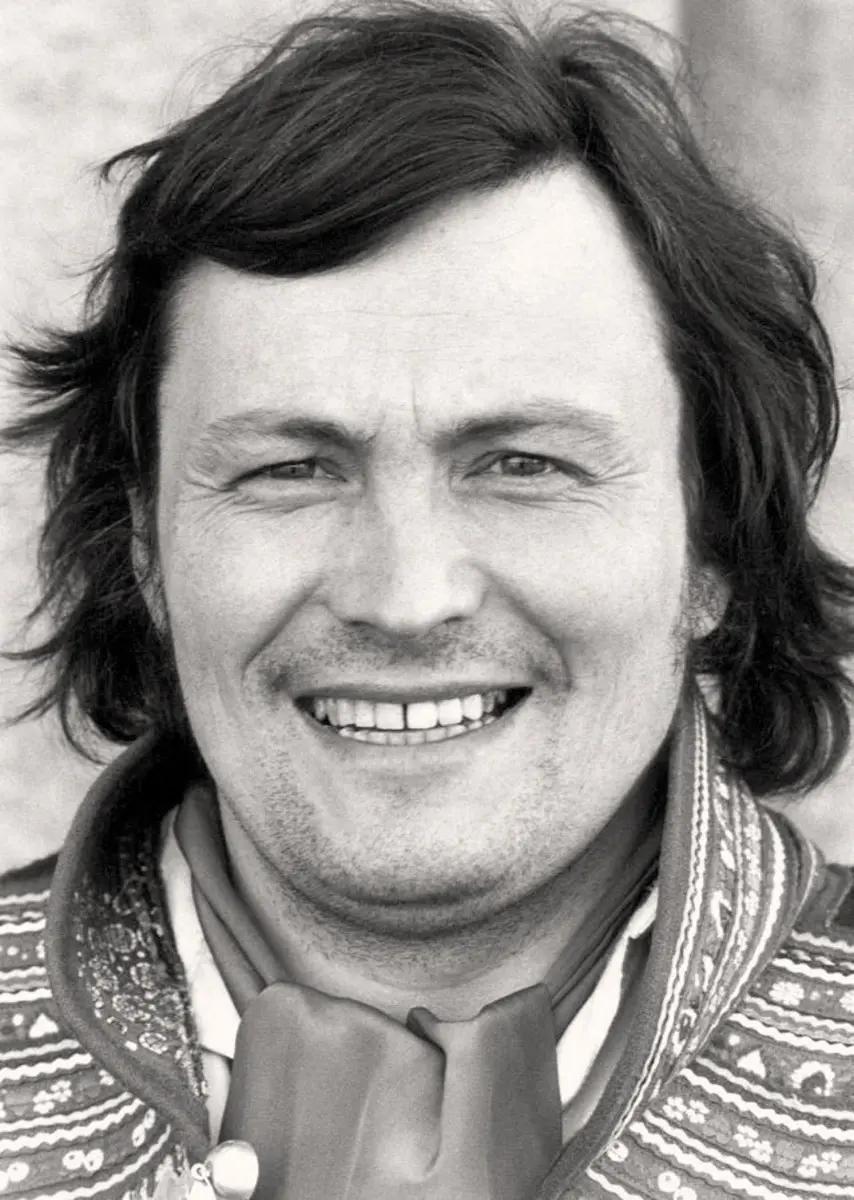
Ailo Gaup was a significant Sámi author and shaman who, through his life and work, helped to revitalise Sámi spirituality and culture. His work spans several fields, from literature and theatre to shamanic practice and teaching.
Upbringing and background
Ailo Gaup was born on 18 June 1944 in Kautokeino, in the heart of Sápmi - the traditional area of the Sámi people in Northern Norway. He grew up at a time when Sámi culture was under heavy pressure from the majority society, something that would shape his later work. At the age of 7 he was sent to a foster home in Larvik, where he grew up. As a young man Gaup moved to Oslo, where he worked as a journalist.
The search for Sámi spirituality
In the mid-1970s Gaup began to explore his Sámi background and spiritual roots. He travelled to Finnmark in search of a Sámi shaman who could teach him the traditional spiritual practices. This proved to be difficult, as much of the traditional knowledge had been lost through generations of oppression and assimilation.
Gaup's first encounter with shamanic practice came, surprisingly enough, through a Chilean refugee named Ernesto, whom he met at a hotel in Kautokeino. With the help of Ernesto's South American traditions and an African djembe drum, Gaup experienced his first journey to the spirit world.
Shamanic training and practice
Inspired by this experience, Gaup continued his exploration of shamanism. He travelled to California to study at Michael Harner's Foundation for Shamanic Studies. Here he learned about "core shamanism" - the idea that there are universal shamanic principles across cultures.
From the late 1980s Gaup established himself as a professional shaman in Oslo. He began to teach shamanism based on Sámi traditions, but with a global perspective. Gaup saw shamanism as a world heritage, and travelled around the world to share his knowledge and to learn more.
Literary work
Alongside his shamanic work, Gaup was also a prolific author. He debuted as a poet in 1982 with the collection "Joiken og kniven" (The Joik and the Knife). His literary output includes poetry, novels and plays.
Gaup's writing is strongly shaped by his Sámi background and shamanic insights. He writes about the life and culture of the Sámi, and their struggle to survive as a people. His novels, especially "Trommereisen" (The Drum Journey, 1988) and its sequel "Natten mellom dagene" (The Night Between the Days, 1992), explore the encounter between modern society and the Sámi mythic understanding of nature.
Themes and style
In Gaup's literature we find a deep understanding of the Sámi belief in a pervasive, invisible world and the importance of the noaidi (the Sámi shaman) as a link to this world. He paints a picture of a spiritual reality that exists in parallel with the material world, and that plays a role in the everyday life of those who live in the physical world.
Gaup often uses characters who share traits with the traditional noaidi. These characters are often outsiders among their own people, which reflects the noaidi's unique position in Sámi society. Through these characters Gaup explores themes such as cultural healing, identity and the relationship between past and present.
Work for Sámi culture
Gaup was not only concerned with the spiritual dimension of Sámi culture, but also actively engaged in promoting Sámi art and culture in general. He was involved in the founding of Beaivváš Sámi Teáhter in Kautokeino, the first professional Sámi theatre. This theatre has played an important role in preserving and developing the Sámi language and culture through the performing arts.
As a playwright, Gaup also wrote pieces for Beaivváš, including "Min duoddarat" (Our Plateaus) in 1983, which were lyrics for a Sámi musical. His work for the theatre helped to give Sámi culture a voice on stage and to bring Sámi stories and perspectives to a wider audience.
Shamanism as a cultural bridge-builder
One of Gaup's most important contributions was his ability to present Sámi spirituality in a way that was accessible to both Sámi and non-Sámi. He saw shamanism not merely as a Sámi tradition, but as a universal practice that could help to unite people across cultures.
Gaup argued that the Sámi, through their unique cultural heritage and spiritual tradition, could play a leading role in uniting humanity. He saw the Sámi ability to live between worlds - both the physical and the spiritual - as a strength that could help others to navigate a complex, modern world.
Legacy and influence
Ailo Gaup died on 24 September 2014, but his influence lives on. His work has contributed to an increased interest in, and understanding of, Sámi culture and spirituality, both in Norway and internationally. His books have been translated into several languages, including English, German, French and Polish.
Gaup's approach to shamanism as a living, evolving practice has inspired many to explore their own spiritual roots. His emphasis on personal discovery and the adaptation of traditional practices to modern contexts has been especially influential.