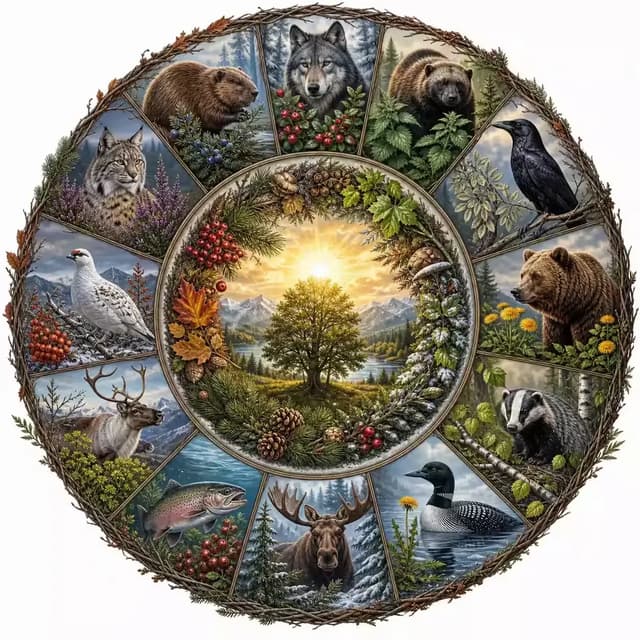
In shamanism, one of the world's oldest spiritual practices, life is seen as a circle, symbolised through the eternal cycles of nature and the universe. This circular conception of life is fundamental to shamanic belief and practice, and it shapes how shamans and their communities understand birth, death, and rebirth, as well as their relationship to nature, the spirits, and the cosmos.
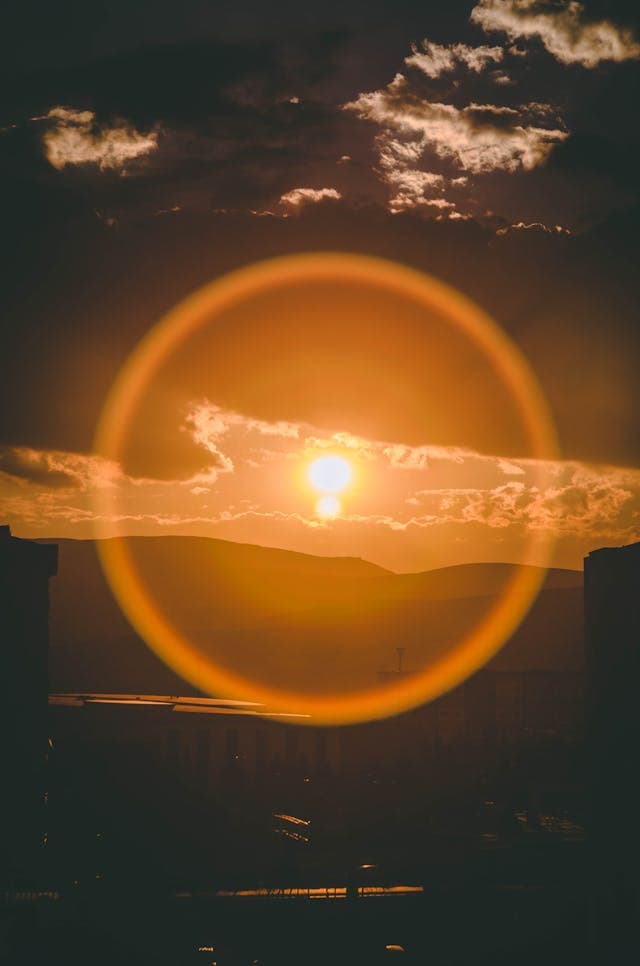
Cycles in nature Shamanism is deeply rooted in nature's rhythms and cycles. Nature's cyclical patterns - such as the sun's daily journey, the phases of the moon, the changing of the seasons, and the life cycles of plants and animals - reflect the circle of life. These natural cycles provide a concrete model for understanding how life unfolds.
For shamanic practitioners, each phase in nature's cycles is a time for specific rituals and celebrations. The solstices and equinoxes, for example, mark important transitions that are celebrated with ceremonies symbolising the death of the old and the birth of the new. These ceremonies help participants to synchronise their lives with nature's rhythms, and they emphasise the eternal circle of life, death, and rebirth.
The phases of life Within shamanism, human life is regarded as a series of cyclical phases that reflect the greater circle of life. Birth, childhood, adulthood, old age, and death are all seen as necessary stages in the circle of life. Each phase has its own lessons and challenges, and each transition is marked with rituals that help the individual and the community adapt to the new circumstances.
Birth: The beginning of the life cycle. Rituals surrounding birth celebrate the arrival of a new soul into the world and invite protective spirits to guide the child. Childhood: A time for learning and growth. Shamanic communities use rituals and stories to teach children about their place in the universe and the significance of nature's cycles. Adulthood: The transition into adulthood is often marked with initiation rituals that symbolise the individual's responsibility and role within the community. Old age: Seen as a time for wisdom. The experience and knowledge of elders are valued, and they play an important role in guiding the younger generations. Death: Not seen as the end, but as a transition to another form of existence. Death rituals help the soul to journey to the spirit world and prepare it for possible rebirth.
Spiritual journey and transformation The practitioner sees life as a continuous spiritual journey. Through trance, dream journeys, and meditation, the practitioner seeks to communicate with the spirit world and to understand the deeper meanings behind life's cycles. These spiritual journeys are a central part of shamanic practice, and they offer insight into the circular nature of life.
Transformation is also an important aspect of this journey. The practitioner believes that, by passing through various life cycles and experiences, the soul undergoes continuous transformations that lead to spiritual growth and development. Rituals and ceremonies, often led by shamans, help individuals to navigate these transformations, underscoring the interconnected nature of all things.
The connection with ancestors and descendants The circle of life also includes a deep respect for ancestors and an awareness of the role of descendants. Ancestor veneration is an important part of many shamanic traditions, and ceremonies honouring the ancestors serve to maintain the bond between past, present, and future. This underscores the belief that the circle of life is eternal, and that each generation plays an important role in carrying forward knowledge and traditions. In shamanism, life is seen as a circle, an eternal cycle of birth, death, and rebirth that is mirrored in nature's rhythms and the phases of human life. This circular understanding gives meaning and structure to shamanic communities, and it shapes how they experience and navigate life's many transitions. Through rituals, ceremonies, and spiritual journeys, shamans seek to harmonise with the cyclical nature of the universe and to guide their communities toward a deeper understanding of the eternal circle of life.