In an age marked by ecological crises and climate change, many are turning their gaze towards the traditions and wisdom of indigenous peoples to find alternative ways of relating to nature. Shamanism, one of the world's oldest spiritual practices, offers a unique perspective on humanity's relationship with nature and our place in the larger ecosystem. This article explores shamanism's relationship to nature and environmental protection, and how shamanic principles can contribute to a more sustainable future.
The animistic worldview and the sacred in nature
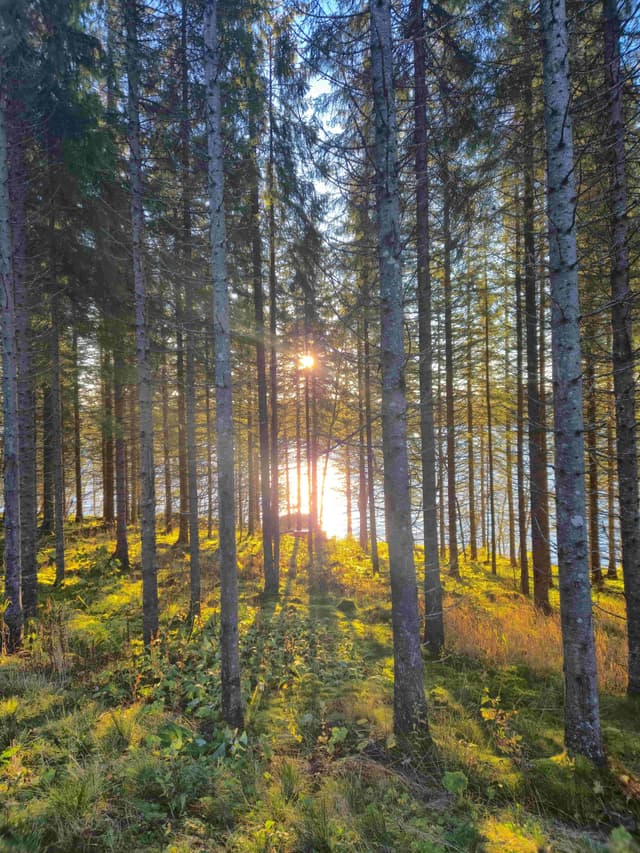
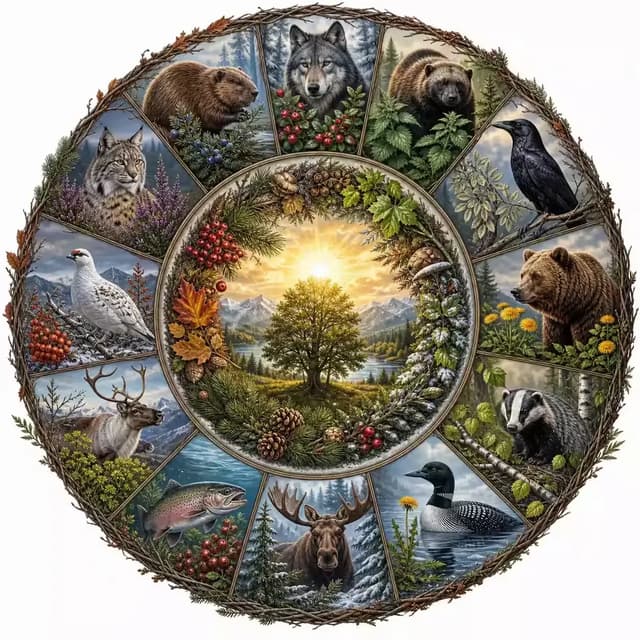
Central to shamanic philosophy stands an animistic worldview - the belief that everything in nature is ensouled and has an inherent value and consciousness. This perspective stands in stark contrast to the mechanistic worldview that has dominated Western thought since the Enlightenment, in which nature has often been seen as a lifeless resource that can be freely exploited.
In shamanic tradition, nature is considered sacred. Mountains, rivers, trees and animals are regarded not merely as physical entities, but as living beings with soul and spirit. This understanding leads to a deep respect for nature and a recognition of humanity's mutual interdependence with the rest of the ecosystem.
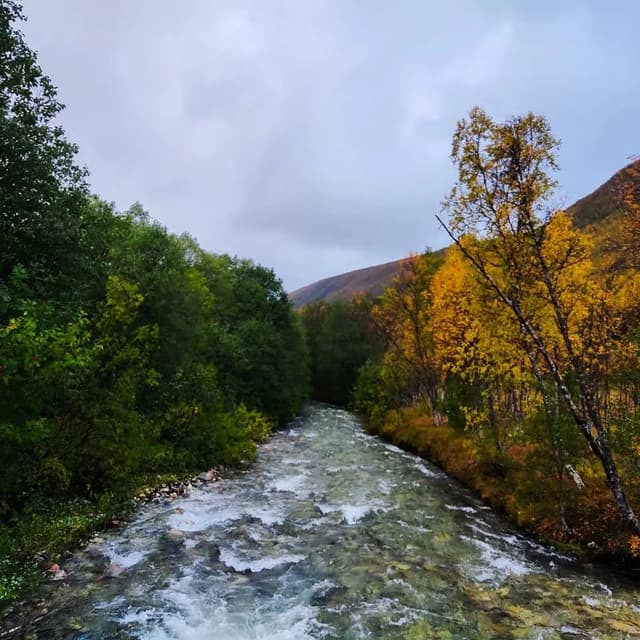
Sámi tradition, for example, has long recognised the sacredness of the landscape. Sacred mountains, lakes and other natural formations play a central role in Sámi spirituality and cultural practice. This deep connection to the land has been a driving force in the Sámi people's struggle to protect their traditional areas against industrial development.
Shamanic perspectives on climate change and environmental crises
Shamanic traditions around the world have long warned of the consequences of disturbing nature's balance. Many indigenous groups have observed and documented climate change long before science began to acknowledge the problem.
From a shamanic perspective, today's environmental crises are seen not merely as physical or ecological problems, but as symptoms of a deeper imbalance in humanity's relationship with nature. Climate change, the loss of biodiversity and pollution are regarded as manifestations of a spiritual crisis - an estrangement from nature and a forgetting of our place in the larger ecosystem.
Shamans and indigenous leaders have often been at the forefront of environmental movements, using their traditional knowledge and spiritual practice to address environmental challenges. For example, Sámi shamans and spiritual leaders have played an important role in articulating the threat that climate change poses to reindeer herding and the Sámi way of life.
Indigenous peoples' struggle for land rights and the preservation of ecosystems
The struggle for land rights and the preservation of ecosystems is closely connected to shamanic traditions and indigenous spirituality. For many indigenous groups, the land is not merely a resource, but an integral part of their cultural and spiritual identity.
During the Alta conflict in the late 1970s and early 1980s, Sámi shamans and spiritual leaders played an important role in articulating the deep cultural and spiritual significance of the Alta River for the Sámi people. Two prominent figures in this context were Ailo Gaup and Eirik Myrhaug.
Ailo Gaup, a renowned Sámi author and shaman, was actively involved in the protests against the development of the Alta-Kautokeino watercourse. He used his position as a cultural bridge-builder and spiritual leader to convey the Sámi connection to the land and the water, and how the development would threaten not only the physical environment, but also the Sámi spiritual and cultural heritage.
Eirik Myrhaug, a respected Sámi shaman and bearer of tradition, also took part in the Alta protest. His spiritual perspective was something that helped to anchor the resistance in Sámi spirituality and worldview. Myrhaug's presence reminded participants and observers of the deep, spiritual connection between the Sámi people and their lands.
Both Gaup and Myrhaug played an important role in bringing a spiritual dimension to the environmental activism, and their participation underscored how the struggle for land rights and environmental protection is inextricably linked to the protection of indigenous culture and spiritual practice. Their engagement in the Alta protest is a powerful example of how shamanic principles and practices can be mobilised in modern environmental and rights struggles.
A more recent example of this is the Sámi struggle against wind farms and other land-encroaching activities that limit the traditional practice of reindeer herding. Wind farms at Fosen in Trøndelag have been the subject of a long-standing conflict, in which Sámi reindeer herders have fought to protect their grazing areas and cultural landscape.
In 2021 the Supreme Court declared that the wind farms at Fosen were unlawful because they violated the Sámi right to cultural practice, including reindeer herding. This was a significant victory for Sámi rights and illustrates how traditional knowledge and cultural practice can play an important role in legal and political processes related to environmental protection.
Internationally, we have seen similar struggles, such as the protests against the oil pipeline at Standing Rock in the USA. Here indigenous spiritual leaders played a central role in mobilising resistance and articulating the significance of the land's sacredness.
Sjamanistisk Forbund and activism
In Norway, Sjamanistisk Forbund has been an important voice in promoting shamanic perspectives on environmental protection and sustainability. The federation works to create awareness of shamanic principles and their relevance to modern environmental challenges.
A notable example of shamanic activism is Kyrre Gram Franck's efforts in connection with the Standing Rock protests. Franck, with his Sámi background, played a key role in influencing DNB to withdraw from the project that financed the oil pipeline at Standing Rock.
Through targeted activism and consciousness-raising, Franck managed to draw attention to the ethical implications of DNB's involvement in the project. His work illustrates how shamanic principles can be translated into concrete action in the face of modern environmental challenges and inspire change in larger institutions.
Ecophilosophy and deep ecology seen in light of shamanic principles
Shamanic principles have much in common with modern ecophilosophical currents, especially deep ecology. Deep ecology, a term introduced by the Norwegian philosopher Arne Næss, shares shamanism's holistic view of nature and humanity's place within it.
Both shamanism and deep ecology emphasise:
The intrinsic value of all life: Everything in nature has an inherent value, independent of its usefulness to humans.
Biospheric egalitarianism: All life forms have an equal right to live and flourish.
Self-realisation through identification with nature: Personal growth and self-understanding are attained through a deeper connection with nature.
Critique of anthropocentrism: A rejection of the idea that humanity is the centre of, and master over, nature.
Shamanic practices such as meditation in nature, communication with nature spirits, and rituals to honour the forces of nature can be seen as practical manifestations of deep ecological principles. These practices foster a deep, emotional and spiritual connection to nature that goes beyond intellectual understanding.
Shamanism's potential contribution to sustainable development
In light of today's environmental challenges, shamanic principles and practices can potentially contribute to more sustainable models of development:
Shamanism's holistic view of ecosystems can inspire more integrated and sustainable forms of resource management.
Shamanic traditions often carry centuries of accumulated knowledge about local ecosystems, which can be valuable for modern environmental management.
Shamanism's emphasis on respect for nature and all life forms can help to develop stronger ethical guidelines for environmental protection and resource use.
The revival of shamanic traditions can help to strengthen indigenous peoples' cultural identity and rights, which are often closely tied to the sustainable use of land and resources.
Shamanic practices that promote direct experience of nature can help to change people's relationship with the environment and inspire more environmentally friendly behaviour.
Shamanism offers a unique perspective on humanity's relationship with nature, a perspective that can be valuable in the face of today's environmental challenges. Through its animistic worldview, its emphasis on the sacredness of nature, and its holistic understanding of ecosystems, shamanic traditions can help to shape more sustainable and respectful ways of relating to the environment.
Examples such as the Sámi struggle for land rights and the activism of Sjamanistisk Forbund show how shamanic principles can be translated into concrete action for environmental protection and social justice. At the same time, it is important to approach these traditions with respect and a recognition of their complexity and cultural context.
In an age when we face serious ecological crises, shamanism's wisdom about interconnectedness and respect for nature can be a valuable resource. By integrating these perspectives with modern science and environmental policy, we can potentially develop more holistic and effective approaches to sustainable development and environmental protection.
References
Berkes, F. (2012). Sacred Ecology. Routledge.
Harner, M. (1990). The Way of the Shaman. HarperOne.
Næss, A. (1989). Ecology, Community and Lifestyle. Cambridge University Press.
Vitebsky, P. (2001). The Shaman: Voyages of the Soul, Trance, Ecstasy and Healing from Siberia to the Amazon. Duncan Baird.
Norsk rikskringkasting (NRK). (2021). "Høyesterett: Vindkraftutbygging på Fosen bryter med samenes rettigheter".
Sjamanistisk Forbund. (2022). Official website. www.sjamanforbundet.no
Standing Rock Sioux Tribe. (2022). Official website. www.standingrock.org
United Nations. (2007). United Nations Declaration on the Rights of Indigenous Peoples.