In recent years, indigenous peoples' traditional spiritual leaders, especially shamans, have taken on an increasingly important role in international negotiations on environmental protection and indigenous rights. This phenomenon, which one might call "shamanic diplomacy", represents a different approach to global challenges that combines traditional wisdom with modern diplomatic processes.
The traditional role of the shaman
Shamans have traditionally held a central position in many indigenous communities as spiritual guides, healers and intermediaries between humans and nature. Their deep understanding of ecological relationships and holistic worldviews has given them a unique insight into environmental matters. In modern times this knowledge has proven valuable also outside indigenous communities, especially in the face of global environmental challenges.
The emergence of shamanic diplomacy
Shamanic diplomacy began to take shape in the 1970s, when indigenous groups increasingly engaged in international forums. An important turning point was the UN Conference on the Human Environment in Stockholm in 1972, where representatives of indigenous peoples took an active part for the first time. Since then, shamans and other traditional leaders have gradually gained a more prominent role in international negotiations.
Shamans in climate negotiations
One arena where shamanic diplomacy has been particularly evident is in international climate negotiations. During COP21 in Paris in 2015, several shamans from various indigenous groups took part, including representatives from the Amazon and Arctic regions. Their presence helped to draw attention to indigenous peoples' unique vulnerability to climate change, as well as their traditional knowledge of sustainable resource management.
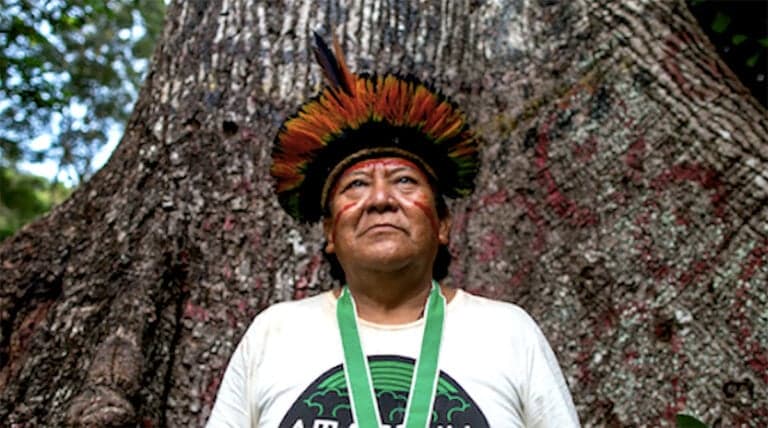
The Amazon shaman Davi Kopenawa of the Yanomami people in Brazil has been a particularly prominent voice in the climate debate. He has spoken at several UN conferences and met with heads of state to convey the Yanomami people's concerns about deforestation and the loss of biological diversity. Kopenawa's message that "the forest is alive" and that its destruction threatens the existence of all humanity has helped shape the global discourse on rainforest conservation.
Indigenous rights and shamanic diplomacy
Shamanic diplomacy has also played an important role in the struggle for indigenous rights. During the negotiations on the UN Declaration on the Rights of Indigenous Peoples (UNDRIP), which was adopted in 2007, several shamans and traditional leaders took an active part. Their presence helped to emphasise the spiritual dimension of indigenous peoples' relationship to land and resources, which was reflected in the final text of the declaration.
An example of effective shamanic diplomacy in this context is the work of Oren Lyons, the faithkeeper of the Onondaga Nation in the USA. For several decades Lyons has been a leading voice for indigenous rights in the UN system, and has used traditional Haudenosaunee (Iroquois) philosophy to argue for sustainable development and respect for nature.
Challenges and criticism
Despite growing recognition, shamanic diplomacy still faces significant challenges. Some critics argue that the involvement of shamans in international negotiations may contribute to romanticising or exoticising indigenous peoples, without necessarily leading to concrete political change. Others point out that not all indigenous groups have shamanic traditions, and that an excessive focus on shamans may overlook other important voices in indigenous communities.
There are also challenges related to translation and cultural understanding. The shamans' message, which is often deeply rooted in specific cultural and spiritual traditions, can be difficult to convey effectively in international forums characterised by bureaucratic language and Western concepts.
Success stories and influence
Despite the challenges, shamanic diplomacy has had significant influence in several areas:
Conservation of biological diversity: Shamans have helped to highlight the role of indigenous peoples in conserving biodiversity. Among other things, this has led to increased recognition of traditional ecological knowledge in international agreements such as the Convention on Biological Diversity.
Protection of sacred sites: The efforts of shamans have helped to increase international attention to the protection of indigenous peoples' sacred sites. This has resulted in several UNESCO initiatives to preserve such areas.
Climate adaptation: Shamans have shared traditional knowledge of climate adaptation, which has been incorporated into several international climate adaptation strategies, especially in Arctic regions.
Recognition of indigenous rights: Shamanic diplomacy has contributed to a broader understanding of indigenous peoples' spiritual and cultural rights in international human rights instruments.
The future - what does it hold?
As global environmental challenges become more pressing, it is likely that shamanic diplomacy will continue to play an important role in international negotiations. Several initiatives are already underway to strengthen the participation of indigenous peoples, including shamans, in global decision-making processes:
The UN Permanent Forum on Indigenous Issues has established mechanisms to ensure more direct involvement of traditional leaders in the UN system.
Several international environmental organisations, such as the IUCN (International Union for Conservation of Nature), have set up their own indigenous committees in which shamans and other traditional leaders are represented.
There is growing interest in integrating traditional ecological knowledge into scientific studies of climate change and biodiversity, which may give shamans a more formal role in knowledge production.
Challenges ahead
For shamanic diplomacy to continue to be effective, there are several challenges that must be addressed
Capacity building: There is a need to strengthen the capacity of indigenous peoples, including shamans, to participate effectively in international negotiations. This includes training in diplomatic processes and international law.
Cultural translation: Better mechanisms must be developed to translate the shamans' message in a way that is understandable and relevant to international decision-makers, without losing the cultural essence.
Balanced representation: It is important to ensure that a diversity of indigenous voices is heard, not just shamans. This involves recognising various forms of traditional leadership and knowledge.
Implementation: A persistent challenge is to translate the shamans' input into concrete policy and action. This requires continued work to build bridges between traditional knowledge and modern governance systems.
Shamanic diplomacy represents a unique and potentially powerful approach to global environmental and rights challenges. By bringing traditional wisdom into international negotiations, shamans help to expand the perspectives and possible solutions to pressing global problems. At the same time, significant challenges remain related to cultural translation, balanced representation and effective implementation.
Going forward, the success of shamanic diplomacy will depend on the ability to build meaningful bridges between indigenous peoples' traditional knowledge systems and modern global governance mechanisms. This requires continued effort from both indigenous communities and international institutions to create room for genuine dialogue and cooperation.
In a world facing increasingly complex environmental and social challenges, shamanic diplomacy can offer valuable perspectives and solutions. By recognising and integrating this form of traditional wisdom into global decision-making processes, the international community can take important steps towards a more holistic and sustainable approach to the planet's future.
References
1 Vitebsky, P. (2001). Shamanism. University of Oklahoma Press.
2 Minde, H. (2008). Indigenous peoples: Self-determination, knowledge, indigeneity. Eburon Uitgeverij BV.
3 Survival International. (2015). "Indigenous peoples at COP21 climate talks."
4 Kopenawa, D., & Albert, B. (2013). The falling sky. Harvard University Press.
5 Wiessner, S. (2008). Indigenous sovereignty: A reassessment in light of the UN Declaration on the Rights of Indigenous Peoples. Vanderbilt Journal of Transnational Law, 41, 1141.
6 Lyons, O. (2007). Listening to natural law. In M. K. Nelson (Ed.), Original instructions: Indigenous teachings for a sustainable future. Bear & Company.
7 Conklin, B. A. (2002). Shamans versus pirates in the Amazonian treasure chest. American Anthropologist, 104(4), 1050-1061.
Posey, D. A. (2002). Commodification of the sacred through intellectual property rights. Journal of Ethnopharmacology, 83(1-2), 3-12.
Convention on Biological Diversity. (2011). Tkarihwaié:ri Code of Ethical Conduct.
UNESCO. (2003). Convention for the Safeguarding of the Intangible Cultural Heritage.
Arctic Council. (2013). Arctic Resilience Interim Report.
United Nations. (2007). Declaration on the Rights of Indigenous Peoples.
United Nations Permanent Forum on Indigenous Issues. (2020). Report on the nineteenth session.
IUCN. (2016). IUCN Policy on Conservation and Human Rights for Sustainable Development.
Berkes, F. (2012). Sacred ecology. Routledge.