The táltos was a type of shaman or medicine man in old Hungarian folk belief. These individuals were considered to have supernatural abilities and could communicate with the spirit world.
Origin and qualities
According to tradition, the táltos were chosen by the gods or the spirits even before birth or in childhood. Children born with extra teeth, six fingers or other extra bones were often seen as chosen. If the extra bone was destroyed or stolen before the táltos turned 7 years old, the abilities would be lost.
The most important abilities of a táltos were to enter a meditative trance called "révülés" in which the soul could leave the body. In this state the táltos could heal wounds and illnesses or learn hidden truths by "sending the soul among the stars." The táltos were chosen by the gods for specific tasks and had a duty to warn the Hungarian people in times of danger, such as invasion or cultural collapse.
Roles and activities
The táltos served as intermediaries between the world of the living and the world of the dead. They could contact the spirit world to carry out tasks for the benefit of the local community. Legends tell that the táltos sometimes hid and fought one another in the form of bulls, often in battles to control weather such as thunderstorms, wind or hail.
According to the chronicles, Attila asked several táltos to foretell the outcome of the Battle of the Catalaunian Plains, where they predicted that the war would be lost based on animal entrails. There are also legends that Saint Stephen and King Matthias Corvinus themselves were táltos who had the ability of révülés.
Decline and remnants
Although the táltos tradition was originally connected to the pre-Christian, pagan Hungarian religion, it still existed in the 18th century. In 1725 a well-known táltos in Debrecen was brought to trial accused of witchcraft, but explained that the táltos cured illnesses, found buried treasures and "fought for Hungary in the heavens."
Although the authentic shamanic practice has been considered extinct, the táltos figure has survived in Hungarian folklore, myths and fairy tales. The táltos horse, or "táltos paripa," is a common motif in Hungarian folk tales, often with supernatural qualities. The táltos tradition is regarded as an important part of Hungarian cultural heritage and represents an ancient shamanic belief with roots in Finno-Ugric and Turkic traditions.
Revitalization of the táltos tradition
Despite the fact that, just as in Norway, the authentic shamanic practice was considered extinct, in recent years there has been a revitalization of the táltos tradition in Hungary. This has come about through modern practitioners who seek to revive and carry on this ancient heritage.
István Zsolt Barát
A central figure in this revitalization is István Zsolt Barát, a Hungarian shaman and author. Barát has studied ancient Hungarian shamanism and the táltos tradition in depth. He has written several books on the subject and holds regular courses and seminars to train new táltos practitioners.
Barát has undergone a traditional táltos initiation and has received the calling to carry on this heritage. He performs shamanic ceremonies, healings and spiritual journeys in keeping with the ancient táltos tradition.
The Kurultaj festival
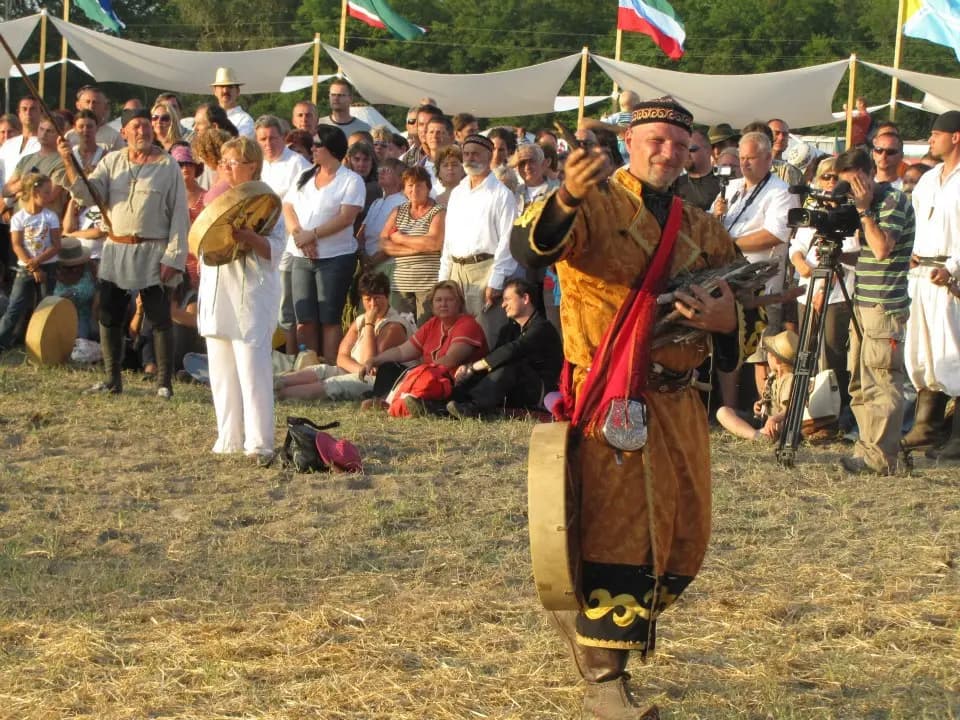
Another important event for the revitalization is the annual Kurultaj festival in Bugac, Hungary. This is a large gathering for followers of ancient Hungarian shamanism, the táltos tradition and Ural-Altaic cultural heritage.
During the festival there are shamanic ceremonies, concerts of folk music, lectures on ancient traditions and myths, as well as various activities related to horse breeding and riding. Táltos practitioners such as Barát take part and hold initiations and healings.
The Kurultaj festival draws thousands of participants each year and has become an important gathering point for honoring and carrying on the ancient táltos heritage in modern times.
Although the authentic, historical practice is difficult to revive fully, such initiatives represent an attempt to keep the táltos tradition alive as an important part of Hungarian cultural heritage and spiritual identity.