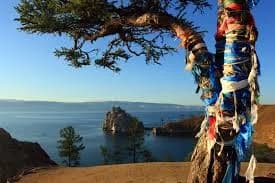
A barisaa, or prayer tree, holds an important position in Siberian/Mongolian shamanism. This ritual brings peace and reduces violence and aggression in all places where it is performed. And there is a need to do it in as many places as possible, especially in places where there have been acts of war or violent death from other causes. The ritual also calls upon the nature spirits of the place to bring inspiration, to calm people's hearts, and to create thoughts of peace and love.
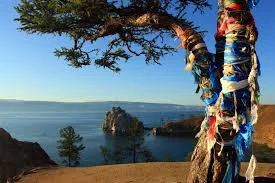
According to Siberian/Mongolian traditions, the human being has three souls. Suld, suns, and ami. Suld is the essence of one's unique personality in the present life, and it becomes a nature spirit after death. The suld soul of a deceased person can be friendly or harmful, depending on how the death occurred. The suld souls of people who have been killed, or who died very young, are often hostile and can cause illness, mental confusion, despair, and thoughts of violence. The reason for this is that they wish to take revenge on those who live long and successful lives, with prosperity, happiness, and children. This is caused by the fact that they do not understand that they can still contribute constructively to humanity, even though they are now spirits.
The 20th century was one of the bloodiest and most violent periods in human history. And now, as more wars and conflicts flare up around the globe, and our societies grow ever more chaotic, desperation and frustration begin to increase in people's hearts. The reason for this is that there are so many people all over the world who have died a violent and premature death, and their suld souls linger around the places where they used to be during the final period of their lives, especially battlefields, places where people were massacred, and urban areas with a great deal of violence. They plant thoughts and desires of revenge, violence, mental confusion, desperation, and illness in these places, causing the deeds to be perpetuated in patterns. This ritual cleanses these souls of such thoughts and feelings, and turns them toward bringing good things to the places where they dwell. This is why this ritual needs to be done in as many places as possible, to calm the spiritual chaos that has been created in this evil century. The most important element needed for this ritual is a young tree; the type is not so important, but it must be healthy and not in immediate danger of being cut down. If the tree is cut down at some point, a new tree must be planted right beside it, and the ribbons and other shamanic decorations must be transferred to the new tree. ** Things needed:** -Ribbons of white cloth or similar -Sage -Juniper -Spring water -Salt -Sand -Rice -Milk -Tea -Vodka (optional) -Incense and burner -Bread -Crackers -Coins -A small table -A wooden spoon or a bundle of twigs, about 10 cm.
The small table should be placed by the tree. On the table you set the incense burner, and the incense should burn continuously throughout the ceremony. The ribbons are placed in a neat pile. Salt, sand, rice, bread, and crackers should be on plates. The spring water, milk, tea, and vodka should be in bowls. To begin with, one of the participants should smudge the tree with sage. Then everyone stands around the tree, each taking at least two ribbons and tying them to the tree's branches. While tying them on, each participant should meditate on bringing peace into the world, to their local community, and into their personal life. Then the ceremony leader/shaman who leads the ritual lights the juniper and walks around the tree three times, fanning the smoke out toward the spirits. Here is an example of a prayer that can be recited in this part of the ceremony:
Nature spirits of this place Suld souls of those who have left us May your anger be cleansed away May your vengeful thoughts be cleansed away May you be filled with light May you be filled with love and peace (all the participants then drum, if they wish to)
Then the ceremony leader takes the spring water, and after calling upon their helping spirits for power, blows this into the water three times. Then the shaman takes the bundle of twigs and walks around the tree three times, casting water out toward the spirits. After the third round, the remaining water is placed back on the table. Then the shaman walks around the tree three times casting salt to the spirits, then three rounds of sand, and then three rounds of rice. The salt, sand, and rice should be completely used up after the three rounds. This is arigula, the cleansing of the spirits in the local area where the ritual is performed, in practice. Then the shaman recites yet another prayer, which should go roughly like this:
Nature spirits of this place Suld souls of you who have moved on Having forgiven what happened in the past Be aware that you can do good for all living things You can bring goodness to all people Inspire people with visions of the future Bring calm and trust to their minds Fill their hearts with peace and love
Hurrah! Hurrah! Hurrah! Hurrah! Hurrah! Hurrah! Hurrah! Hurrah! Hurrah!
(For each hurrah, you should move your right arm in front of you in a clockwise motion)
Then the shaman will drum (and preferably the others too) and all the participants in the ceremony slowly circle around the tree three times. Then the shaman takes the milk and circles around the tree once, casting the milk out toward the spirits, then one round with the tea in the same way, and then with the vodka.
Then each of the participants should take a piece of bread or a cracker and crumble it up and scatter the crumbs at the foot of the tree. Then the shaman pours half of the milk at the foot of the tree, and casts the rest up toward the sky. Then in the same way with the tea and the vodka.
Then each of the participants should place some coins at the foot of the tree. These are gifts to the nature spirits and to the spirit of the tree. Other gifts can be tobacco or dairy products, such as pats of butter or pieces of cheese. You honor Mother Earth especially by offering dairy products.
Now the ceremony is finished and each participant should take a sip of the water. This has become Arshaan, energized water, and has the power to cleanse your spirit. Any water left over is drunk by the shaman and/or poured at the foot of the tree.
Now the tree has become a barisaa, a shamanic sanctuary to the nature spirits. It should be honored regularly with small gifts in the form of food and liquids. You can also tie on new prayer ribbons or place more coins at the foot of the tree, to ask the spirits for protection, help, and to have wishes fulfilled. Of course, other people, or animals, may take the food and the coins afterward, but the very act of giving creates "buyanishig" (a strengthening of personal power and integrity) and increases a person's "windhorse," which is one's personal, spiritual power, and one's ability to make unlimited use of one's innate abilities. This ritual, to calm the spirits, will have a lasting effect and will be beneficial to all people in the local area where it has been performed, not just to the participants.
May the new century be a peaceful one.