In both Norse and Sami mythology there is a wealth of creatures that have played a central role in how the people of prehistoric Scandinavia understood the world around them. Trolls, jotnar, vettir, the hulder, the nøkk and other nature spirits are tied to the landscape, natural phenomena and the daily life of human beings. These creatures have often been seen as dangerous or demonic, but this can partly be attributed to the influence of Christianity. In a shamanic context these beings can be understood as manifestations of natural forces or spiritual beings with a moral and existential otherness, which a shaman had to understand and respect.
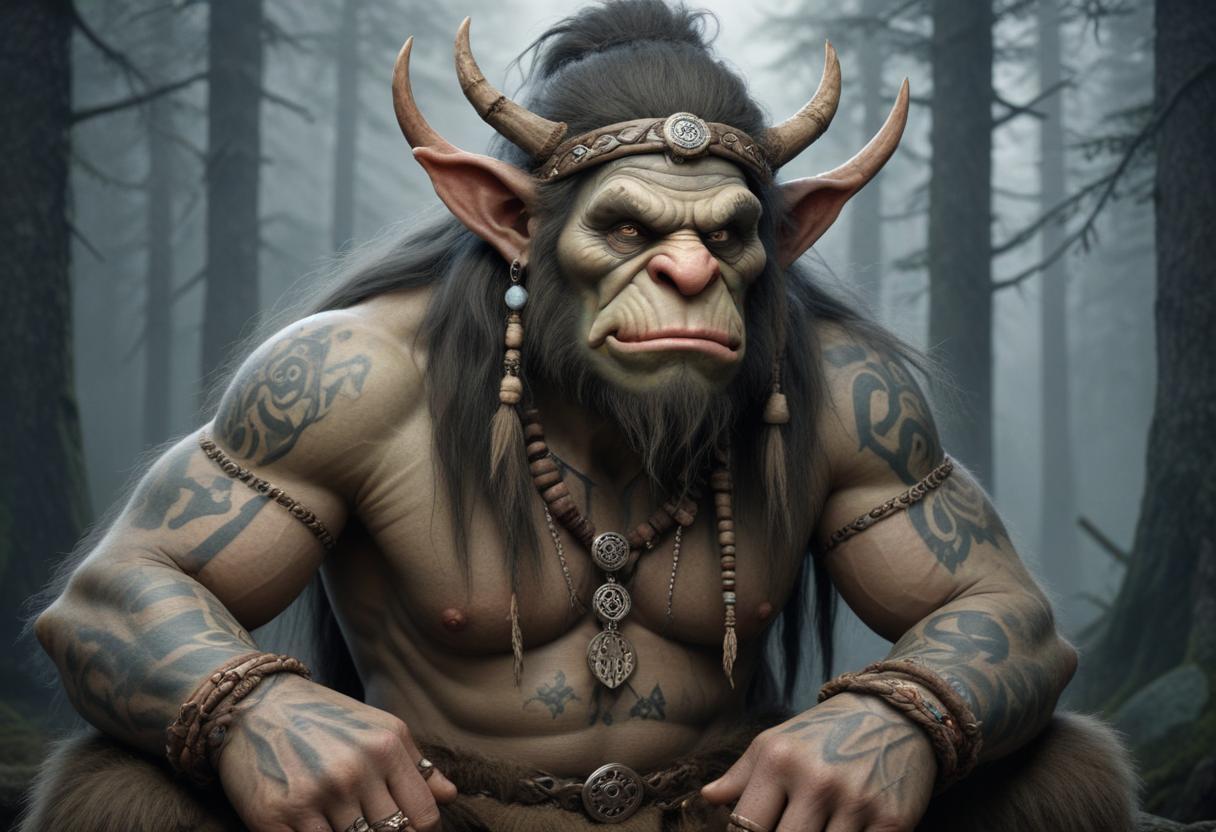
Trolls and jotnar in Norse mythology Trolls and jotnar are among the best-known creatures in Norse mythology. The jotnar, also known as rime giants or frost giants, are often portrayed as enemies of the gods of Asgard, but this does not necessarily reflect a simple good-evil dichotomy. The jotnar represent the raw, uncontrollable forces of nature – cold, darkness and the wilderness – which cannot be measured against human values or morality.
Trolls are often tied to particular mountain areas or forests and can be seen as the guardians of nature. In a shamanic context these beings represent the forces a shaman must learn to understand and cooperate with, without necessarily judging them by human standards. For the shaman it is essential to realise that these creatures operate according to their own laws, and that they cannot be expected to act according to human ethical norms. They are neither evil nor good in the human sense, but neutral forces in a cosmic balance.
The hulder, seductress of the forest The hulder is one of the most fascinating figures in Scandinavian folklore, often described as a beautiful woman with an animal tail. The hulder is tied to the forest and is both alluring and dangerous. She can lure men to her, and if they do not satisfy her wishes she can inflict harm on them. The hulder does not follow human morality; she acts in accordance with the laws of nature and her own nature as a spiritual being.
For the shaman the hulder is a manifestation of the spirit of the forest or the feminine aspect of nature. She represents another reality, where human concepts such as justice or evil do not necessarily apply. A shaman would have understood that interacting with the hulder required a deep respect for her otherness and an acknowledgement that she operated outside human morality. To understand the hulder's nature meant understanding the secrets of the forest and its hidden forces.
The nøkk, spirit of the water The nøkk is another mysterious being that dwells in the water, known for luring people to it with beautiful violin music, only to drag them down into the depths. The nøkk can take many forms, from a beautiful human to a grotesque figure, and it does not follow human norms. Its actions are driven by the unpredictable and often dangerous forces of nature.
In a shamanic understanding the nøkk can symbolise the spirit of the water, a manifestation of the power and mysteries of water. The nøkk does not operate within the framework of human ethics, and a shaman would have realised that the nøkk's intentions could not be measured by human standards. To navigate safely in the realm of water, the shaman had to acknowledge the nøkk's distinctive nature and respect its place in the natural order.
Nature spirits and vettir Vettir, also known as land spirits or hidden folk, are lesser spirit beings that dwell in nature – beneath the earth, in forest, mountain or water. These creatures often act according to principles that are unknown or incomprehensible to human beings. They are neutral in their nature, but can react with hostility or friendliness depending on how people behave towards nature.
The shaman, as an intermediary between the human and the spiritual world, understood that the vettir did not act according to human values. Instead they operated by their own rules, which were inseparably tied to the landscape they protected. A shaman would take care to maintain harmony between people and the vettir through respect and ritual acts, without imposing human morality upon them.
Sami creatures In Sami mythology, which is closely tied to shamanic traditions, we also find a number of spirit beings that resemble the Norse ones. Among the most central are various nature spirits that dwell in the landscape, for example the stallo, a large and powerful figure, sometimes described as a kind of giant or troll figure. The stallo can be both protector and threat, but its actions are best understood through its own nature and not human moral frameworks.
The Sami shaman, known as a noaide, had a special ability to communicate with these spirits through rituals, song (joik), and trance. For the noaide it was crucial to understand that these beings operated on their own terms, and that their intentions could not necessarily be interpreted through human values. Respect for nature's distinctive character and its spiritual inhabitants was essential to ensure a harmonious interaction.
Christianity's demonisation With the arrival of Christianity in Scandinavia many of these creatures were demonised. Trolls, jotnar, the hulder, the nøkk and other spirit beings came to be seen as evil and devilish, and this attitude was eventually reflected in folk belief. Many of the originally neutral or even protective spirits were turned into threatening demons that had to be fought. This reflects a broader cultural change in which the Christian worldview, which drew a clear distinction between the sacred and the profane, came into conflict with the shamanic understanding of a world where spiritual and material realities were deeply intertwined.