This interview was previously published in full in our newsletter. What follows is an edited and translated version.
Tell us about yourself
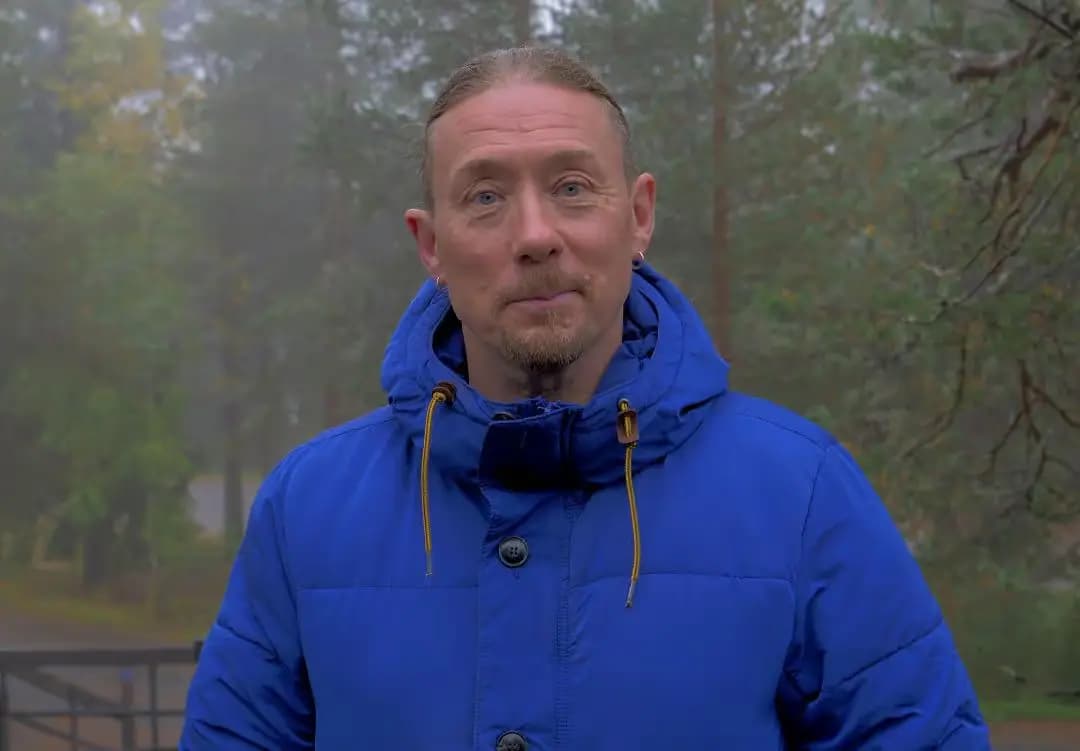
My name is Francis Joy, and I come from West Yorkshire in northern England. In 1996, at Avebury, in a stone circle located in Wiltshire, I was initiated into the Druid tradition by priests and priestesses of the British Druid Order (BDO). I received my training in the Dobunni Druid Grove, which is based in Bristol.
My training consisted, among other things, of how to plan and hold rituals and ceremonies at sacred places. Both for others and as part of a private practice. This was a way of re-establishing a deep, loving relationship with the land, the trees, the plants, the rivers, the stones, the forest, and the landscape of the surrounding area.
After being initiated as an Ovate, which can be compared to a magician or shaman in other cultures, I moved to Finland. There I studied indigenous religions and Arctic civilizations at the University of Helsinki.
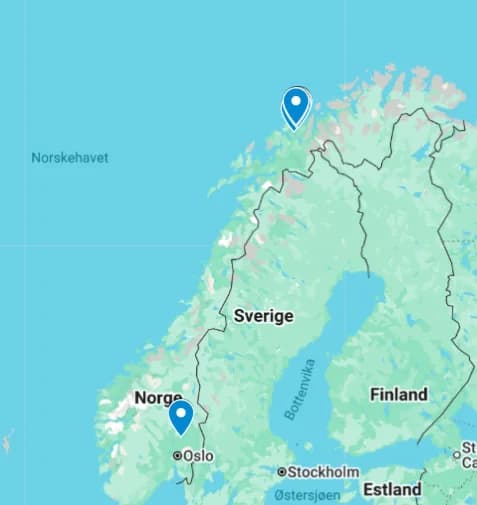
After living in Helsinki for 2 years, I opened a small practice where I offered healing and consultations for 5 years before I moved to Rovaniemi, which lies on the Finnish side of Sapmi. I still live here. My academic work has concentrated on working with Sami people who practice contemporary shamanism, and a few who practice traditional shamanism (noaidevuohta).
My work, whether as an academic or as a healer, is in service of the land, the people, and the forces of nature.
As a healer, I work with both intervention and rebuilding work. Intervention work involves strengthening groups and individuals in the process of working through shame and codependency. This often springs from ancestral trauma and exposure to addiction. Both of these conditions are contributing causes of soul loss as well as loss of quality of life, vitality, and spontaneity. Since codependency (which can also be described as a lack of self-love) is characterized by dependency. Many of those who have been exposed to trauma or addiction share a lack of self-worth/self-love. Depending on the individual's history, this may have become fragmented, and the effects of this can manifest as illness or cognitive dissonance, or both. The illness can be addiction (addiction is an emotional illness) or emotional and physical symptoms characterized by grief and loss. One of the most common symptoms in men, for example, can be emotional energy that has frozen because it has not been expressed. This can be seen as one of the great underlying causes of depression and suicidality. Emotional energy can be seen as a vital life force through which we express ourselves and our feelings. In such cases, where someone has shut off their emotions, this can also result in them becoming physically drained. The rebuilding work is characterized by uncovering painful memories as well as feelings and emotions that have not been expressed. To get there, the person needs to have become free of their substance abuse, whether it concerns substances or other types of addiction. In this way, the energies associated with this can come to the surface. With the help of time, the authentic inner self will also be allowed to emerge. Everyone who is in an addiction is bound up with death energies, because addiction is the enemy of life. If not their own death, then the death of nature through the collective.
The rebuilding work is done to support them while they slowly but surely recover and become revitalized by the force of life. Sometimes shamanic extraction work is also necessary to remove spirits that have taken up residence in the body or energy field, so that they can no longer influence it and are sent back to the Creative Force.
There can also arise cases where a person who has met a traumatic death lacks the power to cross over into the spirit world and therefore needs help. Often through healing, so that they can move on from earthly life. Each case is different; the methods and the approach therefore vary. But in order to help someone back to life, one needs help from the spirit world. One of the great benefits of my work has been to be able to teach others about the power of trees and plants and their importance for lasting change and healing.
Do you have any shamanic visions or dreams in relation to Scandinavian shamanism?
One of my dreams is to find a wood carver who can carve a beautiful landscape into a tree where the roots are still attached. Where different levels of reality are portrayed. A work of art that shows animals, spirits, and humans. Something that represents the world tree, a place where higher spheres turn toward both humans and those who live beneath the earth and dwell in their worlds. I could imagine this work of art in a museum as a permanent exhibition. As a symbol that the tribes here in the north are once again reclaiming their cultural heritage, their birthright to cultures and traditions. Cultures and traditions that were subjected to violent changes because of extreme missionary activity.
The values of the Nordic traditions are depicted in Scandinavia through rock carvings and prehistoric paintings. Today these are used first and foremost to promote tourism. It is sad that today there is little teaching about the origins of shamanism in the school system. Perhaps only at the university level is there some teaching, since the rock carvings are the first written symbolic language that depicts communication between species, soul journeys, and the use of the drum among what were probably the ancestors of the Sami.
Today, if one looks at the climate crisis, there is a void that could have been filled by the role and function of the shaman. The value of nature, the protection in how a shaman conducts training. Our responsibility for nature is also not among the values we learn about in school. But we are a part of nature, and we all carry collective spiritual wounds, a consequence of not knowing our own spiritual traditions and heritage. This manifests through a painful restlessness, a compulsive craving for material wealth, growth, and power, to the extent that it sucks the soul out of the Earth. This is what people need to be reminded of. Shamanism teaches us about the balance of life and about respect for nature.
How do you think the cooperation between the ethnic groups in the Nordic region was in the past?
I see it this way: life is, by and large, about survival. Very few lived to a great age, so people did what they had to in order to survive. But there is little doubt that when Christianity really gained momentum in the 1400s, it brought with it a pursuit of land, taxation systems, and the development of agriculture. This brought with it conflicts between peoples over rights to land, hunting, and territories. It is difficult to say anything about spiritual cooperation. We know that the Sami traded with their neighbors, but when it comes to spirituality, language plays a major role. So I believe that the spiritual traditions existed within traditions, customs, and taboos that belonged to the culture and the ancestors. They were probably not shared outside the culture, because history tells us that many Sami groups lived in isolation for a very long time.
What is needed to create a broader cooperation in Norway today?
A starting point for bringing healing and the restoration of relationships must be based on everyone having equal worth. Regardless of status, culture, or economic standing. That is a vision that can bring progress. But this is constantly challenged by that which creates discord between people. Religion, wealth, social status, law, gender, and politics are just some examples. One way to get past these is to recognize that we all have an interest in preserving life on Earth. We must look beyond ourselves and think of others, but not only that. Empathy and care for Mother Earth and all living things can be the focus of our motivation. Working to help the Earth can help to awaken our spirituality.
Which values from pre-Christian times are important today?
The values we can draw from pre-Christian times are about reverence and respect for nature, the landscape, water, and air. The ancestors and the animals. That one takes only what one needs to survive, and not for profit and greed. Preserving respect for the ancestors is not easy, since so many of us were harmed as children. This is important because the historical past has much power in what it can teach us about preserving relationships, respect, and integrity. This is something the old ones knew. If one crossed the line and nature was harmed, the consequences came to the degree they were necessary. When the human being serves the forces of life, all is well and there is no need for overconsumption. Life is simple, and therefore an inner joy of life is created. These values teach us what it is to be spiritually awake and conscious, instead of being trapped in an eternal cycle of an unconsciousness that comes from greed and from being disconnected from the life force. To be in harmony with oneself and with nature through spiritual practice and reverence for the ancestors and the traditions.
What do you think are the core values for creating a greater understanding of shamanism?
Shamans have always seen the world as a composite being characterized by a web of relationships and therefore by both ecological and spiritual values. The reason shamans see the world this way is that many of them have survived illness, near-death experiences, or even physical death from which they have returned. This has caused them to break out of ego consciousness and become spiritually and ecologically awakened. The worldview and the understanding that all life is connected, something that is maintained through shared and respectful relationships, is the core of shamanism. In that way, it has much to teach. Especially here in the north, because of the Arctic climate.
What do you think about shamanism in a European context versus Scandinavian shamanism?
Scandinavian shamanism is very much characterized by the Arctic climate, the Nordic identity, and the language. Especially Sami and Finnish shamanism, which, in contrast to the Swedish and Norwegian, are linked to the Germanic language.
This is not an easy question to answer fully, because the traditions are being recovered, renewed, modified, and shared. Therefore one can say that it is an ongoing process. There are overlapping practices and common denominators, such as reverence for the earth, the water, the animals, sacred stones, that both Scandinavian and European cultures share. In addition, the bear in the constellation Ursa Major is something else they share, because the bear, whether in the past or the present, has been a central part of the cosmology of Nordic and European hunting culture. There are many confirmations of this in stories and in rock carvings.
One must also take in the fact that the borders came as a result of the establishment of nation-states that divided up land into economic and governmental delineations. Through these processes, they also sought to assimilate smaller population groups such as the Sami and the Kven in such a way that they became almost invisible.
In each country there are ethnic minorities with their rights, practices, traditions, and identities that must be respected and not assimilated further. It is important that each individual culture be given the freedom to develop and shape its traditions and destinies independently. Where cultures coexist, respect and reverence are needed.
What view do you have of gods and goddesses in your faith?
The power of goddesses and gods is a part of everyday life and a part of a spiritual life. They are a source of power, inspiration, and support. They make no great demands other than honesty from the one who seeks their help and guidance. Most human-made religions that turn to a prophet or saint have lost their understanding that the sacred manifests itself in nature; this is why we have such great respect for nature. It is quite clear that humanity has forgotten this when we look at the great destruction of nature, especially of forests and water. One of the first insights that comes from a spiritual awakening is the call to find which forces exist in your culture and to approach them through meditation and prayer. To ask them how one can best serve them and be of service.
Shamanism is a modern word with many interpretations; what do you put into the word?
The word shaman is ambiguous, since it is imported from the east. Shamanism is a concept that can be applied in many contexts, but essentially it refers to a person who, through out-of-body experiences, travels into the spirit worlds with the help of spirit helpers to find information and guidance for those who need it. This is the same way that Ovates and Druids in the Druid tradition do it. The Druids' work is about healing and divination. So it is also with the medicine men in North America. They carry out similar work using these methods. This can also extend into the dream world and through visions that can come from illness and tragedy. The shaman works with spirits in different ways. The name varies in different cultures.
What is a ritual or a ceremony for you, and which elements are important?
The intention of a ritual or a ceremony can be many things. In my work, they have mainly two functions. Healing and the celebration of the eight seasons that exist in the Celtic and Druidic year. To be in ceremony is a way of coming into the same frequency as the rhythm of nature. When one follows the course of the year in ceremony, it gives us access to the creative energies and the power that flow through the changes. This can be healing, spiritual clarity, and wholeness, something that gives us a feeling of peace and belonging. Many use drums, some sing, fast, or visit sacred places and circles. They call on the ancestors to bring the past and the present together in order to attain knowledge and inspiration. The stones and the trees also give this, if you are open to contact with them.