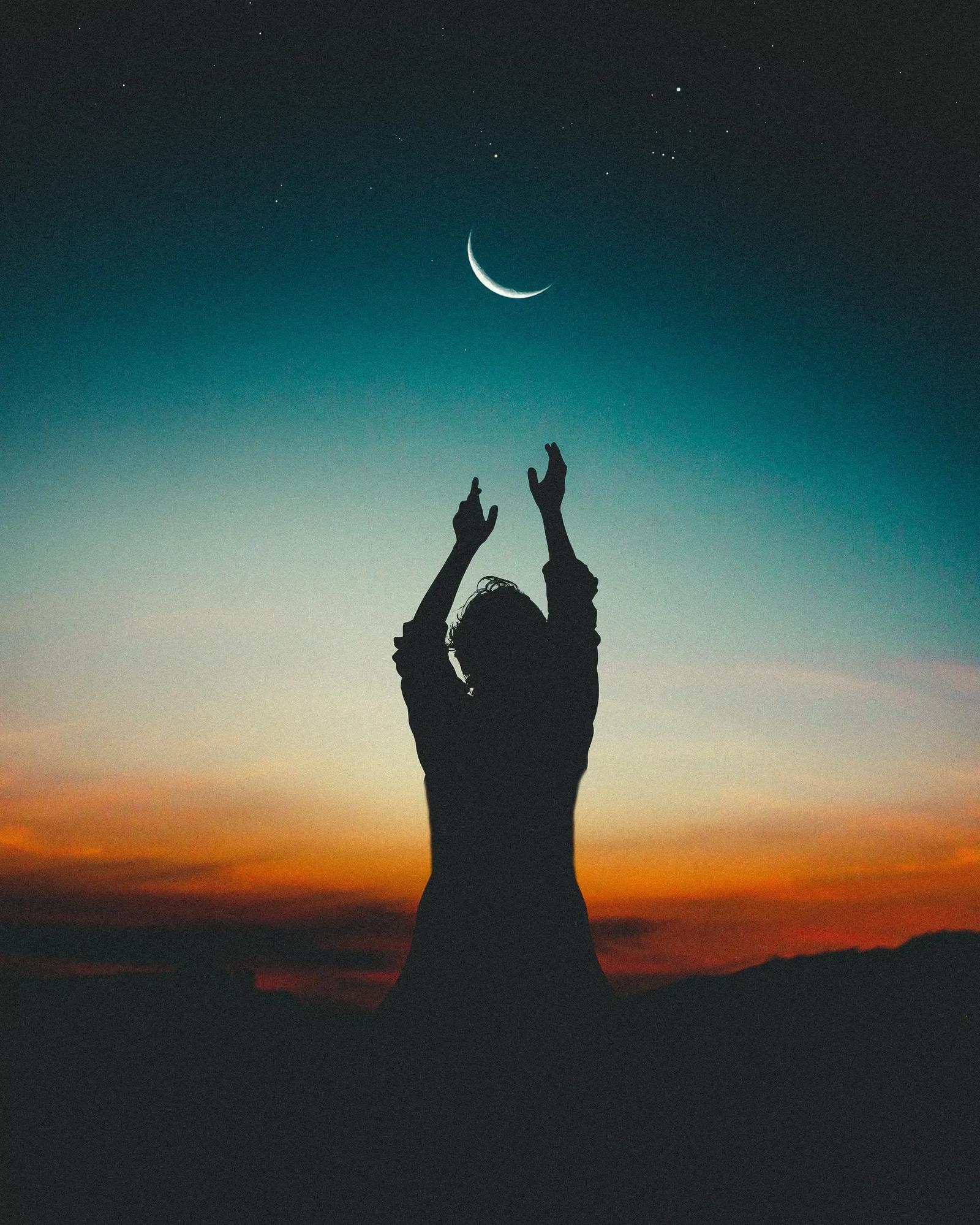
There is little doubt that the moon held great significance for our ancestors. The phases of the moon affect all life in the same way as they affect the sea. The Norse people called the moon god Mani, and the Sámi called the moon goddess Mano, Manna or Aske. She was worshipped in the period around the new moon and especially at the winter solstice. The Norse people counted the months from new moon to new moon. There are many legends and much mythology surrounding the moon in both Norse and Sámi history. Both were nature-near religions and therefore influenced by the rhythms of nature. So important were the phases of the moon to people that they arranged harvesting and hunting according to them.
Everyone knows that the moon affects the sea, and there are often good fishing periods just after the new moon and the full moon. Up here in the north, wood is always cut on a waxing moon. Wood harvested on a "growing moon" burns better and dries much faster. People also never slaughtered on a waning moon, as the meat would then spoil quickly and shrink away in the pot.
Most people who work in the police or rescue services know that during a full moon people become a bit wild, and it is often busy nights for them. Many also struggle to sleep around the full moon. For those who are not so familiar with these rhythms, the idea that the moon affects us can be both frightening and unfamiliar. It is not at all unusual for conflicts, unrest or psychological problems to manifest, or to become stronger, in the time around the full moon. And for one to be more in balance at the new moon.
For us who find the sacred in nature, this is nothing strange, but a part of nature's cycles. For us, the spirit world and the ordinary world are equally real and important. At the new moon we begin a cycle, a goal or a project that reaches its highest energy and culminates at the full moon. You could say that we both live and practice our faith in step with nature's rhythm. The new moon in shamanism is, incidentally, not reckoned in the same way as when the calendar indicates the new moon (that day is, by the way, called the black moon by many), but from when the first crescent of the moon is visible. That is, roughly a day later.
By celebrating nature's own rhythm, one becomes a part of nature, and one also gains a greater understanding of oneself and of the spirit forces in nature. In olden times these customs were kept alive, and they still are today. Many people have rituals at the new moon and at the full moon.
- The black moon is a time for rest, and one should refrain from rituals
- The new moon is a good time to begin projects, rituals and prayers for what you wish for, and to set goals for yourself
- When the moon waxes, you draw things toward you and into your life.
- At the full moon, the energy is at its highest; this is also a time to look within and to perform rituals for all goals. It is also a time to rid yourself of things you no longer need. (Whether it concerns the physical, the mental or the spiritual)