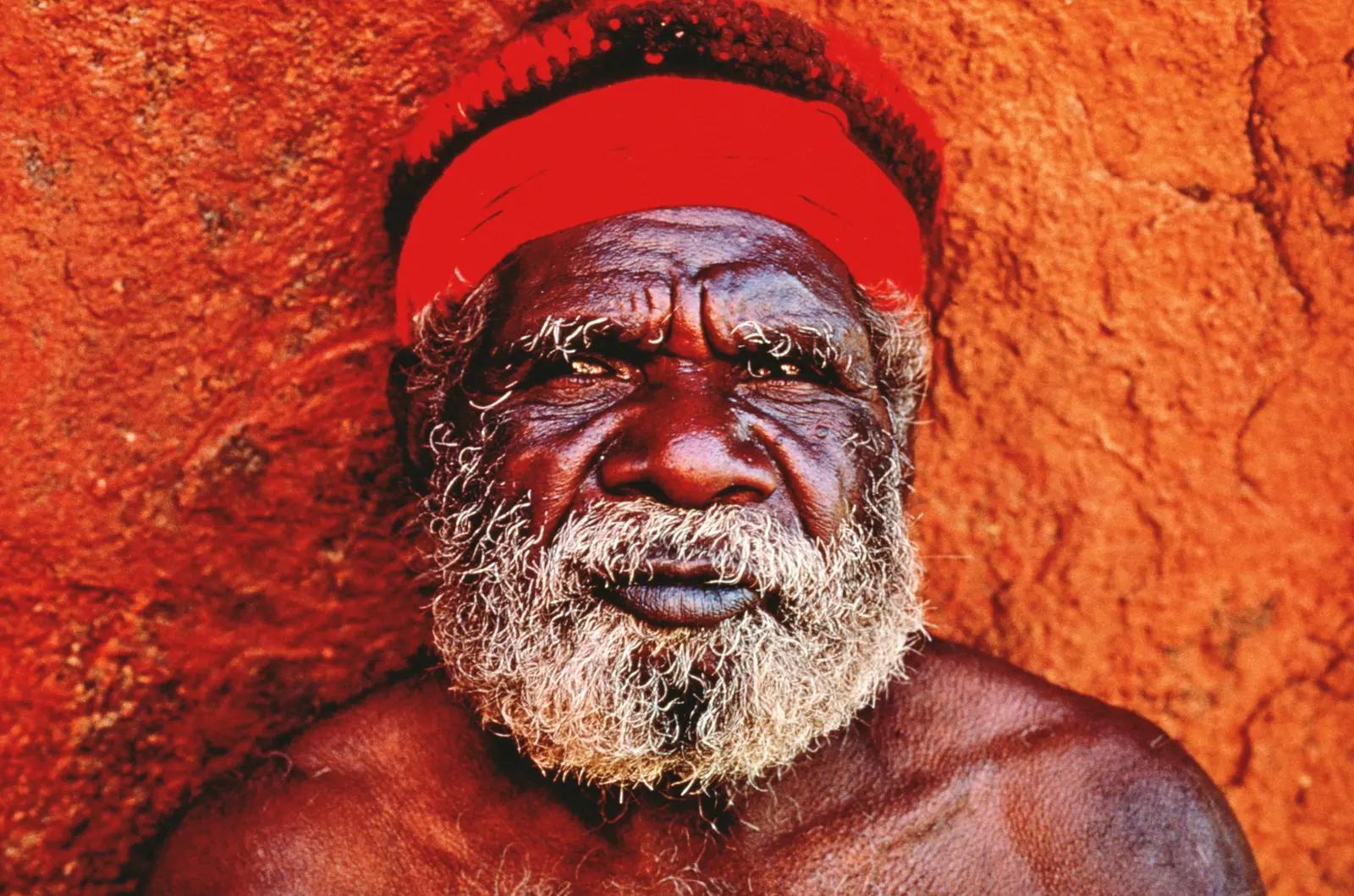
The Aboriginal peoples of Australia are among the oldest continuous cultures in the world, with a history stretching over tens of thousands of years. Their spiritual practices are deeply rooted in a complex mythology and a cosmology that is closely linked to the land, ancestors and the Dreaming (Tjukurpa). Although Aboriginal cultures do not necessarily use the word "shaman" to describe their spiritual leaders, many of their practices are comparable to shamanism as it is understood in other Indigenous cultures.
The Dreaming, the source of Aboriginal cosmology Central to Aboriginal spirituality is the Dreaming, a mythical period that describes the creation of the world and the establishment of the laws and norms that govern human life. According to Aboriginal belief, the world was shaped by the ancestors, spiritual beings who travelled through the land, creating landforms, animals, plants, and establishing the first humans. The Dreaming is not only a creation myth, but also an eternal state that exists in parallel with the physical world. Through the Dreaming there is a continuous connection between the present, the past and the future.
Clever Men and Women Aboriginal societies have specialised spiritual leaders who act as healers, guides and protectors of their spiritual traditions. These leaders are often known as "clever men" or "clever women," and their role resembles that of shamans in other Indigenous societies.
These spiritual leaders are known to possess special abilities, including the ability to communicate with spirits, heal illnesses and perform rituals that protect the community. They can also undertake spiritual journeys in which they visit the Dreaming or other spiritual worlds to obtain insight or guidance from the ancestors.
Rituals and healing Rituals are an integral part of Aboriginal life, and many of them are connected to the land and the ancestors. One example of a central ritual is the corroboree, a ceremony that includes dance, song and storytelling. These ceremonies are a way of maintaining the connection to the Dreaming, and they are used to mark special occasions such as rites of passage, festivals and healing.
When it comes to healing, Aboriginal healers use a combination of spiritual and physical methods. Herbs and natural medicines are often part of the treatment, but equally important are the spiritual aspects, which involve cleansing rituals, contact with spirits, and protection against negative energies or spiritual attacks.
Spiritual journeys and contact with the Dreaming An important part of Aboriginal spiritual practice is the ability to undertake spiritual journeys. During these journeys, spiritual leaders can visit the Dreaming to communicate with the ancestors or other spiritual beings. This is a parallel to shamanic journeys in other cultures, in which the shaman enters a trance to obtain insight, to heal, or to communicate with spirits.
To achieve this state, Aboriginal spiritual leaders use various techniques such as meditation, song and dance.
Aboriginal spirituality in modern times Although many Aboriginal communities have been affected by colonialism, Christianity and modernisation, many of the traditional spiritual practices have survived. These traditions continue to be an important part of Aboriginal identity and cultural heritage. There is also a growing interest among both Aboriginal people and other Australians in preserving and revitalising these ancient practices.
In today's Australia, Aboriginal spiritual leaders are still respected and consulted, especially in connection with healing and community rituals. In addition, there has been a renewed recognition of Aboriginal land rights and their spiritual bonds to the land, which is essential to understanding their culture and worldview.
References:
Berndt, Ronald M., and Catherine H. Berndt. The Speaking Land: Myth and Story in Aboriginal Australia. Inner Traditions, 1994. Elkin, A. P. Aboriginal Men of High Degree: Initiation and Sorcery in the World's Oldest Tradition. Inner Traditions, 1993. Vitebsky, Piers. The Shaman: Voyages of the Soul - Trance, Ecstasy and Healing from Siberia to the Amazon. Duncan Baird Publishers, 2001. Clottes, Jean and David Lewis-Williams. The Shamans of Prehistory: Trance and Magic in the Painted Caves. Harry N. Abrams, Inc., 1998. Rose, Deborah Bird. Dingo Makes Us Human: Life and Land in an Australian Aboriginal Culture. Cambridge University Press, 2000.