Sami cupping is an ancient healing technique that has been used by the Sami for centuries. This practice, known as "guoladat" in Sami, involves using cups or hollow horns to draw illness and unwanted energies out of the body. Cupping is part of the larger Sami shamanic tradition, which includes a number of other healing methods and ritual practices.
Origin and Historical Background The cupping technique has deep roots in Sami culture and has been practiced throughout the Sami region, which stretches across Norway, Sweden, Finland, and Russia. The exact origin of Sami cupping is difficult to determine, but it has probably developed over many generations as part of the traditional medical knowledge of the Sami.
The Sami have always had a close relationship with nature, and their healing methods reflect this. Cupping was used to treat a range of ailments, including pain, inflammation, and circulation problems. The technique has similarities to cupping practices in other cultures, such as in traditional Chinese medicine, but developed independently in the Sami region.
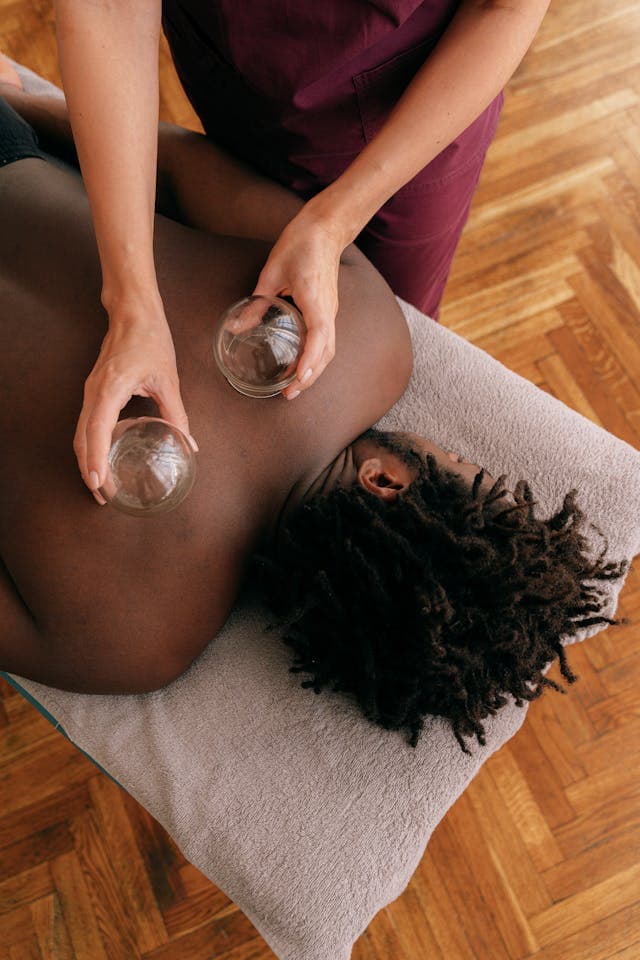
Method and Process Traditional Sami cupping often uses horns from reindeer or other animals as cups. These horns were carefully adapted to fit the surface of the body and create a vacuum. In modern times, glass cups are also used, but the principle remains the same.
The process includes the following steps:
Preparation The area to be treated is cleaned and sometimes oiled to ease the movement of the cups. Creating a Vacuum Horns or cups are heated with fire to create a vacuum when placed on the skin. The heat draws air out of the cup, and when it is placed on the skin, it pulls the skin into the cup. Treatment The cups can either remain in one place or be moved around on the skin to stimulate circulation. The treatment usually lasts from 5 to 20 minutes, depending on the condition being treated. Aftercare After the cups are removed, temporary marks may appear on the skin as a result of the vacuum. These marks usually disappear after a few days.
Healing Properties and Applications
Improved Circulation: By creating a vacuum, blood and lymphatic fluid are drawn to the surface, which can improve circulation and help relieve muscle pain and stiffness. Removal of Toxins: Cupping can help draw toxins out of the body and promote healing. Pain Relief: The technique is often used to relieve chronic pain, including back pain, neck pain and headaches. Reduction of Inflammation: Cupping is believed to reduce inflammation and promote healing in injured areas. Sami Cupping in Modern Times Although Sami cupping is an ancient tradition, it has survived to modern times and is still used by some Sami. Today this technique is also recognized by people outside Sami culture, and it is often integrated into alternative forms of treatment.
Interest in traditional healing methods has grown globally, and Sami cupping is receiving more attention as an effective and natural treatment method. Modern therapists may combine traditional techniques with modern knowledge to provide a holistic approach to health and well-being.
Sami cupping is a fascinating and effective healing technique that has roots in Sami culture's deep connection to nature and their traditional medical knowledge. The technique, which has been practiced for centuries, has proven useful for treating a range of ailments, including pain, inflammation and circulation problems. It survives and flourishes today, and continues to offer natural relief and healing to many.
Important Notice
Sjamanistisk Forbund is a faith community and does not offer treatment. It is important to note that shamanic forms of therapy do not replace the health care system. People with health problems should always seek advice and treatment from qualified health professionals. Sami cupping can be a supplement to traditional health services, contributing to a holistic approach to personal and spiritual growth.
Sources Solbakk, A. (2007). Sjamanisme og runebommer i samisk tradisjon. Davvi Girji. Hætta, O. M. (1996). Samene: en håndbok. Cappelen. Petersen, H., & Åhren, E. (2004). Sami Culture in a New Era: The Norwegian Sami Experience. University of Washington Press. Pollan, B. (1993). Sjamanisme i nord: en studie i noaidevuohta og åndetro. Universitetsforlaget. Mebius, H. (2003). Blodsymbolik i den samiska trummans värld. Centrum för Samisk Forskning, Umeå Universitet.